






Lea la historia en Español
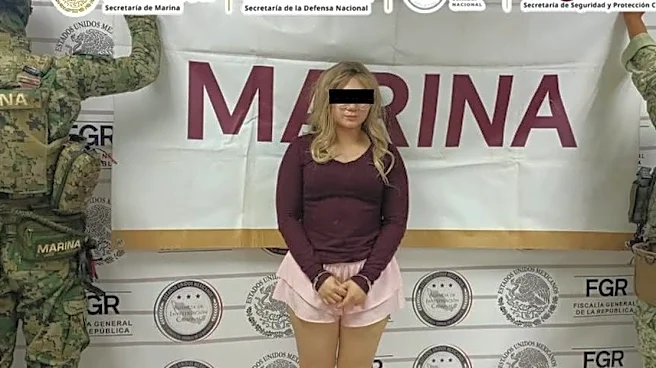
At just 21 years old, Yaneth “N.”, a U.S. citizen, crossed the Arizona-Sonora border much like thousands of people do every day. On Sept. 11, that routine journey came to an abrupt end when Mexican authorities discovered 5,400 rounds of ammunition hidden beneath the seats of the SUV she was driving near San Luis Río Colorado, Sonora.
Just two days earlier, on Sept. 9, two other U.S. citizens, César Pablo “N.” and Mario “N.”, were arrested in Nogales, Sonora, during a search operation in the Kalitea neighborhood, one of the city’s most affluent residential areas. Authorities allege the men were involved in street-level drug dealing after officers found containers holding small bags of marijuana, methamphetamine and cocaine.
The three arrests occurred within less than a week.
On their own, the cases could be viewed as isolated incidents. Together, however, they point to a broader pattern that Mexican authorities have been documenting with increasing frequency: a growing number of U.S. citizens appearing in investigations involving firearms, narcotics, human smuggling and other federal crimes in Mexico.
Why US citizenship has become asset in cross-border criminal operations

Records from Mexico’s Ministry of National Defense, known as SEDENA, show that arrests of U.S. citizens in Mexico have remained a recurring reality for more than a decade, with the numbers climbing significantly in recent years.
Between January 2012 and February 2025, Mexican federal forces detained 3,526 U.S. citizens.
Through 2017, annual detentions of U.S. citizens by the Mexican Army and National Guard remained below 100.
The figure surpassed the 100-case mark for the first time in 2018, with 131 detentions, and rose to 155 in 2019. The sharpest increase began in 2020, when authorities recorded 338 detentions, more than double the previous year.
While the trend has not followed a straight line and has fluctuated from year to year, detention levels have remained significantly higher than they were a decade ago, reaching 969 arrests in 2024, the highest annual total in the period reviewed.
For law enforcement authorities on both sides of the border, the Arizona-Sonora corridor has become one of the most visible stages of this phenomenon. What was once seen as an occasional occurrence now appears repeatedly in official records, highlighting the increasingly complex role some U.S. citizens play in criminal investigations taking place in Mexico.
Recruiting Americans for the cartels, a border trend draws growing attention
The Arizona-Sonora border has emerged as one of the regions with the highest concentration of arrests involving U.S. citizens in Mexico. Sonora has recorded 621 detentions, ranking third nationally behind Baja California and Tamaulipas.

The states with the highest numbers of arrests of U.S. citizens are Baja California (946), Tamaulipas (645), Sonora (621), Quintana Roo (461) and Baja California Sur (424).
For Steve Ralls, a Tucson attorney with 45 years of experience handling criminal cases in both the United States and Mexico, the trend also reflects changes in how criminal organizations recruit new members.
According to Ralls, cartels often target young Americans living in border communities through social media, taking advantage of their ability to cross the international boundary frequently without immediately attracting suspicion.
“I’ve seen cases like that. It’s something I’ve seen on the U.S. side,” Ralls told La Voz.
Specialists consulted for this report and findings from ongoing investigations suggest that U.S. citizenship can facilitate frequent movement between both sides of the border, a characteristic that criminal organizations may view as advantageous. The ability to travel regularly between the United States and Mexico can reduce initial scrutiny at some ports of entry and provide access to networks operating in both countries.
Social media and the recruitment of Americans
Authorities, lawmakers and researchers in both countries increasingly point to social media as a key tool used to recruit young people into criminal activity.
Platforms such as Facebook, TikTok and Instagram are frequently cited in studies and investigations examining how criminal organizations attract new recruits, including both Mexican and American citizens.
Ironically, the same social media platforms used for recruitment have also become valuable sources of evidence for investigators.
Long before her arrest, Yaneth had posted photographs of firearms on Facebook. Those posts later became part of the investigation into her activities. Authorities are now pursuing a line of inquiry aimed at determining whether the weapons shown in those images were connected to the criminal organization allegedly led by El Mayito Flaco.
According to preliminary investigations, authorities believe Yaneth held a second-level rank within Los Mayos, a position that placed her as a logistical link between the supply of firearms in Arizona and their distribution in Sonora.

On the day of her arrest, authorities also found an identification card issued by the Arizona Department of Corrections, Rehabilitation and Reentry in which she was listed as a Correctional Officer II.
Investigators believe that both her U.S. citizenship and her employment may have represented valuable assets to the criminal organization by facilitating cross-border movements with a lower risk of detection.
In Sonora, federal authorities identify Los Chapitos and La Mayiza as the principal factions of the Sinaloa Cartel operating in the state. Authorities allege those groups are led by descendants of Joaquín “El Chapo” Guzmán and Ismael “El Mayo” Zambada, both of whom are imprisoned in the United States.
Meanwhile, the Mexican government has intensified efforts to identify and remove online content linked to criminal recruitment.
During a news conference on April 8, 2025, Mexican President Claudia Sheinbaum said authorities had removed 69 websites and online pages associated with criminal recruitment activities in the previous weeks.
Concern over cartel recruitment has reached US Congress
In legislation titled the “Combating Cartels on Social Media Act of 2025,” Arizona Republican Juan Ciscomani and Pennsylvania Democrat Chrissy Houlahan proposed a national strategy to combat criminal recruitment through digital platforms.
Among the testimonies cited was that of Mark Dannels, sheriff of Cochise County, Arizona, who warned that the phenomenon was already having direct consequences in border communities.
According to Dannels, deputies in his department have been involved in high-speed pursuits and the arrests of young Americans accused of participating in illegal activities after being contacted by suspected cartel members through platforms such as Facebook and TikTok.
The legislation is currently under review in congressional committees after being reintroduced at the beginning of the legislative session.
Firearms are the leading cause of arrests of Americans along border
Beyond the recent cases in Sonora, an analysis conducted by La Voz using records obtained through Mexico’s National Transparency Portal shows which federal crimes are most common among U.S. citizens detained in Mexico.
The data covers the period from May 2021 through January 2025 and includes 476 U.S. citizens arrested exclusively for federal offenses.
The records show that nearly nine out of every 10 arrests fall into two categories: firearms offenses and drug-related offenses.
Crimes involving firearms account for 224 cases.

Drug-related offenses, a category that in Mexico primarily includes conduct involving narcotics, account for 200 cases.
The remaining arrests include 14 cases involving document forgery, 12 administrative violations, 12 cases involving cash seizures, 10 vehicle theft cases, two kidnappings, one arrest warrant case and one human smuggling case.
Baja California and Sonora account for the largest number of arrests specifically tied to firearms offenses. Together, they represent six out of every 10 arrests in that category.
The data reinforces a clear pattern: when U.S. citizens are detained for federal crimes in Mexico, firearms and drugs appear most frequently in their case files.
Where are Americans most frequently arrested in Sonora?
Investigators determined that Yaneth operated in San Luis Río Colorado, one of the most sensitive border corridors for firearms trafficking into Mexico.
The Sonora municipalities with the highest numbers of arrests involving U.S. citizens are General Plutarco Elías Calles (210), Nogales (149), San Luis Río Colorado (91), Sonoyta (77), Agua Prieta (38), Opodepe (12) and Hermosillo (11).
The concentration of cases in border municipalities highlights the strategic importance of these corridors for the movement of firearms, drugs and people between the United States and Mexico.
Following their arrests, Yaneth, César Pablo and Mario were turned over to the appropriate prosecutors, who will determine their legal status and continue the investigations.
Time is critical in the defense of Americans arrested in Mexico
For Steve Ralls, time is one of the most important factors when a U.S. citizen is detained in Mexico.
Ralls said that while U.S. attorneys cannot practice directly before Mexican courts, they often work in coordination with local law firms.
“For example, in Hermosillo, I work there a lot and I have attorneys who work with me. In situations like these, the attorneys in the city where the person is detained immediately try to see whether an agreement can be reached,” he said.
According to Ralls, representing U.S. citizens is not especially difficult for Mexican attorneys who are familiar with the country's legal system.
Among the cases recorded during the September arrests, Ralls sees a recurring pattern: U.S. citizens entering Mexico’s prison system at increasingly younger ages, often in connection with firearms offenses, drug-related crimes or activities linked to criminal organizations.
On Sept. 12, just one day after her arrest in Sonora with thousands of rounds of ammunition, Yaneth turned 22.
Her social media accounts contain birthday messages from previous years marking the occasion. This year, however, her case has become another entry in a binational trend that continues to grow and increasingly involves U.S. citizens accused of crimes committed in Mexico.
This article originally appeared on Arizona Republic: The Arizona-Sonora corridor ranks third in arrests of Americans in Mexico