





“East of Eden,” John Steinbeck’s self-described magnum opus, is a big, beautiful, sprawling book, an updating of the Cain and Abel story told through the lens of a growing America.
It’s enjoying a moment among younger readers, readers who might have been put off or rebelled against a high-school reading assignment, but are now enticed by BookTok testimonials and the promise of a new Netflix series.
Good. I’ve actually read some complaints on social media that this is somehow an unworthy shortcut to getting readers to the novel, that they should find it by way of their curiosity and love of literature or whatever.
Give me a break. Who cares what gets them there, as long as they get there? And I feel the same way about the series. Zoe Kazan adapted
the novel, which is interesting in itself — her grandfather, Elia Kazan, directed the 1955 film version starring James Dean. Elia Kazan focused on Cal and Adam Trask and the back half of the book.
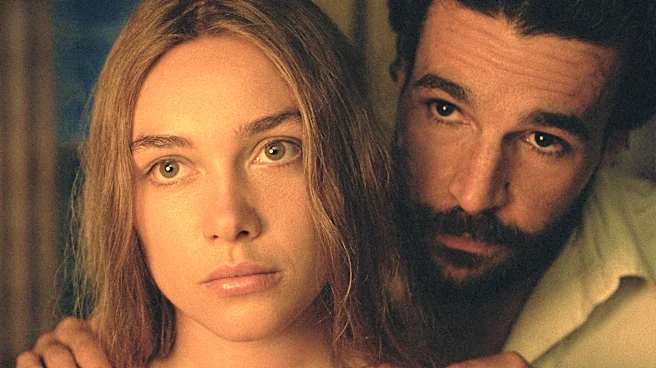
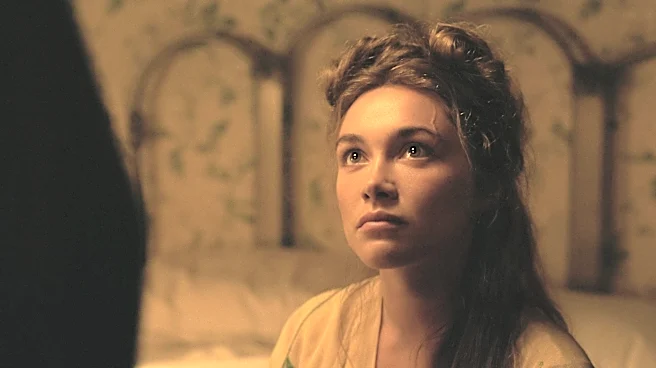
Zoe Kazan’s version is more sweeping, yet puts the focus squarely on one character: Cathy, played with an astounding intensity ― ferocity, really ― by Florence Pugh. Pugh is always good; here she’s great, adding, along with Kazan, layers to Cathy that aren’t in the book.
What is 'East of Eden' about?
About that. If criticism is supposed to be thoughts delivered from the mountaintop of iron-clad opinion like so many tablets from Moses, this isn’t that. I’m not sure how I feel about the changes in Cathy, who in the novel is one of literature’s great villains.
Spoilers abound, although come on, the book was published in 1952. You’ve had some time.
Cathy in the novel is just evil, born that way, lacking a conscience. This allows her to blithely set her childhood home on fire with her parents in it; to give birth to twins and walk away from them almost immediately, shooting the husband she never wanted in the first place in the process; to set up shop in a brothel and murder the madame. There’s more.
In the series, she’s given a backstory of mistreatment and abuse that helps explain her behavior throughout her life, though her goal remains the same: personal freedom. This is where I’m torn. One of the reasons the movie “Halloween” works so well is that the Shape, known in later films as Michael Myers, is simply evil, without explanation. (Yes, I am comparing one of the great works of literature with a slasher film. And happily so.) He exists as a force of nature, and there is power in that.
So does Cathy in the book, with the explanation, such as it is, that some people are born that way. Yet I also understand that women have been undeservedly blamed for everything that’s gone wrong in the world and characterized as crazy and mean every time they furrow their brow since Eve made her unfortunate dietary decision. I get it, in other words. But if I’m divided on Kazan’s choice, I was so blown away by Pugh’s performance it wasn’t a stumbling block.
Florence Pugh will blow you away in 'East of Eden'
And boy, was I blown away. When she is on-screen, you just can’t look away. You’re afraid you’ll miss something.
I have, in fact, three favorite characters in the novel. One, in addition to Cathy, is Lee, played by Hoon Lee. If Pugh’s performance is overpowering, Lee’s is far more subtle, but just as powerful. Lee, the character, is a Chinese servant to Adam (Christopher Abbott) and his twin sons, the ones abandoned by Cathy. In reality, he is much more, as Adam remains despondent for a few years after Cathy’s exit. Despite being born in the U.S. and going to the University of California, Lee speaks pidgin English around white people, though eventually he opens up to Adam and the boys.
Lee the character is brilliant, patient, wise. He seems to know how the world works. Lee the actor is also patient, and lets the character come to him. The Trask household can’t run without him, and neither can the story. He is friends with Samuel Hamilton (Ciarán Hinds), an Irishman who figures far more prominently in the novel. Something had to give, I guess, and it was Hamilton and his family. But he, too, is wise, and Adam could not have survived without him. He also recognizes Cathy for what she is, particularly in the book: evil.
Mike Faist plays Charles Trask, the Cain to Abbott’s Abel. Like everyone in this series, he’s outstanding, though he’s not in it as much as he might be. Martha Plimpton as the madam Cathy ousts and the great Tracy Letts as Charles and Adam’s pitiless fraud of a father are welcome presences, again in small doses.
But this is Pugh’s show, her spotlight, and she makes the absolute most of it.
Is it better than the book? No. That’s usually the answer, unless you’re talking about “Jaws” or “The Godfather.” But it’s not worse than the book. It’s different, a unique take on a great story, the basis for which predates Steinbeck’s by, oh, a few centuries. Credit to Kazan for finding a new way to tell it, and for making it accessible to a new audience.
How to watch 'East of Eden'
Streaming on Netflix.
Reach Goodykoontz at bill.goodykoontz@arizonarepublic.com. Facebook: facebook.com/GoodyOnFilm. Media commentary with a side of snark? Sign up for The Watchlist newsletter with Bill Goodykoontz.
This article originally appeared on Arizona Republic: 'East of Eden' takes a classic novel in a powerful new direction