
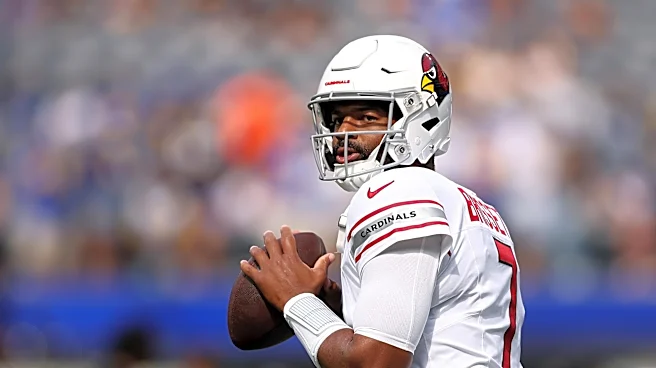

Jacoby Brissett was asked, after his 16th loss in 19 starts, whether there were any plays he would like to have back, from this iteration of the same old story.
“Right now?” Brissett said. “I can't think of any right now.”
The first drive of the second half would be a good place to start.
On the third play out of the break, Brissett had Jalen Brooks with two steps of separation on a pair of defenders deep downfield. His underthrow forced Brooks to work back to the ball, attempting to fight through contact for the catch.
Brooks took the blame and said, “If I don't make that play, I at least need (to draw) a penalty.” The defenders, though, could have been avoided entirely with a better throw.
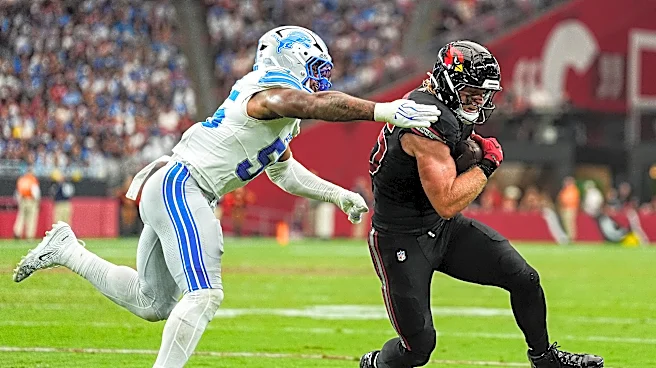
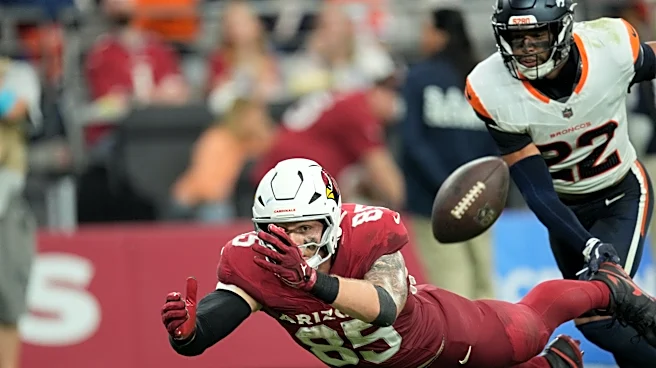
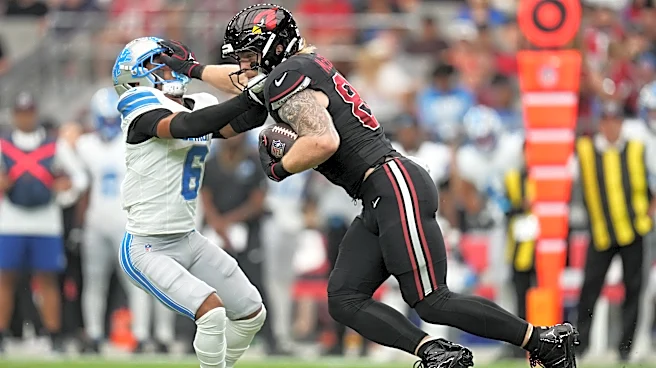
Then, two plays later, Brissett had McBride coming open
on a corner route inside field goal range. This time, he threw high and behind the tight end, who nearly made a spectacular catch but couldn’t maintain possession as he went to ground.
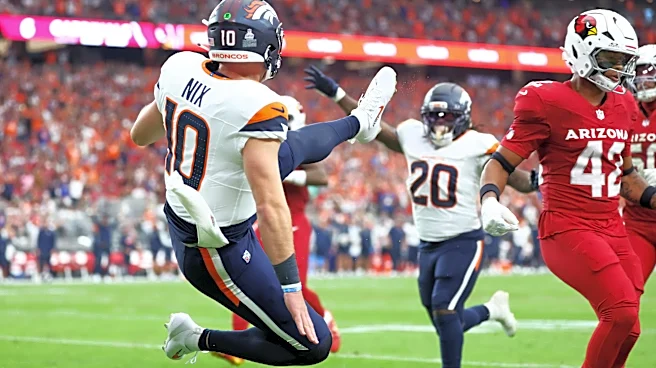
The series ended with a costly punt inside Broncos territory. Denver was in the end zone within just two plays and expanded the lead to 14. It never shrank within a possession again, as the Cardinals lost, 30-16.
It all served as a useful reminder of just how outmatched this Cardinals offense is, from a talent perspective.
After the game, Brooks said that the Broncos were giving the Cardinals a heavy dose of man coverage. Head coach Mike LaFleur added that Denver was trying to “take the air” out of the underneath passing game, knowing that Brissett had the league’s second-lowest average time to throw this season.
“We knew we were gonna have to get over the top,” LaFleur said. “And when you do that, you're gonna hold onto the ball a little bit longer.”
The problem: That requires talent, from the offensive line to the quarterback to the pass catchers.
For the Cardinals, that’s in short supply.
According to Next Gen Stats, Broncos edge rusher Nik Bonitto generated 13 pressures on Brissett, the most of any player in a single game in two years. Twelve of them came against backup left tackle Jayden Williams. Third-string guard Hayden Conner wasn’t much more effective against the interior pass rush.
Even using the more charitable metrics from Pro Football Focus, Brissett was pressured on 39.6% of his dropbacks, a season high. On those plays, he took three sacks and completed 41.2% of his passes for 4.1 yards per attempt.
Overall, Brissett has now failed to eclipse 6.2 yards per attempt in six consecutive games. He's the first quarterback to achieve that feat within a single season since he did it himself in 2024.
And when Brissett did deliver accurate passes downfield, his pass catchers often failed to haul them in.
Running back Bam Knight dropped a touchdown on a seam route in the end zone. Brooks only caught one of his six targets and has hauled in just 31% of his targets since the Marvin Harrison Jr. trade. Even Michael Wilson, the Cardinals’ second-most productive offensive player, couldn’t secure one deep pass, only bailed out by a questionable pass interference call.
“We've just gotta make the most of the opportunities down the field,” Brooks said. “That starts with us as the playmakers.”
If none of those wasted opportunities sting enough, there were also the trio of first downs negated by penalties (one facemask, two holdings). And the free play on a Denver offside, when Brissett scrambled for four yards instead of taking a shot downfield. And the goal-line sequence at the end, when the Cardinals got to the 1-yard line, then failed on seven consecutive attempts to score.
All of it came back to a roster that was — nearly to a man — woefully outmatched by its opponent.
As for where to place the blame, there are options aplenty.
Maybe you want to point to the injuries. The Cardinals are without their best offensive lineman, Paris Johnson, and are missing three of their top four options at guard, as well as running back Jeremiyah Love.
Maybe you want to point to the Marvin Harrison Jr. trade. That move left Jalen Brooks and Reggie Virgil vying for a starting wide receiver spot.
Maybe you want to point to the roster construction. The Cardinals entered the season with one proven NFL tackle for two spots and with no established receiver depth. They did not upgrade their quarterback position, instead leaving Brissett as the starter after he posted a 1-11 record a year ago.
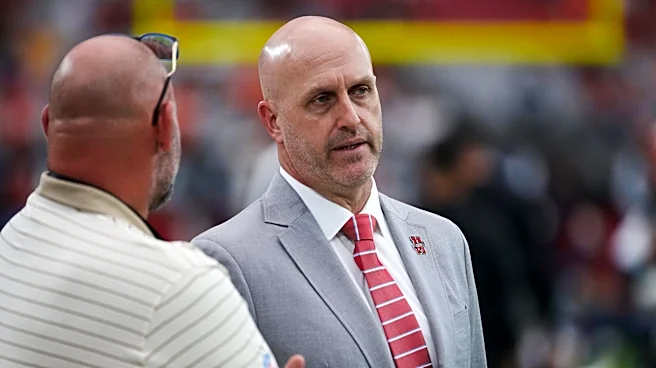
Maybe you want to point to the draft history. Even beyond Harrison, the Cardinals have seen minimal production from a number of offensive pieces drafted in the first three rounds under Monti Ossenfort.
Or maybe it's just the reality of a rebuilding roster — a lost season between Kyler Murray and whatever lies ahead at quarterback, augmented by the misallocated resources elsewhere.
Assigning blame, though, doesn’t change the reality. The Cardinals may find some wins between now and January, as they did last week in Los Angeles. But against the NFL’s best defenses, they will continue to be outmatched until the offseason arrives, with another opportunity to infuse talent into an undermanned roster.
That is perhaps best summed up by their quarterback situation.
LaFleur maintained postgame that he is sticking with Brissett, presumably because the Cardinals lack any clear upgrades. The question posed to LaFleur, then, was what Brissett is currently offering the Cardinals, given the state of their offense.
“I'm not even gonna talk about any of the individuals,” LaFleur said. “It's us collectively.”
The collective, though, is comprised of individuals. Few of them have consistently been up to the task.
This article originally appeared on Arizona Republic: Arizona Cardinals are just bad mo matter where blame is placed