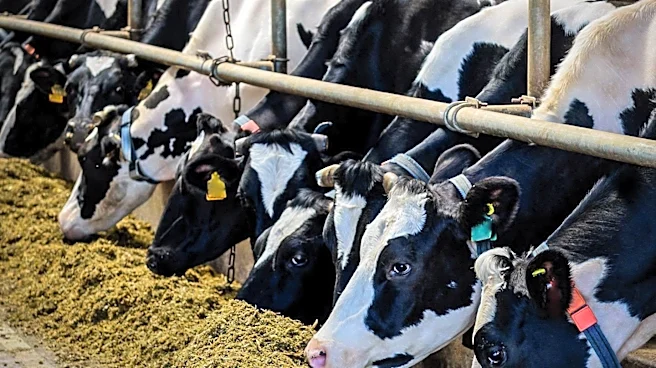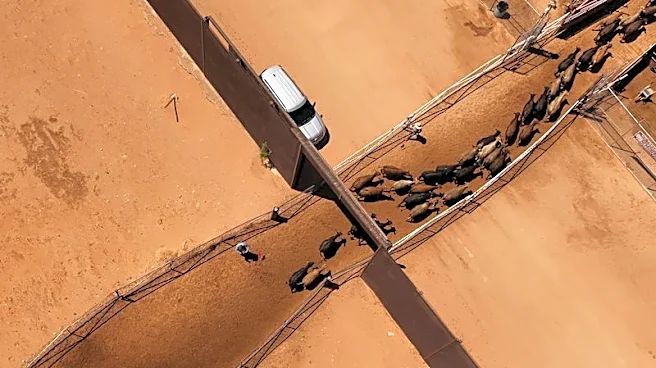






The United States will resume importing Mexican cattle Aug. 24 through a port of entry in Douglas, Arizona.
The U.S. Department of Agriculture closed the international border to all cattle and livestock imports in November 2024, with a brief reopening in 2025, in response to the spread of cases of New World Screwworm in Mexico. Both North American countries had eradicated the parasite and contained cases at Panama's Darien Gap until last year's outbreak. There have been 38 detected cases of infection in Texas but none in Arizona.
The federal agency said the phased reopening of livestock imports through the Arizona-Sonora port could be paused if they identifiy increased risk in the Mexican border states. Otherwise, officials would take steps to open imports through New
Mexico.
Arizona officials and some cattle traders celebrated the decision as one that will stabilize beef prices and said it reflects binational work.
“We have worked tirelessly with USDA, the cattle industry, our sister states and Mexico to assure a safe border opening when the time came,” said Paul Brierley, director of the Arizona Department of Agriculture, in a statement.
The halt in cattle imports for almost 20 months had a chain-effect reaction and left deep economic losses in both Mexico and the United States, reducing revenue and increasing market prices for feedyards and beef consumers. Sonoran ranchers say the reopening was long due.
"The border should never have been closed," said Juan Carlos Ochoa Valenzuela, president of the Regional Livestock Union of Sonora.
Even when there were screwworm outbreaks decades ago, when there were fewer tools to deal with the parasite, cattle imports weren't halted, he told The Arizona Republic. Sonora, which tailors its cattle production for the U.S. market, stepped up sanitary measures, even if the parasite hasn't shown up anywhere near the state.
"Unfortunately, this issue became political," Valenzuela, said. "Rather than technical or sanitary."
In the news release announcing border reopening, USDA said both Sonora and Chihuahua have "a track record of success" when it comes to animal disease control and animal health programs, and give the agency "confidence that they can do the job."
Arizona's agriculture department director said the neighboring state has "excellent disease protocols" and Arizona will increase screening and tracking protocols for inspection. Instead of blue metal export tags, Mexican cattle will now have to cross with USDA-approved electronic identification.
“When trade resumes, we will implement all necessary measures to protect Arizona livestock and wildlife," Brierley said. "We are ready.”
A relief to the cattle trade
Closure to imports affected both sides of the border.
In Arizona, the impact is estimated at $261 million, according to a 2026 analysis from the Arizona Cattle Feeders' Association and Cattlemex that considers imports' benefits on food and lodging, transportation, feed sales, operational costs and employment.
In Sonora, cattle producers lost nearly half of their revenue when they sold their cattle to the Mexican market instead of exporting. Estimating a head of cattle sells for export at $2,000, and Sonoran producers send some 350,000 head of cattle across the border every year, the yearly loss might be at $280 million for sales alone.
Some in the cattle industry see the Douglas port reopening as a relief. Others suggest it's too little, too late.
The damage cannot be undone, said Valenzuela. Even if this are "excellent news" that gives Sonoran ranchers great hope, they "don't want to throw their hats up" because there have been two cancellations to reopening efforts since November 2024.
The news was "a welcome development for the cattle feeder industry that has been hit so hard by the border closure,” wrote Dave Stevenson, president of Red Rock Feeding Company, an Arizona feedyard, in a shared statement from the Arizona agriculture department.
He added that this move will "stabilize beef prices and support the economies of the agricultural industry and border communitiesin southern Arizona.”
Basilio Aja, vice president of the Arizona Cattle Feeders' Association, sees a weaker impact.
"It will have more of an emotional effect on the market — increasing some supply but with only one port and the stringent importation process, the number of imports will be nowhere near precious," he wrote to The Republic.
The impact on the market is better to be gauged in a month. But, he suggested, the damage has been done.
"It does not remediate the loss of transportation, feed and supply sales and labor lost over the past nearly 2 years," he said.
Of the approximately 350,000 head of cattle that Sonora exports every year to the United States, half of them stay in Arizona feedlots. The low supply of cattle from the border shutdown drove prices up. Some local cattle growers could have benefitted from these higher prices, but in recent years many have been pushed to sell much of their herd due to drought.
In Sonora, Valenzuela says the last two years have been a lesson to Mexican ranchers. He hopes his fellow cattle producers will work harder in developing a second market for their product, instead of catering almost exclusively to the U.S. market.
Uncertain benefits for consumers
Beef prices in the United States are historically high. In June, they hit a record $6 per pound.
Big fluctuations are not new but part of a 100-year "cattle cycle" tied to cattle supply and the age of herds, but the current prices are also influenced by high production costs, high demand, the smallest U.S. cattle herd in seven decades, and reduced imports from high tariffs and a southern border closed to livestock trade.
Rebuilding the U.S. cattle inventory will take time, and the effects of a the announced border reopening to Mexican cattle may not be big nor quick. For now, imports will only resume on the Arizona port of entry, which represents a portion of the total Mexican cattle imports in a year. The imported cattle would take months to reach consumers.
"The opening of the border in Douglas is not going to do anything for relieving high beef prices until at least another 6 months out," Russell Tronstad, a University of Arizona professor and extension specialist, told The Republic.
Feeder cattle being imported into the U.S. will need to be fed for another 6-12 months before they reach their "slaughter weight," he added. Cattle imports are likely to be "much lower" than before the new world screwworm outbreak, as facilities need to be restaffed, follow new protocols and prepare cattle.
The August reopening "is not going to result in any immediate relief to high beef prices at the retail level."
Clara Migoya covers agriculture and water issues for The Arizona Republic and azcentral. Send tips or questions to clara.migoya@arizonarepublic.com.
This article originally appeared on Arizona Republic: Arizona to reopen border to Mexican cattle after screwworm outbreak