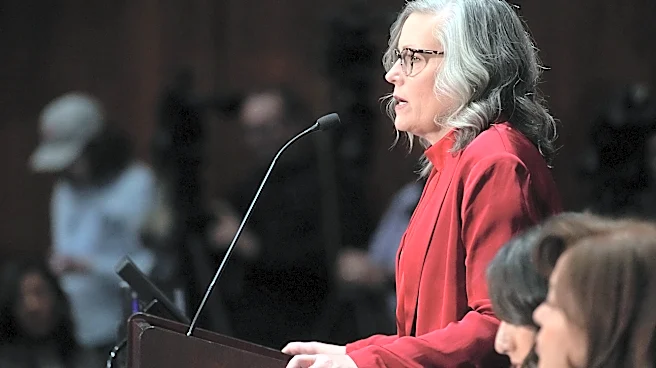





Arizona Attorney General Kris Mayes announced she would not prosecute her fellow Democrat, Gov. Katie Hobbs, following a bribery investigation that has spanned two years.
But Mayes said in her Aug. 21 announcement that transparency reforms were needed, leaving an opening for continued scrutiny of the governor's ties to a donor who received a special rate increase outside of its normal contract.
The issue will remain in focus as both Hobbs and Mayes are on the ballot this November, asking Arizonans for second terms in what are expected to be tough races, even as the national political environment favors their party.
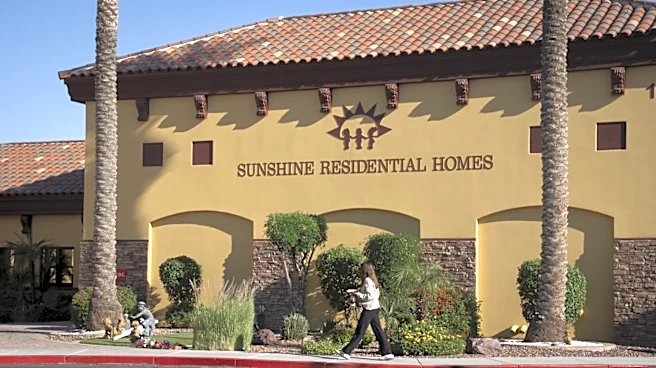
The attorney general's inquiry stemmed from reporting by The Arizona Republic that found Sunshine Residential Homes received the special
pay increase, and then a higher-paid contract, as it gave over $400,000 to Hobbs' party or entities controlled by her campaign. Sunshine Residential has held contracts with the state for decades and runs group homes for children in the care of the Arizona Department of Child Safety.
The contributions bought Sunshine Residential's CEO access to the governor, and their relationship raised concerns of pay-to-play and whether Hobbs directed that her donor benefit in return. Hobbs has said she was not involved, and Mayes' investigation corroborates that.
Here are the key takeaways from Mayes' investigation.
Sunshine gave much more than previously known
The attorney general's investigation uncovered another $150,000 that Sunshine Residential, which is taxpayer-funded and questionably claimed to be operating at a deficit, gave to support Hobbs. That money was given to her legal defense fund, a secretive account to help defend her 2022 win of the Governor's Office against lawsuits filed by her failed GOP challenger, Kari Lake.
The funding was disclosed in an Aug. 17 letter to Mayes' investigators from Hobbs' campaign attorneys, Austin Yost and Kelleen Mull of Coppersmith Brockelman. The letter was dated three days before Mayes' office wrapped up its legal analysis, finding no charges should be filed.
That revelation brings the total amount of money Sunshine Residential gave to help elect Hobbs four years ago or support her after she was sworn into office to more than $550,000.
The timing of the contributions to the legal defense fund is also noteworthy. Contributions came in $50,000 increments every three months from November 2023 to late May 2024, and were solicited by Hobbs' campaign manager, Nicole DeMont, according to attorneys' letter. The final contribution was deposited 12 days before The Republic first revealed the company's ties to Hobbs and the special pay increase it received from DCS.
That was the extent of Sunshine Residential's planned giving, which it had done to support Hobbs because she is a former social worker, according to a spokesperson for the for-profit company.
"Neither Sunshine nor its leaders had committed to give any additional funds to Governor Hobbs or the legal defense fund," Sunshine spokesperson Tommy McKone said in an email.
Charges would have required proof of a quid pro quo
Mayes' findings are documented in a seven-page summary written by her Criminal Division Chief Nick Klingerman. The summary explains how prosecutors reached the conclusion not to charge Hobbs with bribery. The analysis turned on court precedent, including the U.S. Supreme Court's determination that political contributions are protected speech.
The analysis cites a 1991 Supreme Court case that required proof of a quid pro quo. The justices said punishing acts by officials after political contributions was not enough to warrant a charge on its own, because those contributions are conduct "that in a very real sense is unavoidable so long as election campaigns are financed by private contributions or expenditures, as they have been from the beginning of the Nation."
No one interviewed by Mayes' deputies said the governor played any role in the contracting decisions, according to the summary.
"After two years of investigation, consisting of 12 interviews, reviews of campaign-finance records, procurement records, bank documents, and State emails and chats, totaling over one terabyte of data and more than 100,000 documents, the investigation has not uncovered any evidence of the necessary quid pro quo to support a bribery charge," Klingerman wrote.
Some questions remain unanswered
The summary indicates the scope of the investigation, notably its dozen interviews and tome of more than 100,000 documents. The highlights of those are in Klingerman's summary. But the investigative records have not been released and could provide a fuller picture of Hobbs' ties to the donor.
For example, Hobbs, her husband and DeMont joined Sunshine Residential CEO Simon Kottoor for dinner at his Scottsdale mansion as Sunshine Residential was renegotiating its contract with DCS in 2024 — after which Sunshine Residential and other providers received a pay bump.
Anne Chapman, a white-collar criminal defense attorney who represented Hobbs' office in Mayes' investigation, wrote to investigators on Aug. 17 about the dinner. But her focus was on what was not discussed.
"Governor Hobbs understood this dinner to primarily be social in nature," Chapman wrote. "Governor Hobbs did not discuss DCS contract rates, Sunshine’s rates, or DCS procurement decisions with anyone at this event."
But what the governor and her closest allies did discuss with a major donor who was hoping to improve his position with the state — a relationship that has drawn continuing scrutiny — remains a mystery.
DCS employees discussed 'pressure' over Hobbs' political ties
The summary confirms that Department of Child Safety employees discussed Sunshine Residential's support of Hobbs before making a recommendation to give it a higher rate in 2023. They also discussed keeping that roughly $4 million annual increase secret from Sunshine's competitors. The department at the time was under a mandate to decrease the use of group homes and was already over budget paying for them that year.
But DCS employees had different opinions about what those discussions meant.
While then-Assistant Director Robert Navarro "claimed that Sunshine's donations 'put pressure on, I think, everybody,' the investigation has shown that any perceived pressure was a result of Navarro’s own knowledge of Sunshine’s contributions," the summary concluded. Then-Assistant Director of Support Services Alex Ong called the discussions "free banter" between friends.
The Republic found that the pair of high-ranking DCS officials also discussed the change in administrations and instability as Hobbs took over and replaced former agency Director Mike Faust.
“We are weak, no leadership, perfect time to get what they want,” Ong said of a request for a rate increase from Sunshine Residential in January 2023. Ong wrote to Navarro that it wasn't the time to approve higher pay.
“I agree...But when Simon gives money to the gov...it can make magic happen,” Navarro responded, an apparent reference to the Sunshine Residential CEO. A previous Hobbs-appointed DCS director denied Sunshine's request at that time.
Sunshine grew so big that it had leverage over DCS
Then-Director David Lujan approved the higher rate in May 2023 after Sunshine Residential threatened to stop providing beds to the state and work instead with the federal government. Two other group homes had terminated state contracts in 2023 for similar reasons, and Lujan felt the state could not go without Sunshine's services.
The company, which Kottoor founded in the 1990s, offers beds for more than 300 children. It has for decades had state contracts to house children who have been removed from their families after allegations of neglect or abuse. Its size allows it to keep groups of siblings together, which Lujan had said was a significant need for the department.
"Rather than the result of a bribe, the investigation has found that Sunshine's rate increases appear as the result of its outsized leverage over DCS' congregate care program," Klingerman's investigative summary reads. Congregate care is the official name for group homes for foster children.
Hobbs wouldn't talk to investigators
From the start of her administration, when Hobbs was sworn in during a private ceremony and funded her 2023 inauguration and gala through a dark-money group, Hobbs has faced criticism that she did not meet her 2022 campaign commitment to transparency.
Her 2026 campaign website doubles down, declaring she is "ready to bring transparency and accountability to the Governor’s office."
But Hobbs refused to sit for an interview with Mayes' investigators, and has not answered questions about why. She has instead stuck to talking points that she had no role in the rate or contract given to Sunshine Residential, and always acted in the best interest of Arizona children.
Findings renewed criticism of Hobbs and Mayes
The announcement that the governor would not face charges following an investigation that has hung over her administration for more than two years landed just 74 days before the November election. Anything short of criminal charges was sure to — and did — become fodder for Mayes' GOP opponent Warren Petersen and other Republicans.
Key figures on the right quickly dismissed Mayes' work as a cover-up for her fellow Democrat.
The investigation has long been a key line of attack for Hobbs' gubernatorial opponent, Rep. Andy Biggs.
Biggs has continued to hammer Hobbs, however, because she twice vetoed a bill that would have added transparency requirements for donors who receive state contracts. Hobbs' office previously said the bill — which only applied to her donors, not groups that donate to state lawmakers or other officeholders — would put state staffers in a more difficult position.
By many measures, Biggs is hoping to catch up to Hobbs as the days tick down to November, and it is unclear whether the investigation will become her political kryptonite.
Hobbs has outraised Biggs by more than $9 million — more than three times his total haul — in the last 18 months, and two new polls released in the last seven days show Hobbs with a decisive lead over Biggs. Across five polls conducted in August, Hobbs averaged 6 percentage points ahead of Biggs.
Those polls were each conducted prior to the conclusion of Mayes' investigation.
Reach reporter Stacey Barchenger at stacey.barchenger@arizonarepublic.com or 480-416-5669.
This article originally appeared on Arizona Republic: 7 takeaways from Kris Mayes' criminal probe of fellow Dem Katie Hobbs