

Public backlash against Flock Safety's license plate reader cameras is fueling a new effort to map the technology's reach, with volunteers creating databases that track searches and camera locations nationwide.
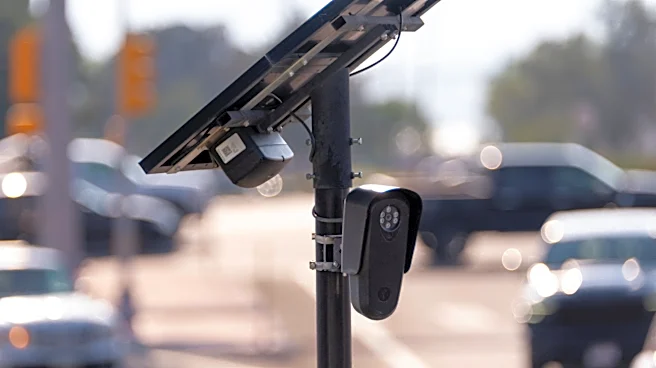
Criticism continues to intensify against the company and its cameras, which automatically take photos and collect data on passing vehicles.
For law enforcement, it's a criminal investigative tool. Many others say the technology feels like mass surveillance that was implemented without public input.
In just the past two weeks in Arizona, law enforcement agencies across the Valley reported that police officers were suspected of misusing the Flock system; agencies were canceling their contracts, and others were rethinking their policies regarding
Flock.
Opposition has not been limited to Arizona, and various websites exist where people can check whether they've been looked up in Flock's database, where Flock cameras are and how people can try to avoid them on trips.
In response to rising pushback, Flock officials announced on Aug. 13 that they were making systemic changes to address community concerns. These include limiting the company's data retention, requiring law enforcement users to adopt Flock's audit tool and making it mandatory for law enforcement to attach a search to an actual criminal investigation. The latter two must be adopted by the end of 2026.
It's unclear if the changes will do anything to quell concerns, as people around the nation have said they want to see the cameras gone.
Flock's position on the websites that share database queries and camera locations is unknown. A spokesperson for the company did not respond to a request for comment.
Here's what to know about the Flock data residents across the nation have compiled.
Has my vehicle been looked up in Flock?
Want to know if a law enforcement official or Flock user has run your plate through Flock's system? Check out: Have I Been Flocked?
Data on the website was obtained from "audit logs" that track searches made in Flock's system, according to the website. It was compiled through public records requests and is updated regularly. Searches on the website are not saved, according to the website.
The dataset is incomplete. Records requests could take months to years to fulfill, requests to certain agencies may not have been made yet, the data received has been heavily redacted, and few agencies make the audit logs available to the public, according to the website.
The website does not include data on whether a Flock ALPR camera has captured a vehicle.
HaveIBeenFlocked.com is funded through donations. Alternative Newsweekly Foundation, a Washington, D.C.-based nonprofit, sponsors the website.
Where are Flock cameras?
DeFlock, a crowdsourcing project, has a map showing where license plate reader cameras are across the nation.
Each dot on the map indicates a camera. On Aug. 17, the Midwest and East Coast appeared to have a higher density of cameras than the western half of the U.S.
There are cameras across Arizona, according to the website. Metro Phoenix and the Tucson area appeared to have more cameras than the rest of the state.
The map mainly shows the locations of Flock cameras, but it also includes other camera brands.
DeFlock also shows the growth of license plate reader cameras since January 2024 and provides a comparative analysis of where cameras exist and how law enforcement agencies disclose and share license plate reader data.
The website is deflock.org. There is a downloadable application.
Can I avoid Flock cameras?
Flock Hopper is another website that shows where cameras are.
But it has another feature. It tells users how many times their vehicle might be captured on a drive and suggests the best alternative for avoiding license plate reader cameras.
To test a route, users enter their destination and select how far away, in feet, they want to be from cameras. The website then provides the difference between the most direct route and the "privacy" route in miles and cameras.
The website is dontgetflocked.com/maps. There is a downloadable application.
Elena Santa Cruz covers the West Valley cities of Glendale, Surprise and Peoria. Reach her at elena.santacruz@arizonarepublic.com or follow her on X @ecsantacruz3.
Like this story? Get more West Valley news straight into your email inbox by signing up for our free weekly West Valley Newsletter, which comes out on Tuesdays.
This article originally appeared on Arizona Republic: Where are Flock cameras? Have my plates been run? Visit these sites