
SANTA CLARA, CA — The Arizona Cardinals made a risky bet this offseason.
They arrived in January after a year in which they set unwanted records for defensive futility. Over the final nine games, they allowed 317 points, the most of any team to end a season since 2011.
“We were going in the wrong direction,” owner Michael Bidwill said. So as usually happens after a 3-14 season, he fired the head coach — Jonathan Gannon, in this case.
But when the Cardinals fired Gannon on Jan. 5, it effectively marked the end of their defensive overhaul.
They did not replace defensive coordinator Nick Rallis, who calls plays on that side of the ball. They did not sign a single defensive free agent to a contract over $6 million per year. And they did not use any
of their top three draft picks on defensive players.
After the third round of the draft, once the scope of his inaction was clear, general manager Monti Ossenfort was asked why he believed the Cardinals' defense could still improve.
“It's a balance of depending on young player development, depending on players getting healthy,” Ossenfort said.
Yet, five months later, the results are difficult to identify.
Despite better health, the Cardinals have not seen improved production from either their front seven or their young secondary — two groups on which Ossenfort has spent a combined eight draft picks inside the first three rounds.
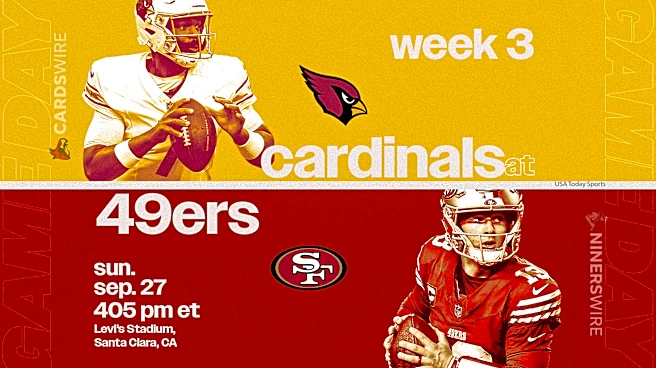
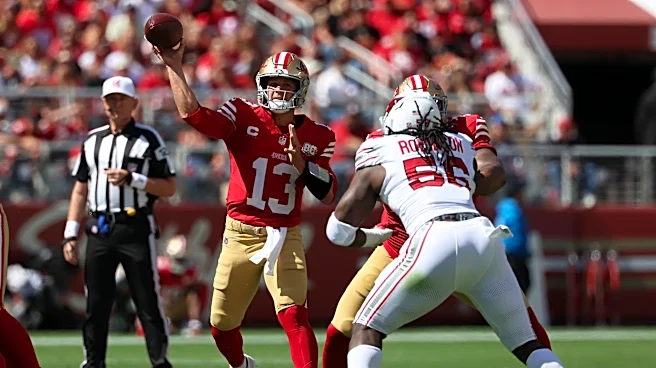
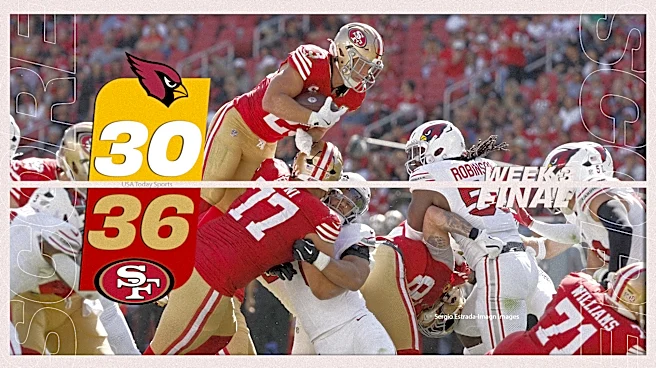
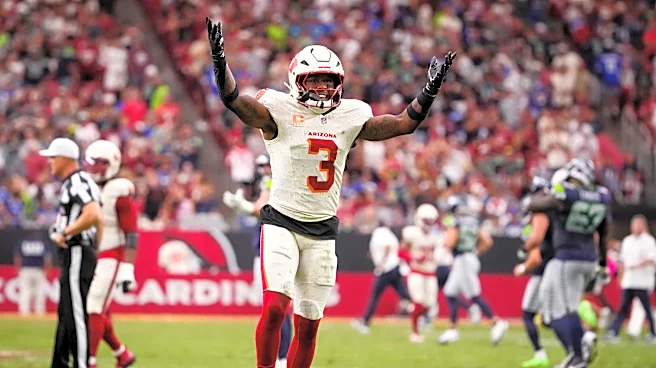
On Sunday, Sept. 27, the Cardinals allowed 36 points to the San Francisco 49ers, squandering a 30-point output from their offense. A week earlier, they allowed 31 points to the Seattle Seahawks, despite the absence of starting quarterback Sam Darnold. That makes it six consecutive games of allowing at least 30 points to NFC West opponents.
As the clock ran out in Santa Clara, it was hard to pick the Cardinals' worst defensive play of the day.
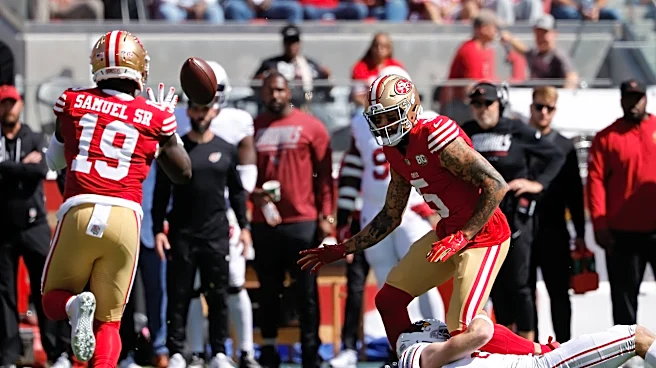
There was the 80-yard hook-and-ladder touchdown on their first drive, when Budda Baker failed to push Deebo Samuel out of bounds at midfield. With Jalen Thompson departed in free agency, Baker no longer has the veteran secondary partner who once enabled him to attack downhill, where he’s at his best.
There was the coverage bust at the end of the first half, which enabled the 49ers to enter field goal range with less than 10 seconds remaining. Since the start of last season, the Cardinals have allowed five scoring drives that began with less than 50 seconds remaining in a half.
“That was on me,” linebacker Mack Wilson Sr. said. “I had a mental error on my part. I'm supposed to stay up with (the receiver) right there, but I kinda got lost a little bit, with it being a 4x1 formation.”
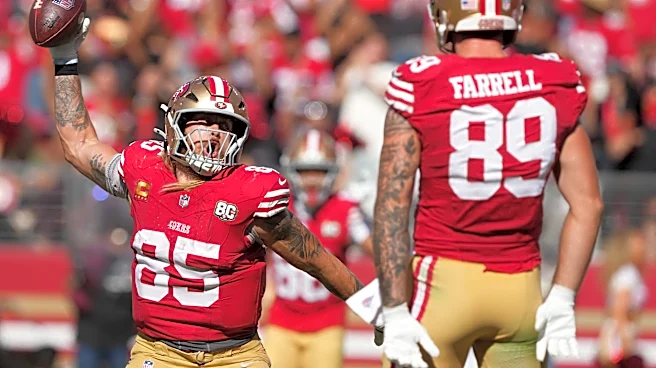
In the fourth quarter, there was the roughing the passer penalty committed by Josh Sweat, who swiped Brock Purdy’s facemask to negate a crucial third-down stop. Two plays later, tight end George Kittle walked into the end zone untouched — after he was matched up with edge rusher Baron Browning.
Rallis’ scheme has often relied on dropping edge rushers into coverage, but that tactic seems to have accelerated this year, as the Cardinals lean into heavy personnel packages. Entering the day, they were using base defense — packages with just four defensive backs — at the league’s second-highest rate. Back in 2024, the Cardinals used base at the 21st-highest rate.
Part of that, LaFleur said, is because of the heavy personnel used by the offenses they’ve faced.
“Just the ability to take some air out of some of the coverages that can happen in some of those penny packages, if you will,” LaFleur said. “Doesn't mean that it'll be the same next week.”
Part of it also may be that the Cardinals need those extra bodies to slow the run, given their personnel limitations up front.
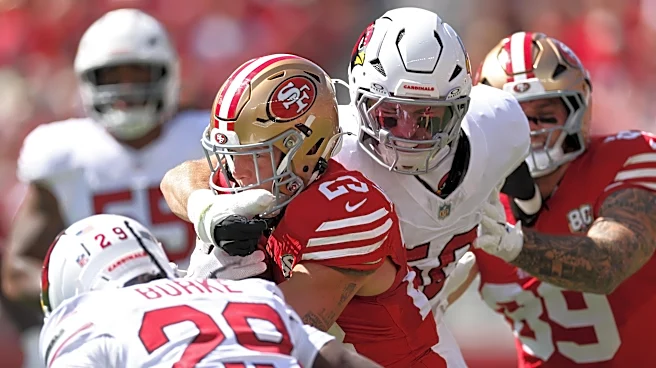
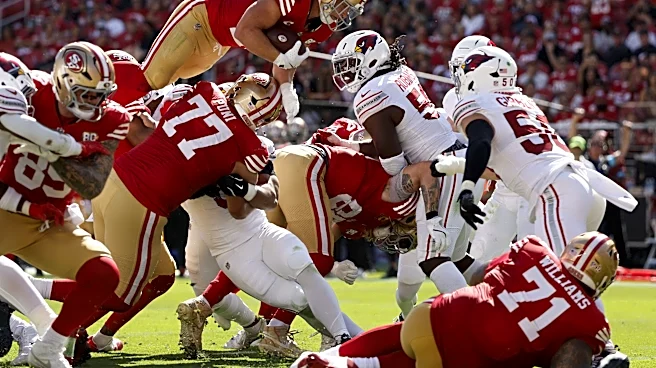
Because on the very next drive — the last meaningful one of the game — they allowed the 49ers to push the pile 12 yards on second-and-10. Two plays later, Purdy evaded the pocket to pick up a second-and-13 with his legs. Those were also strong candidates for their worst defensive play of the day.
But for all the Cardinals’ coverage busts, missed tackles and mental miscues, their biggest issue may be simple.
Per Next Gen Stats, they generated just four pressures on 27 dropbacks. No one had more than a single pressure. Unbothered by the pass rush, Purdy averaged 3.26 seconds to throw, the fifth-most of any quarterback in a game this season.
It’s little surprise, then, that he averaged 11.0 yards per attempt and finished with a 133.8 passer rating.
Entering the season, the Cardinals had two players who profiled as above-average pass rushers: Josh Sweat and Walter Nolen. Combined, they have generated a dismal 3.9% pressure rate this season, as Sweat works back to full health from an unspecified offseason procedure. Last year, that duo was at 13.7%.
The rest of the defensive line, meanwhile, is populated by veterans who have never produced a five-sack season.
In training camp, Ossenfort was asked where the Cardinals could find high-level production on their defensive line, outside of Sweat and Nolen. He did not provide a clear answer.
“High-level production? I know we've got a lot of NFL players up front,” Ossenfort said. “We've got players that have played snaps.”
With Sweat and Nolen both quiet, that weakness has become glaring.
But there’s another element here, too.
In 2024, when the Cardinals defense outpaced expectations, they were defined by their creativity and aggression. That season, they blitzed at a 33.8% clip, the fourth-highest in the NFL. Over the past two years, that number sits at 23.3%, the 27th-highest rate.
“Yeah, I miss blitzing, obviously,” Wilson acknowledged. “But at the end of the day, we play whatever coach calls, and we believe in the plan he puts in every week.”
Back at the podium, LaFleur offered a different tone.
“I like the plans that we've put together,” LaFleur said. “We've just gotta keep providing the clarity and go execute.”
Something, though, isn’t working.
Maybe it’s the personnel. Maybe it’s the game plan.
Maybe it’s doing the same thing as last season and expecting a different result.
This article originally appeared on Arizona Republic: After offseason inaction, Cardinals defense off to familiar start