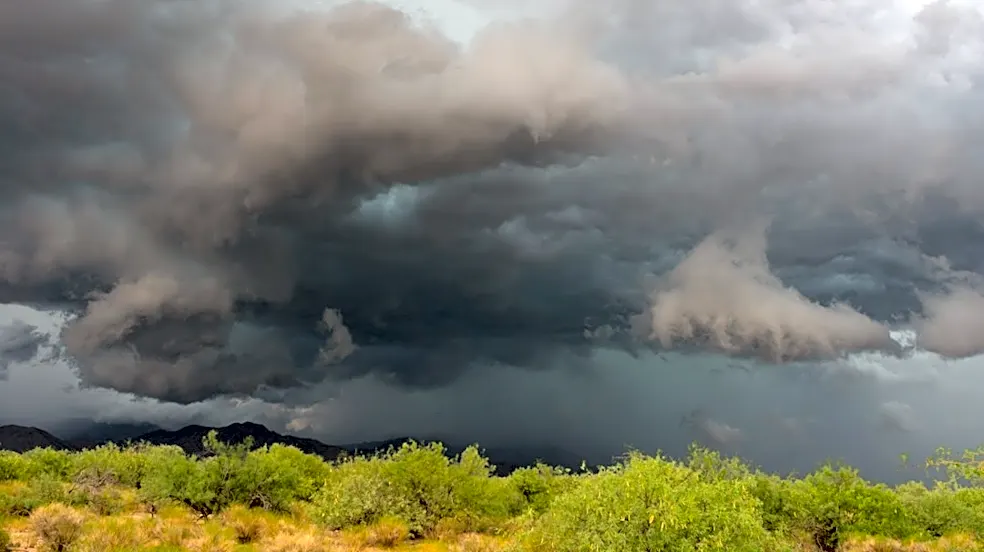






Hopi leaders declared a state of emergency after persistent heavy rainfall and widespread flooding swept through northern Arizona, while the Navajo Nation is also grappling with torrential downpours that have forced schools to let out early, led to closures and evacuations and left residents in need of rescue.
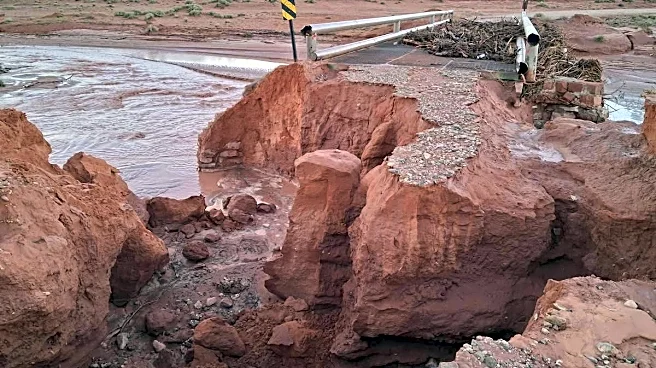
Hopi officials said continued heavy rainfall triggered flash floods, causing significant damage to bridges, roadways, homes, utilities, buildings, other structures and equipment across multiple communities. The storms have also triggered mudslides and rockslides, further threatening infrastructure and public safety.
The village of Lower Moenkopi has issued its own emergency flooding declaration after damage caused by heavy rains within its communities.
Flooding has affected property and livelihoods in Upper Moenkopi, Hotevilla, Bacavi, Old Oraibi, Kykotsmovi, Shungopavi, Mishongnovi, Sipaulovi, Walpi, Sichomovi, Tewa, Keams Canyon and Yu-Weh-Loo Pahki, according to the Hopi tribe.
"The Hopi Tribe encourages all residents to prioritize their safety, remain informed about changing weather conditions, and take necessary precautions to protect their families and property. Please use caution when traveling in areas that may be affected by flooding and follow all posted road warnings and closure notices," said Hopi Chairman Lamar B. Keevama and Vice Chairman Mikah H. Kewanimptewa Sr. in an Oct. 22 advisory.
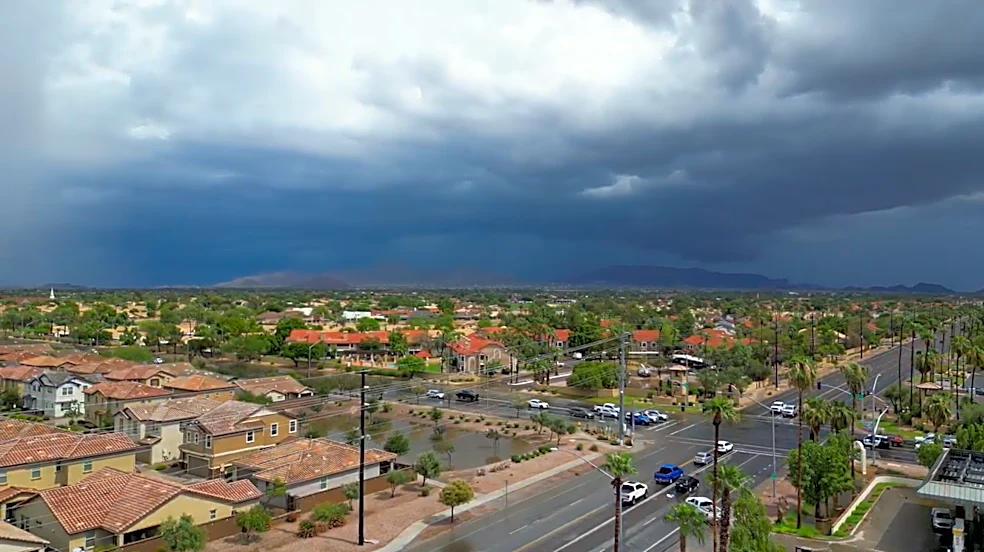
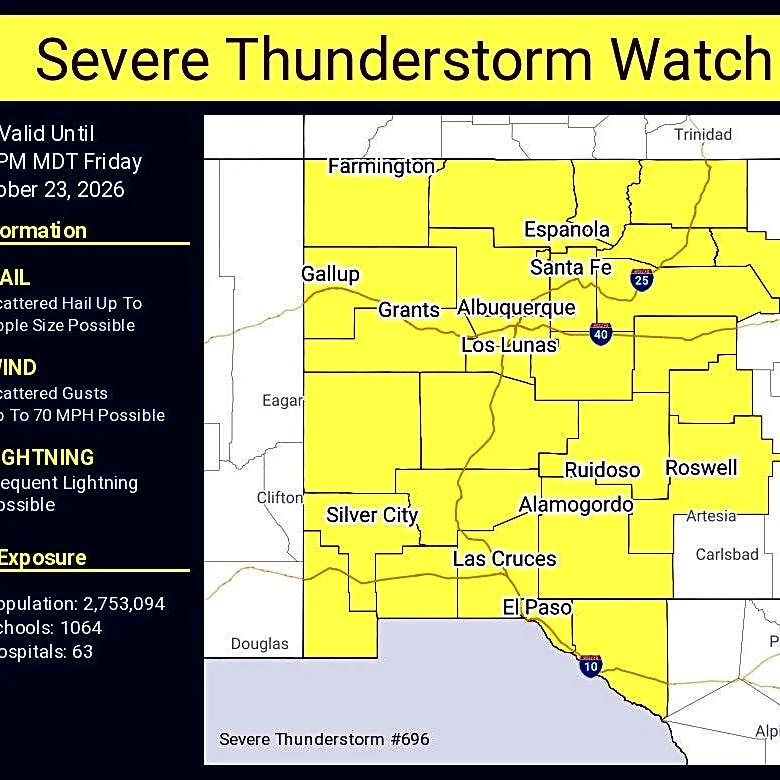
Earlier this week, forecasts showed an increased threat of severe storms across Arizona, with the Storm Prediction Center raising the risk to enhanced Level 3 of 5. A powerful low-pressure system moving inland from California, combined with tropical moisture from the south, created the conditions for supercell thunderstorms.
Floods hit Navajo Nation again
In September, the Navajo Nation experienced flash flooding that claimed thelives of three people. Navajo Nation President Buu Nygren approved an emergency declaration on Sept. 17 to strengthen emergency response, recovery efforts and access to resources for affected communities. The declaration remains in effect.
Under the declaration, affected chapters have access to emergency funds to assist displaced families, provide shelter and address immediate safety needs. The Navajo Department of Transportation is also authorized to coordinate with the Federal Highway Administration to pursue emergency relief assistance for damaged roads and infrastructure.
"We are all aware that flash flooding has hit the Navajo Nation hard over the last 24 hours, leading to dangerous road conditions. First responders are assisting communities the best they can with limited resources and manpower. With that being said, we urge our communities to make safe decisions when heading out on the road," said the Navajo Nation Police.
Schools near the Arizona-Utah state line, such as Bluff Elementary School, Montezuma Creek Elementary School, Whitehorse High School, Monument Valley High School, Tse'Bii'Nidzisgai Elementary School and Navajo Mountain High School were released early on Oct. 22 due to heavy rains and increased flooding.
Chinle schools dismissed students early on Oct. 21 and shifted to online learning Oct. 22–23 due to weather risks. Tuba City Unified School District sent out notification to parents that they would have "mud day" closure on Oct. 23. Window Rock Unified School District scheduled a two-hour delay for Oct. 23, while Ganado schools moved to online learning that day because of weather conditions.
"I recognize that this will be our second consecutive Mud Day, and I want to take a moment to explain the reasoning behind this decision," said Tuba City Scott Nedrow Superintendent for Tuba City Unified School District. "A Mud Day is a weather-related school closure due to road conditions that may make travel unsafe for our students and staff, particularly those traveling on dirt and unpaved roads."
He said that, with the significant moisture, many of their roads can become muddy, difficult to navigate and potentially unsafe for school buses and staff.
"One of the unique challenges we face as a district is the large geographic area we serve," Nedrow said. "While some roads may appear safe and accessible, conditions can be very different just a few miles away, especially in our more rural communities. Every instructional day matters, and I certainly understand the challenges that school closures can create. When conditions present potential risks, I would much rather make a proactive decision than put someone in a situation where they could be injured or unable to travel safely."
Roads closed, rescuers help residents
Seven families, with 30 people in all, were rescured from their flooded homes in the community of Dennehotso, Navajo police said. The rescues were coordinated with the Navajo Department of Emergency Management, Navajo Nation Fire and Rescue Services, Navajo EMS, Navajo DOT and the local chapter house personnel, AZDPS Rangers Air Rescue, and the Kayenta Fire Department.
Emergency management officials deployed the SHERP, an all-terrain specialized rescue vehicle to aide in this emergency response. Navajo Department of Transportation alerted drivers that Dennehotso Loop Road was flooded and water had overtopped the road, as local community members and families try to evacuate from the flooded areas.
Roads in various communities have been closed and motorists were advised to seek other alternate routes due to road washouts and heavy muddy terrain.
The Navajo Parks and Recreation Department closed Monument Valley Navajo Tribal Park and Four Corners Monument for Oct. 21 and 22. Also closed was Lake Powell Navajo Tribal Park, including Antelope Canyon, on Oct. 22 due to flooding from recent storms. Reopening dates for the sites wasn't provided.
Sage Memorial Hospital in Ganado experienced power outages and flooding concerns on Oct. 22, remaining open with limited services. Residents were urged to avoid flooded roads, limit unnecessary travel and check on elders and vulnerable family members.
Tuba City Regional Health Care outpatient clinics announced they will operate on a three-hour delay because of weather-related concerns. Outpatient services were set to open at 11 a.m. on Oct. 23. The weather also interrupted mobile health clinic units that hospitals such as Tsehootsoi Medical Center, in Fort Defiance, and Tuba City Regional Health Care provide for remote patients.
Tribal communities face disproportionate exposure
A study published Sept. 24 by the Urban Institute found that tribes and Indigenous communities face disproportionate exposure to natural hazards, including hurricanes, wildfires and flooding.
Between 2015 and 2024, Indigenous communities in the United States and its territories experienced an estimated $4.4 billion in damages to property and crops from disasters. That’s far more than the recovery grant funding they received over the same period from the Federal Emergency Management Agency, the study found.
"We find that Indigenous communities are more likely to be exposed to disasters. At the same time, they face systemic social and economic challenges, such as under maintained housing stocks and higher rates of chronic health conditions, which make disasters more damaging and more difficult to recover from," the study said.
Although damages in Indigenous communities account for just 1% of total disaster-related losses in the United States, they amount to more than five times the FEMA disaster recovery grants these communities received during the same period. In comparison, damages in non-Indigenous communities were approximately 1.2 times their FEMA recovery grant funding.
It was also found that since 2016, Indigenous communities have faced repeated major disasters, with more than half experiencing two or more presidentially declared disasters.
"About 53 percent of these communities have experienced two or more disasters within a two-year span during the last decade. Back-to-back disasters can compound the difficulties communities face in responding and recovering because their economic and social infrastructures are already destabilized. These challenges underscore the need for communities to be prepared and have the resources to recover quickly," the study said.
Arlyssa D. Becenti covers Indigenous affairs for The Arizona Republic and azcentral.com. Send ideas and tips to arlyssa.becenti@arizonarepublic.com. Follow her on Bluesky at @abecenti.bsky.social.
This article originally appeared on Arizona Republic: Navajo, Hopi communities hit by destructive floods after heavy rains