






I believe “The Social Network” is one of the three best movies of the 21st century.
(“There Will Be Blood” and “Synecdoche, New York” are the other two, and I’ve rewatched “The Social Network” about a million times more than those.)
David Fincher’s masterpiece is about so much more than who founded Facebook. It’s the story of how Mark Zuckerberg gained the internet and lost his soul, and thanks to career-best performances by Jesse Eisenberg and Andrew Garfield, along with Trent Reznor and Atticus Ross’ Oscar-winning soundtrack, it holds up magnificently.
So, of course, has Facebook. At least on the influence and financial fronts. It’s not the company it was in 2010, when Fincher’s film came out. Now it controls the world, or at least parts of it,
and got to this lofty perch with predatory and greedy practices. “The Social Network” was, in other words, ripe for a sequel.
Is 'The Social Reckoning' a sequel to 'The Social Network?'
“The Social Reckoning,” the filmmakers have said, isn’t exactly that. It exists more alongside the first film. Maybe. The good news is that Aaron Sorkin once again writes the screenplay; he won an Oscar for “The Social Network.”
The bad news is that Sorkin also directs.
Too bad. Sorkin is a competent director, but a clunky one. His dialogue trusts the audience to put things together in ways that his direction does not. He’d rather bang you over the head with a frying pan to make his point, when a tap on the shoulder with a finger would have done.
That said, “The Social Reckoning” tells another compelling story, about how whistleblower Frances Haugen (Mikey Madison) worked with Wall Street Journal reporter Jeff Horwitz (Jeremy Allen White) to blow the whistle on Facebook’s, and Zuckerberg’s, practices.
But the magic’s just not there.
Jeremy Strong is good, but 'The Social Reckoning' misses Jesse Eisenberg
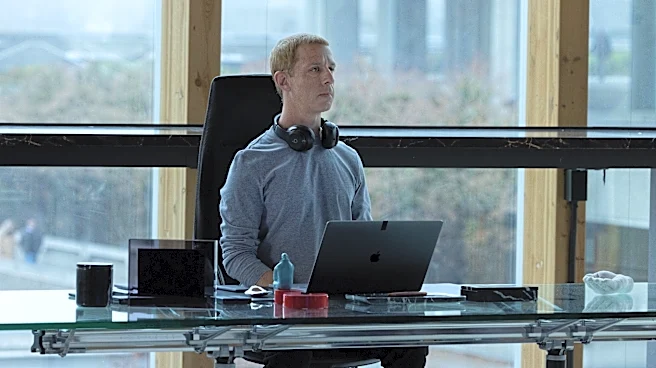
In part, that’s due to Eisenberg’s absence. He declined to return for “The Social Reckoning.” Instead, Jeremy Strong plays Zuckerberg. He’s outstanding in limited screen time. An actor’s actor, he makes Zuckerberg as a character both recognizable and distinctive. Of course, so did Eisenberg. It’s remarkable how two different actors can bring such differing approaches to the same character and still succeed.
Enough about comparisons. Unavoidable as they are, “The Social Reckoning” needs to rise or fall on its own merits. The film begins with a prologue in which a stranded woman waits in the dark for a tow truck. Two police officers arrive to help. Inexplicably, she goes off on them with racist taunts, recording everything on her phone.
Soon, the video is posted on Facebook. Of course it is. We learn that the woman, who was friends with Frances, has become radicalized. But how? And by whom? Frances thinks she knows.
This coincides with Jeff moving to San Francisco. He’s portrayed, more in Sorkin’s writing than in White’s performance, though White doesn’t fight the impression, as a bit of a dope who can’t even use his phone’s GPS, despite having covered politics in D.C. The point, however ham-handedly made, is that he’s an investigative reporter, not a straight tech reporter.
He strikes up a correspondence with Frances, who reluctantly helps him. She has evidence, for instance, that 64% of people who joined extremist groups were sent there by Facebook’s algorithm. That’s just the tip of the iceberg of damning information that shows the company will do anything, including ignoring all of the warning signs of radical groups spreading lies and violent rhetoric, to make a buck.
Meanwhile Zuckerberg spends most of the film in a mock-up hearing room to help him prepare for testifying before Congress. He barely seems human, not because he doesn’t understand normal behavior but because he simply doesn’t care about it. (Eisenberg played some of that, too, but not to this extent.)
While lackeys argue about word choice and tie color, Charlie (Bill Burr), who has endured Zuckerberg’s evidently eternal wrath by writing a critical op-ed, serves as a bald Jiminy Cricket, the conscience everyone else lacks. He is adamant that Facebook fact-check political ads. When Zuckerberg brings up the meager guardrails in place (now gone completely), Charlie scoffs. “You’re like a crossing guard outside a school, but you’re not using your arms,” he says.
Zuckerberg is unmoved. “As long as there’s no risk of imminent harm, they can post whatever they want,” he says. Later, he reveals his true feelings. “You know why we don’t fact-check ads,” Zuckerberg spits at Charlie. “It’s because we don’t have to.”
Well now. That explains a lot. Frances and Jeff continue to work to find more data and to bounce banter back and forth. Their dynamic is strange, as if from another type of film. They often seem to have wandered in from a 1940s screwball comedy. "His Girl Friday," this ain’t.
In a film like “All the President’s Men,” the shoe-leather reporting becomes a thrilling aspect of chasing down the story. Here it’s mostly taking pictures of computer screens with a cellphone. More efficient, no doubt, but decidedly less dramatic.
Sorkin can't rein in his bombastic impulses
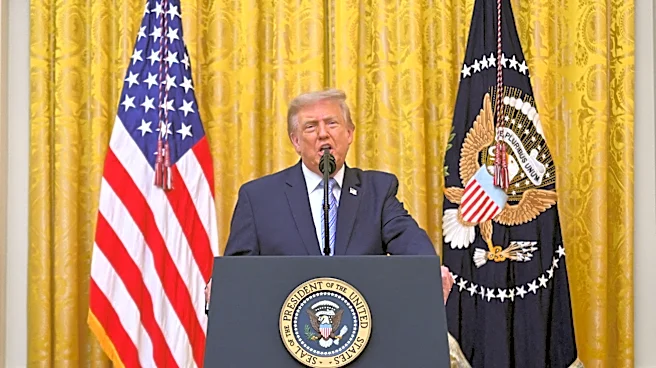
Sorkin jumps back and forth through time, from the preparation for the hearing and the reporting work. A new development is introduced: The attack on the U.S. Capitol on Jan. 6, 2021. Truly bouncing between timelines, Sorkin shows the Facebook brain trust, watching the violence play out live on TV screens, begging Zuckerberg to remove a Donald Trump video message that both tells rioters to go home, but also repeats his lies that the election was stolen from him.
Finally, we see not Zuckerberg testifying before Congress, but Frances, intercut with the violent attacks on the Capitol. It is laughably overdone, with Alexandre Desplat’s score ratcheting up the absurdity. (Desplat has won two Oscars, but the film really misses Reznor and Ross.)
Sorkin clearly needs someone to rein in his most grandiose instincts. It’s a shame, because there is a great story in here somewhere beneath the bombast. Facebook and other social media platforms have hijacked attention and, for some, lives. “The Social Reckoning” wants badly to explain how and, more importantly, why. A story that important doesn’t need to mix in melodrama. It’s a good movie that could have been a great one.
And once this review is published? I’ll do what I always do. In hopes of finding more readers, I’ll post a link to it.
On Facebook.
'The Social Reckoning' 3 stars
Great ★★★★★ Good ★★★★
Fair ★★★ Bad ★★ Bomb ★
Director: Aaron Sorkin.
Cast: Mikey Madison, Jeremy Allen White, Jeremy Strong.
Rating: R for language.
How to watch: In theaters Thursday, Oct. 8.
Reach Goodykoontz at bill.goodykoontz@arizonarepublic.com. Facebook: facebook.com/GoodyOnFilm. Media commentary with a side of snark? Sign up for The Watchlist newsletter with Bill Goodykoontz.
This article originally appeared on Arizona Republic: 'The Social Reckoning' is no 'The Social Network.' Why it fell short