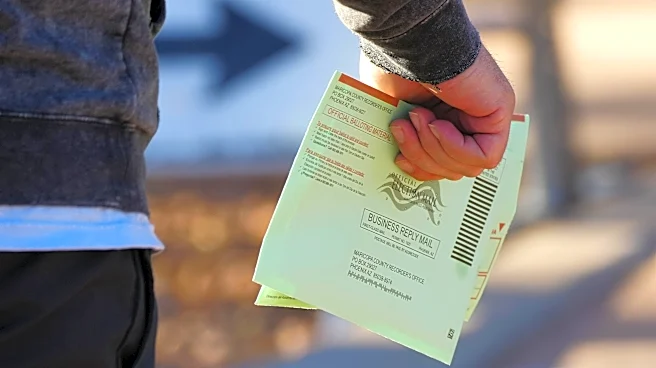





Proposition 144 would require identification to vote by mail in Arizona, but voters are being asked to approve the constitutional amendment before lawmakers determine how it would work.
The proposition was referred to the ballot by Republican lawmakers under the title, “Fast, Accurate, Secure, Transparent Election Results Act,” or “FAST Election Results Act.” It would enshrine several existing election laws in Arizona’s Constitution and require voters to provide government-issued identification before voting in all elections.
But the measure does not specify how voters would show identification, leaving it up to state lawmakers to iron out the details in the next legislative session. Opponents argue that the uncertainty puts the state’s entire
mail-in voting system at risk.
Randy Keating, chair of “No on Prop 144,” calls the measure a “poison pill.”
“This was pushed through in the middle of the night on the last day of session with all this political window dressing to try to, frankly, trick Arizona voters who have enjoyed vote by mail for 35 years,” Keating said.
Alex Kolodin, a Republican state lawmaker who sponsored the measure and is running for secretary of state, has said the measure would mean Arizonans get their election results faster and called the claims it would stop mail-in voting "lies." Kolodin pointed to Proposition 144 as an example of his commitment to election security.
The measure would also require Election Day voters have the option to have their ballots tabulated at their polling location in hopes it would prevent delays in results.
“We have been wrong by failing to give you the election system that you deserve, but that ends today,” Kolodin said in February.
Greg Blackie, deputy director of policy at the Arizona Free Enterprise Club, a conservative advocacy group, advocated for the measure earlier this month in a public debate. He said if the measure passed, Arizona could follow in the footsteps of other states, like Florida and Texas, that already require an ID number to be listed on mail-in ballots.
"I think the Legislature would give a menu of options to voters," Blackie said, noting that lawmakers could change identity verification laws as new technologies are introduced.
Blackie also said state laws against foreign investments in elections were needed to prevent interference in ballot measure campaigns within Arizona.
Arizona already requires voters to show government-issued identification and proof of residency and citizenship when registering to vote. If a voter does not provide adequate proof of citizenship they are only permitted to vote in federal elections, not state or local races. Voters also attest under penalty of perjury that they are citizens when they cast their ballots.
Election officials review voter rolls frequently to confirm only eligible voters are registered.
The measure makes several other additions to the state’s Constitution, including specifying that elections can only be decided by eligible U.S. citizens and foreign nationals cannot spend money to try to influence elections. Those regulations already exist in federal law.
Proposed changes follow years of election fraud claims
The latest ballot measure comes after Republicans have repeated false claims of widespread election fraud both in Arizona and nationally.
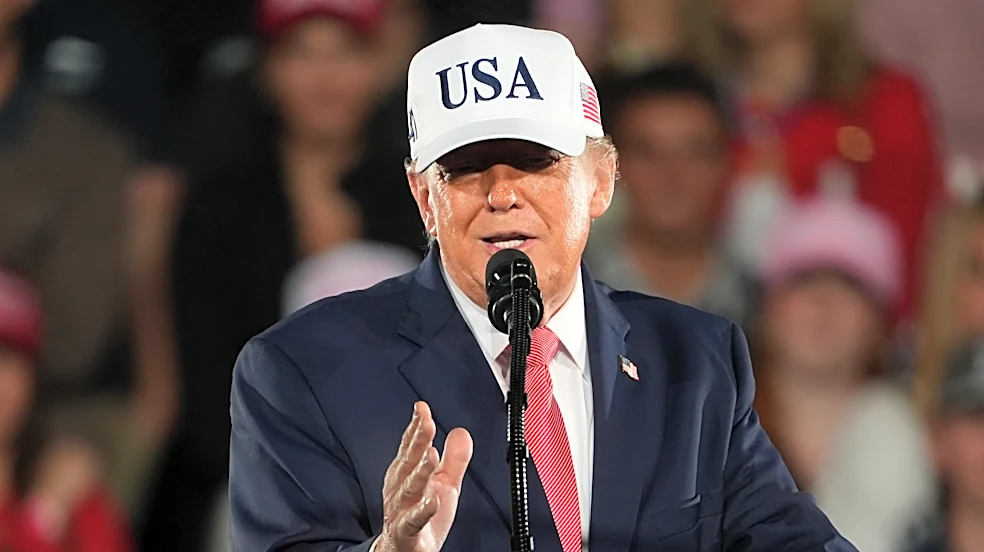
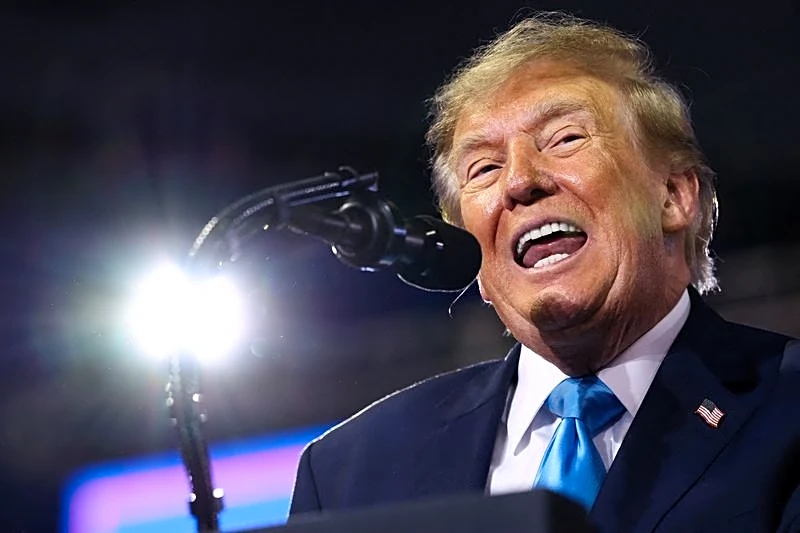
President Donald Trump has been one of the most prolific promoters of those claims. Earlier this year, he said the mail-in voting system was “inherently corrupt.” He’s encouraged Republicans across the country to reel in mail-in voting, even as he continues to vote by mail.
“We’ve seen all over the country where Republican legislators, state legislatures are moving to try to restrict or ban mail-in voting, almost in lock step with unsubstantiated claims of voter fraud,” Keating said.
Keating also expressed concern over the logistics out how rules would be passed. If passed, the measure would take effect at the start of 2028, giving the state Legislature one year to pass laws implementing ID requirements for mail-in voting. It’s unclear if the legislation would need to be signed by the governor to pass.
If lawmakers fail to agree on how to implement the measure, Arizonans wouldn’t have a way to vote by mail in the next election.
Several high-profile Democrats have spoken out against the measure, including Gov. Katie Hobbs and U.S. Sen. Mark Kelly.
“There is a certain segment of our society that feels that if it’s harder for people to vote, they win,” Kelly said at an Oct. 20 news conference against the measure. “They want to remain in power.”
Voting by mail is popular among voters across the political spectrum. In Arizona, roughly eight in 10 voters use it.
Kelly argued certain voters would be hurt more if the measure passes, including seniors and Americans serving in the military who are stationed abroad. He said adding unclear steps to verify their citizenship every year is unnecessary and could discourage them from voting.
A recent investigation by Maricopa County Attorney Rachel Mitchell, a Republican, found that eight noncitizens voted in Arizona elections from 2012 to 2025. No more than three voted in any one same election, meaning the numbers were too small to sway the outcome of an election. Maricopa County has roughly 2.5 million registered voters.
The investigation was conducted after Maricopa County Recorder Justin Heap referred more than 200 names to Mitchell’s office, claiming they were noncitizens who were registered to vote.
The federal government has also increasingly policed states' voter rolls, with the U.S. Department of Justice recently charging 28 noncitizens in California with various voting crimes.
Helen Rummel covers state politics and higher education for The Arizona Republic. Reach her at hrummel@azcentral.com. Follow her on X, formerly Twitter: @helenrummel
This article originally appeared on Arizona Republic: What would Proposition 144 mean for voting by mail in Arizona?