






A southern Arizona sheriff is calling criticism against his department’s response to protests at the U.S.-Mexico border from other Arizona sheriffs politically motivated and inaccurate.
The Arizona Sheriff’s Association issued an open letter Oct. 9, blasting Santa Cruz County Sheriff David Hathaway’s action at the border, claiming that Hathaway’s office declined requests for assistance from federal and state law enforcement involving violence, threats and property damage at the border.
“The right to peaceful protest must be protected, but credible reports of criminal activity demand appropriate law enforcement attention,” the letter, authored by Navajo County Sheriff David Clouse, president of the Arizona Sheriff’s Association, said.
The letter,
released Oct. 9, was issued the same day that construction crews destroyed a platform holding supplies for a protester who had been sitting in a cottonwood tree at the border. She was aiming to halt the destruction of the tree to make way for border wall construction.
The woman eventually climbed down on her own. The protest was part of a monthslong effort to stall border wall construction and protest the destruction of the trees.
The association is comprised of sheriffs from Apache, Cochise, Coconino, Gila, Graham, Greenlee, La Paz, Maricopa, Mohave, Navajo, Pinal, Yavapai and Yuma counties.
In the letter, Clouse said the Arizona Department of Public Safety could exercise its own law enforcement power if a county agency does not respond to a reported offense. The letter claims sheriffs from the association are ready to provide resources and personnel if requested by DPS.
DPS officials did not immediately respond to a request asking if this was a action that was being considered.
In a statement, Hathaway, a Democrat, said the Arizona Sheriff’s Association has been presided over by “activist Republicans,” and that he stopped paying membership dues to the organization after trying to convince it to adopt a neutral political stance.
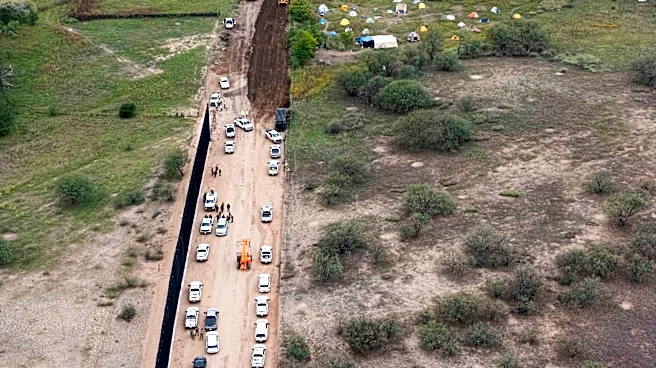
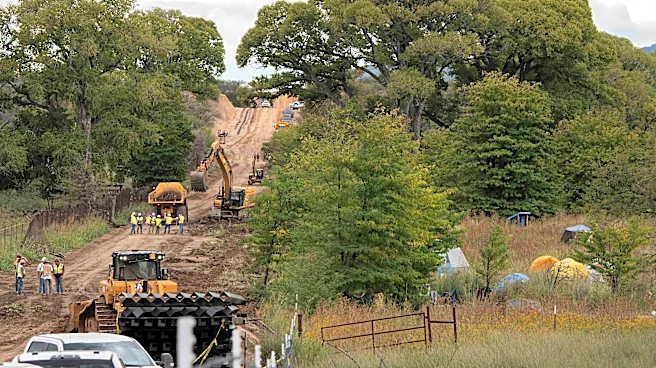
The letter was about ongoing protests in Lochiel, a small border settlement where protesters have been gathered for months. The groups were aiming to stop the destruction of cottonwood trees, estimated to be 150 years old, for construction of the border wall.
In his statement, Hathaway said his office has frequently been called by federal officials or border wall contractors to remove peaceful protesters.
“These calls have been very disingenuous and have involved no threat to federal employees or contractors,” he said.
The Santa Cruz County Sheriff’s Office has 45 sworn officers that cover 1,238 square miles, he said.
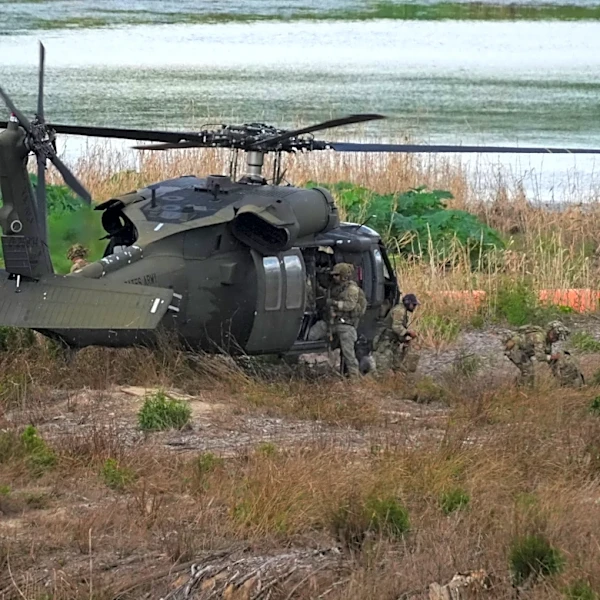
“We are outnumbered 20 to 1 by the federal officers assigned to the county to work the border; not to mention the active-duty military members assigned to the border,” Hathaway said.
Hathaway accused federal law enforcement of trying to shirk the responsibility of border enforcement, which he said has been established at the jurisdiction of the federal government.
“Once we realized that the large contingent of federal officers and contractors in Lochiel were not in danger and that the federal government wanted to avoid their responsibilities regarding this clearly federal issue, we adopted the posture that the thousands of federal officers armed with machine guns, helicopters, drones, and chemical weapons should not pawn off their own border security job on the very small Santa Cruz County Sheriff’s Office by pretending that they are afraid of gentle unarmed folk that are a throwback to the flower children of the Vietnam anti-war movement,” he said.
The only violent encounters were from mask-clad federal officers gassing protesters and dragging them away, Hathaway said.
“I was not about to start a war with CBP by having my armed officers confront the armed federal officers in response to calls from protesters facing an onslaught from an overwhelming army of masked federal officers,” he said. “This was clearly a federal issue requiring federal decisions regarding appropriate action.”
Protests in Lochiel included a camp on private land with the permission of the landowner, according to a news release from the Sonoran Desert Press Office. According to the release, an unnamed protester was sitting in the last cottonwood tree, on the Mexico side of the border, when workers from Fisher Industries, the contractor working on the border wall, destroyed a platform she was using to hold supplies. The protester came down from the tree on her own about 12 hours later.
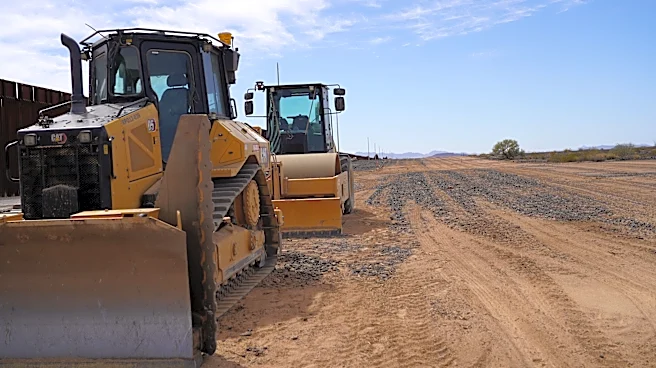
Fisher Industries is one of the largest contractors working on the wall. It is also a sister company to VAI Global Development, which is building the VAI Resort in Glendale.
According to the release, protesters received a total of 36 charges related to the protest, but the tree sitter is the only person still in custody, while 18 people had been detained and released as of Oct. 7.
The Tohono O'odham Nation filed a lawsuit Oct. 5 seeking an injunction to stop the removal and destruction of thousands of saguaros along the path of the border wall.
"Construction of the border wall will not only usurp the sovereign authority of the nation over its lands but result in their permanent devastation," tribal leaders wrote in the suit.
The suit, filed in the U.S. Appeals Court in the District of Columbia, is directed at U.S. Secretary of Homeland Security Markwayne Mullin, Commissioner of U.S. Customs and Border Protection Rodney Scott and Chief of U.S. Border Patrol Rosario Vasquez. Arguments are due from Mullin, Scott and Vasquez by Oct. 15, and the tribe has another week to respond.
Corina Vanek covers development for The Arizona Republic. Reach her at cvanek@arizonarepublic.com. Follow her on X @CorinaVanek.
Have a news tip? Contact The Arizona Republic and azcentral.com at newstips@arizonarepublic.com.
This article originally appeared on Arizona Republic: Arizona sheriffs spar over protests at US-Mexico border wall site