







Fly surges have become a yearly occurrence in Yuma, as soon as warmer temperatures arrive. The fly problem this year created a buzz so loud among neighbors that it moved third-generation citrus farmer Tyler Woodman to start a social media campaign.
"I literally just kind of like was at my wits end. I was standing in my backyard. It was just getting warm enough for my kids to play outside again and the flies were just so bad," Woodman, owner of The Lemon Grove, said. "I was just in disbelief."
The root of the fly infestations is unresolved, but neighbors and early studies point to a landfill, a disposal site for produce packing and a company applying treated sewage sludge on state trust land as the main culprits. State officials have moved to limit
the use of trust lands.
For years, county officials have received multiple complaints about flies and overwhelming odors. They get yearly complaints from neighbors, reports from schools on the Yuma Mesa that must restrict kids from going to the playground, and hear of date growers having issues finding enough people who are willing to work at their farm and processing facility because of the number of flies. Testing has been limited, and the issue is widespread.
For Woodman, the root was clear and pointed to a bigger issue. In April, he recorded a video and posted it on social media. In May, he created a Facebook group that has grown to attract over 5,000 members — "equally fed up," he said. Its purpose: to inform others about the massive imports of Southern California's biosolid waste into Yuma and call for oversight and thorough soil and water testing.
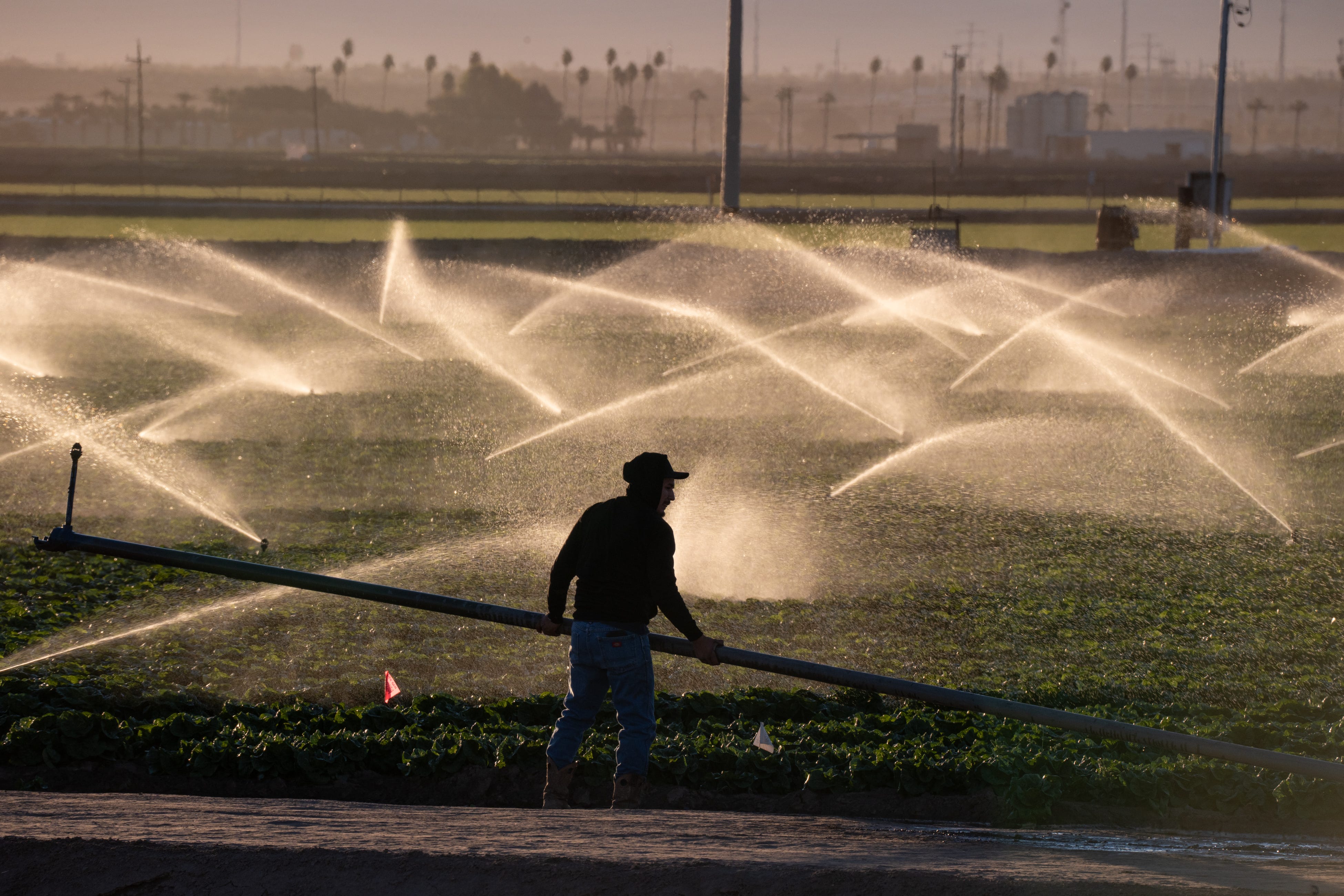
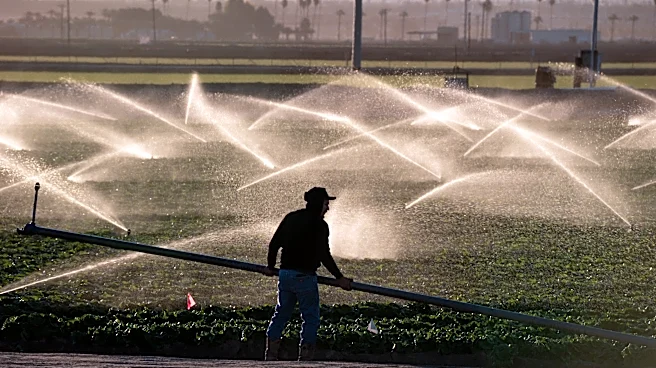
AgTech LLC, a company founded in Arizona, leases state trust land at the intersection of West County 19th Street and South Avenue B since 2002. The business trucks in tons of treated sewage sludge, or biosolids, to spread or inject over thousands of acres. They grow some sudan grass or alfalfa on it.
Critics say the company is acting more as a biosolids disposal business than an agricultural biosolids operation, and that the enterprise is eroding the quality of life and damaging local businesses. Arizona's Attorney General Kris Mayes opened an investigation into the operation and the Arizona State Land Department canceled the company's five leases on Sept. 10.
The company's lease would expire Dec. 11, and the lessee would have 90 days from that date to remove all physical property to the land. They may appeal and request a hearing within 30 days from the decision.
In a public statement, AgTech labeled the state's actions as "unsubstantiated" and a "political game." The company claimed the agency violated due process and said it will appeal. They sued Woodman for defamation.
An 'outlier' in biosolid applications
In 2025, AgTech applied some 69,000 dry metric tons of biosolids on state trust land, according to annual reports sent to Arizona Department of Environmental Quality, or ADEQ, an average of nearly 11 dry tons per acre if spread evenly across the 6,311 acres leased by the company.
The operation's loading rate, Gov. Katie Hobbs' office said, was 20 times larger than the average biosolid operation in Arizona. Over 90% of the biosolids came from Southern California municipal wastewater treatment plants.
Limits on how much biosolids can be placed on a piece of cropland is not a one-size-fits-all. Rates are estimated using soil condition, crop type and other factors.
ADEQ said its regulations "exist specifically to enforce these agronomic limits and prevent over-application." The agency issued two notices of violation to AgTech under this legal authority in 2023 and 2025, following inspection visits. Public records show the company had incomplete or unclear worksheets and calculations to determine biosolid application rates.
The agency issued other five notices of violation to the company since 2014 on different grounds. All compliance conditions have been satisfied and the cases are closed, ADEQ said in a statement to The Republic.Yuma is now at the center of a statewide push to study and redefine the proper use of treated sewage sludge on agricultural fields, and whether Arizona's state trust land should accept biosolids from other states.
"AgTech is really an outlier and not what I would call normal biosolids use," Arizona Department of Agriculture Director Paul Brierley told The Republic, adding that there are dozens of other biosolid applicators in the state.
Applying treated, nutrient-rich biosolids for the production of grains and animal feed is not new or rare, but the situation in Yuma has been "eye-opening," Brierley said. He is part of a seven-person committee, created this year by the Arizona Legislature, that will study and recommend new biosolid application rules.
AgTech is close to farms growing produce and next to a facility processing dates that are meant to be consumed raw, which presents a risk as flies can transport pathogens, he said. A preliminary 2015 study to address concerns of flies and food safety in the area found that flies at the biosolid operation and at the South Yuma County Landfill had a high prevalence of salmonella. A more complete study was not continued.
This year, following community complaints, Yuma County Vector Control inspected AgTech operations. They went to recent biosolid application areas, a truck wash-down area and a septic injection site. They found no larvae in any of the locations and reported that "at this time, there is no evidence of any disease outbreaks linked to the recent surge in fly activity."
The lease cancellation is not connected to violations of environmental law. Arizona's State Land Department said the company defaulted the lease agreements in one of the five property leases. The agency decided not to renew the other four.
AgTech has a scale on-site that used to weigh harvested hay to avoid transporting it out of the property, but seems to be missing documentation for it, said Stuart Kimball, a legal counsel for the company. That was one of the alleged violations.
“The only thing that actually has some legitimate teeth is that we didn't file this paperwork,” he said. The lease agreement, however, requires the agency to raise the concern and give the company 45 days to solve it to avoid being in breach of contract, he added.
“That's not what was done. A decision was made to go out there and take away people's existing property rights as well as their valid business interests without any time to look at the law or the facts,” Kimball told The Republic.
“And that is absolutely problematic for anybody.”

Issue on the 'back burner' for years
The land where AgTech operates today has been used for biosolid applications for nearly half a century. The Arizona-based business was founded in 1976 by Kenny Evans, and later purchased by the Magan family, which runs it from Fresno, Calif.
Over the years, more people have moved to the Yuma Mesa, San Luis and Somerton, and streets neighboring the AgTech operation have become a key interstate route.
Driving behind biosolid-carrying trucks was part of the day-to-day routine for Woodman, who began working in farming in the early 2000s, but he said that in the past 15 years or so, the number of trucks and flies has been increasing. He and other growers have been concerned about AgTech’s operation for a long time, Woodman said. He had never engaged in an issue with this level of activism.
"I'm glad that I could really focus my efforts on something that I hold as a core belief: that Yuma should not be a dumping ground for this stuff," Woodman said. "Or at least, if our town needs to do it, then let's figure it out in a sanitary manner."
A decade ago, the calls to investigate fly infestation and overwhelming smells gained momentum.
In 2015, current Yuma County Supervisors Martin Portes and Lynne Pancrazi hosted large public meetings that lead to the funding of a preliminary study. Back then, Portes was mayor of Somerton and Pancrazi was in the Arizona state Senate.
Studies found that there was an average of 4.1 times more flies around County 19th St than in the other areas. In some spots it was 13.6 times higher, said Elene MacAdam, district manager with the Yuma County Pest Abatement District, at the July town hall where she presented the results.
“We repeated the study again in 2018 to see if the results were the same; it was very similar both years” MacAdam said.
However, most of the flies were not coming directly from the landfill or the biosolid application, but from a solid waste disposal next to AgTech's operation. The "Desert Ridge site," named in the study, disposed of salad and produce waste near the AgTech operation.
The flies are a “three in a row” issue, Pancrazi told The Republic. On top of biosolid waste coming mostly from Southern California, land neighboring AgTech is also being used to dispose of leftover produce and salad waste from packing operations. Then, less than 2 miles east, there is the South Yuma County Landfill.
Yuma County passed an ordinance that requires a special use permit for anybody who is bringing in waste from another state, but it doesn't impact AgTech because, as a biosolid operation growing crops, it's protected under the agricultural exemption, Pancrazi explained.
They've asked for legislation that would give them some control over biosolids coming from out-of-state. At the July town hall, Portes, county supervisor and former Somerton mayor, encouraged residents to call their representatives and inform them about the issue; "We are not the toilet for California," he said.
In December 2025, county supervisors asked the Arizona State Land Department to terminate the AgTech lease citing "persistent nuisances."
"I am concerned about the quality of life for the people that live here. And that means the people that live in San Luis and Somerton, and out on the Mesa, and the kids that go to Orange Grove Elementary School, and the date farmers," Pancrazi said.
She would like to see testing results from the soil and groundwater near the sites, echoing neighbors’ concern about potential PFAS, or “forever chemicals,” contamination. ADEQ has screened for PFAS in biosolids and sludge produced across Arizona, but not on the out-of-state material applied by AgTech.
"So far it has not impacted our agricultural industry as far as our fresh vegetables, our winter crops. I don't want it to come to a point where it does," she said.
Clara Migoya is an agriculture and water reporter for The Arizona Republic. Send comments or tips to clara.migoya@arizonarepublic.com.
This article originally appeared on Arizona Republic: Biosolid use sparks Yuma debate: 'We are not a toilet for California'