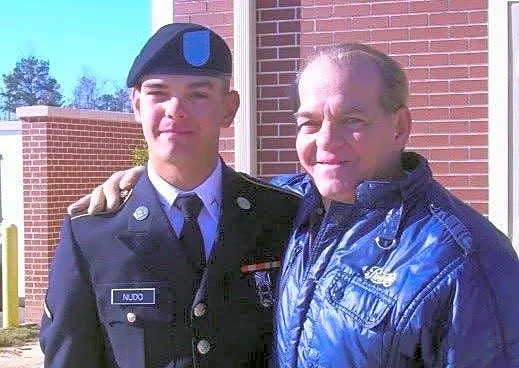






For as long as I can remember, I wanted to follow in my dad's footsteps of service to our nation. He served in the United States Navy. I enlisted in the Army as soon as I graduated from Cactus High School to continue the legacy.
My dad served during the Vietnam War, the effects of which would not be felt until decades later. He served on a ship off the coast and was exposed to Agent Orange. Decades later, he was diagnosed with adenocarcinoma of the lungs associated with herbicide exposure.
His cancer was identified far too late for him to get any treatment or help.
My dad was among those loyal veterans who loved his VA but faced barriers to care on a regular basis. His local VA in Phoenix was ground zero for the scandalous stories of wait-time
manipulation and deaths, and the problem was magnified during COVID-19.
Bureaucratic hoops, canceled appointments and long wait times meant my dad went months without check-ups and follow-ups. In that time, the cancer he didn't know he had spread. He died 45 days after diagnosis.
Watching what happened to my dad was especially hard for me as a veteran myself. A generation of post-9/11 war veterans is entering the VA system, which already can’t handle its caseload.
Unfortunately, problems at the VA are a feature of the system. Though you can find incredible, patriotic people who serve veterans well, they can’t make up for the bloated bureaucracy.
The VA system and administration are built to put the department at the center of care rather than veterans. The appointment system is rigid and doesn't allow for self-scheduling. Appointments are often canceled without notice, leaving veterans to go to the back of the line.
Community care, a program that allows veterans waiting too long or driving too far to a VA facility to seek care in the community, is an option for some, but records obtained through FOIA requests have raised concerns that VA scheduling guidance discouraged some veterans from using community care. Records and oversight reports also have raised concerns that VA scheduling practices affected whether veterans qualified for community care.
This is not the care veterans were promised when swearing an oath to this country. But luckily, Congress is taking steps to make it right.
The Take Care of America's Veterans Act uniquely serves veterans and families through a bipartisan combination of more than 60 bills that make care and benefits easier to access.
I'm most excited about provisions that expand access to lifesaving mental health treatment programs, establish self-scheduling options for care and protect community care access by codifying eligibility rules.
The reforms in this bill address precisely the barriers my dad encountered: scheduling delays and the VA putting its thumb on the scale of community care access.
As with any legislation, this one has its opponents. Some on social media believe this bill should be derailed because of reforms that update the VA disability rating schedule for compensating service-connected tinnitus or sleep apnea, a system that hasn’t been updated since 1945. Critics argue the bill would reduce some future compensation for tinnitus and sleep apnea claims. Supporters counter that existing ratings would be protected and that future claims would remain compensable under revised criteria.
All current veterans' existing ratings for these service-connected conditions will be honored, and both will remain compensable in future claims, with ratings reflecting modern medical advancements and treatments.
This bill has bipartisan support, as well as the support of 23 veterans organizations. A survey from Mission Roll Call shows 71 percent of veterans back the bill.
My dad died waiting for the VA system to catch up with his needs. I don't want to see more children bury a parent under the same conditions. Nor do I want my generation of veterans to go into their care knowing that, at best, they are going to struggle to get what they earned.
Lawmakers should put veterans first and pass the Take Care of America's Veterans Act without delay.
Michael Nudo is legislative liaison for Concerned Veterans for America, an Army veteran who was born and raised in Arizona.
This article originally appeared on Arizona Republic: My dad was failed by the VA. Congress can fix that | Opinion