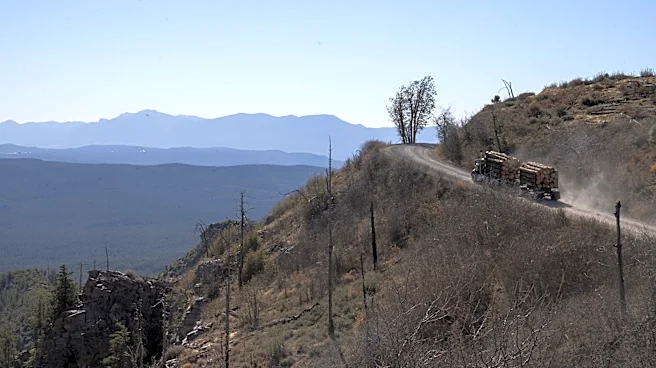

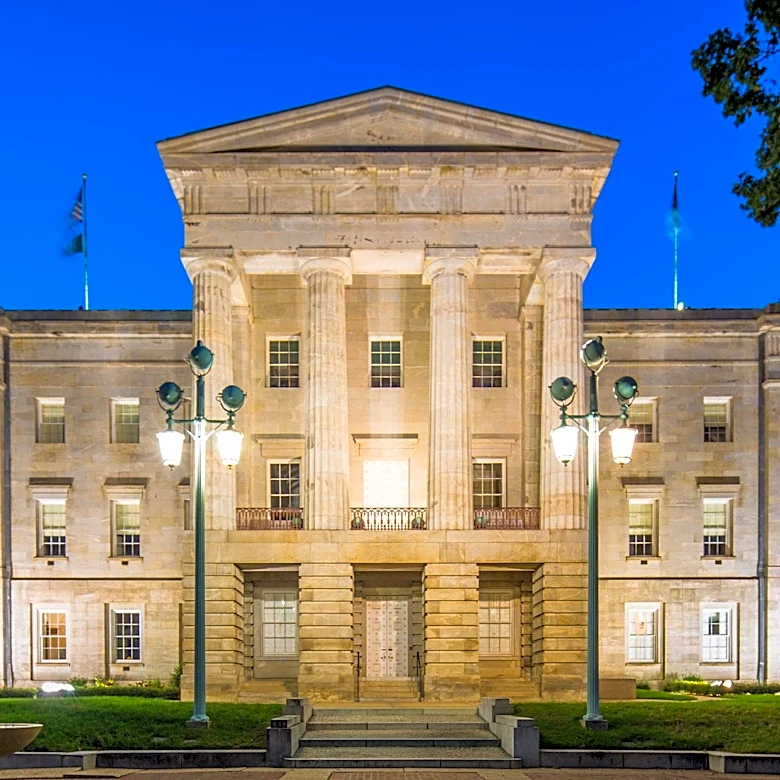







The U.S. Forest Service acknowledged that its plan to roll back protections on 45 million acres of national forest land could impact endangered species, water supplies and wildlife habitat across Arizona and the Southwest.
The agency filed a proposal on Aug. 18 to rescind the “roadless rule,” which set aside over 60 million acres of forests and grasslands within national forests as roadless areas. A final environmental review was released a day later. The move comes a year after the U.S. Department of Agriculture, the Forest Service's parent agency, shared its intent to rescind the rule.
The plan raised alarm among conservationists who have warned that repealing the rule could infringe on some of the least developed land in the country.
"The government's
own scientists found that repealing the roadless rule could harm hundreds of species already at risk of extinction, decrease the quality of drinking water in Western communities, cost rural communities millions of tourism dollars, and grow the Forest Service's already-massive road maintenance backlog,” said Kate Groetzinger, the communications director of the Center for Western Priorities, a conservation advocacy organization.
But Trump administration officials claim that it will improve forest management, especially for wildfire prevention.
“Active forest management is not an option. It’s essential,” said Forest Service Chief Tom Schultz in a statement on Aug. 18. “Acting now, thoughtfully and decisively, is the best way to restore the balance, reduce wildfire risk, and secure the long-term health of our forests and neighboring communities.”
The Forest Service’s plan says that cutting access roads into the protected forest areas will allow land managers to do more fire prevention work and provide new opportunities for minerals and energy use. But it also notes that “management opportunities would be modest and localized,” and that any improvements in efficiency would be “incremental and limited” by costs, funding and a $6.9 billion backlog on current maintenance for roads and bridges in national forests.
Arizona has 1,174,000 acres of roadless areas that could be affected by the new plan.
Meanwhile, on Aug. 21, the Forest Service announced plans to amend another rule to expand national forest access for cars and other motorized vehicles.
How the rule change could affect habitat
In both new Forest Service proposals, officials suggest the changes would help the agency better manage its lands, but conservationists argue that the plans could subject forests to more human degradation — and potentially more wildfires.
Under the Forest Service’s new proposal, a preliminary biological assessment found that it “is likely to adversely affect” 327 threatened or endangered species.
“Building roads into these last intact forests fragments them,” said Taylor McKinnon, the Southwest director of the Center for Biological Diversity. Roadless areas are an important refuge for imperiled wildlife such as Mexican spotted owls and jaguars in Arizona, he said.
The rule also helps protect the water resources that many Western states rely on, environmentalists say. Road construction can disturb natural hydrology, Groetzinger said.
The Forest Service’s plan notes that rescinding the roadless rule would increase soil erosion and sediment pollution for about 24 million Americans. In the Southwest, the repeal could affect 739 water intake locations and nearly 2 million people, according to the plan.
Wildfires also affect the watersheds that sustain humans and wildlife across the country. Both proposals would increase human use of new and existing roads, despite the agency’s own acknowledgement that road construction and human use increase the risk of human-caused wildfires, according to the roadless rule revision.
“Road density is linked to human-caused wildfires, and as the density of roads increases so does the probability, number, and frequency of wildfire ignitions,” the agency noted. But, it said, not all new roads built under the proposal would be open to the public.
Humans cause 85% of all wildfires, and 78% of human-caused fires in national forests start within half a mile of a road, according to an analysis by Trout Unlimited, a conservation organization.
Groetzinger said the Trump administration is using wildfire mitigation as a guise for subsidizing the timber industry.
Last August, the agency announced its intent to rescind the roadless rule, calling it “an impediment to responsible forest management,” just two months after President Donald Trump issued an emergency executive order urging public land management agencies to ramp up timber production.
After Trump took office, the Forest Service faced staffing shortages and budget cuts. Nearly 6,000 employees left the agency. About 4,500 held firefighting jobs. In 2025, the agency treated 35% less acreage than it did in 2024, according to a Center for Western Priorities analysis. Fuels reduction across the country shrunk by 1.5 million acres, a 40% decrease. Prescribed burning also dropped by 44%, according to a report on NPR.
Fuel reduction and prescribed burns are important tools for mitigating fire risk, especially as climate change makes many regions more fire prone. The existing rule does allow for fuels reduction and tree thinning in places like Arizona’s ponderosa pine forests, McKinnon said.
Sarah Henry covers environmental issues for The Arizona Republic and azcentral. Send tips or questions to sarah.henry@arizonarepublic.com.
Environmental coverage on azcentral.com and in The Arizona Republic is supported by a grant from the Nina Mason Pulliam Charitable Trust.
Follow The Republic environmental reporting team at environment.azcentral.com and @azcenvironment on Facebook and Instagram.
This article originally appeared on Arizona Republic: Trump 'roadless rule' repeal has environmental costs, feds acknowledge