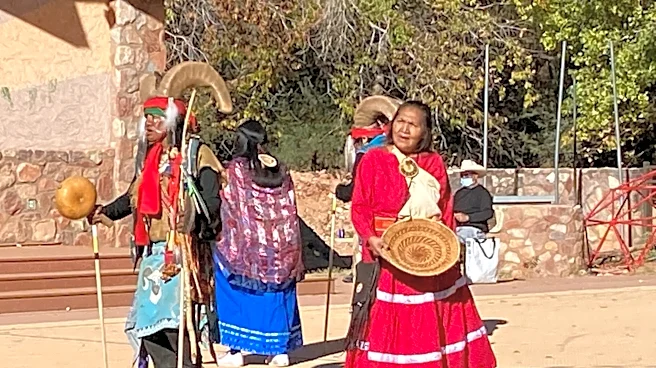







After four years of planning, engineering and community review, the Havasupai Tribe broke ground July 31 for construction of a long-awaited, and long-needed, broadband system that will bring the West's most remote tribal community closer to the world.
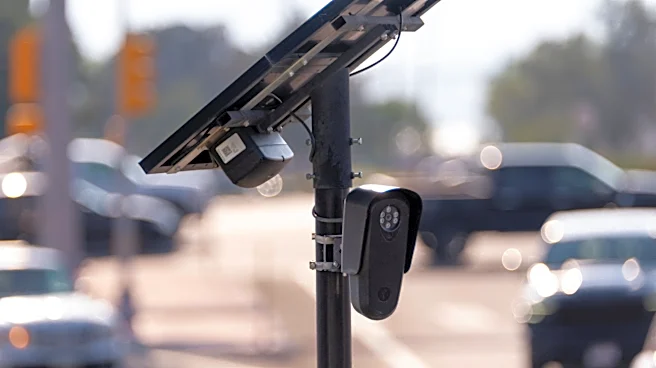
The Tribal Council wielded shovels to formally begin the first of three phases. The first phase: deploy a broadband in-canyon emergency system.
The second and third phases will expand broadband internet for education, health care and emergency communications to more than 100 families, more than 30 agencies and a tribal business in and around Supai.
The service will enable homes and businesses to have Wi-Fi and will upgrade the tribe’s service from soon-to-be obsolete 3G service to 5G, which will also
improve communications.
The project was authorized and funded by the National Telecommunications and Information Administration, which administers the Tribal Broadband Connectivity Program. Margaret Gutierrez, a division chief with the Telecommunications and Information Administration, said the groundbreaking ceremony represented a milestone in the tribe's broadband journey.
The Arizona Republic attended a tribal council meeting in December 2022 when the Telecommunications and Information Administration and the tribe met in Supai to formalize the deal.
Planning the system and obtaining the funding and licensing took nearly eight years. Tribal member Ophelia Watahomigie-Corliss, Havasupai's broadband connectivity program director, led the effort and was present to see the beginning of the final push to bring her community closer to the world.
Bringing the world to Supai
Havasupai Chairwoman Melinda Yaiva said the groundbreaking marks “an important step forward for the Havasupai Tribe and for the future generations of Havasupai. Broadband is more than technology; it is a pathway to education, health care, public safety, economic opportunity and cultural revitalization."
The tribe partnered with American Indian Media Concepts, a nonprofit that provides technical advisory and implementation support for public-sector and tribal infrastructure projects to shepherd the project to fruition.
"Reaching this milestone has required years of collaboration among tribal leadership, the National Telecommunications and Information Administration, consultants, contractors and countless individuals committed to the success of this project," said nonprofit President Adam Geisler, a member of the La Jolla Band of Luiseño Indians.
Havasupai leaders also acknowledged the assistance and support of the U.S. Bureau of Indian Affairs, tribal members and officials, and bipartisan support from Congress to ensure the broadband project moved forward.
"The Tribal Broadband Connectivity Program represents years of bipartisan leadership in Congress, sustained federal investment, and continued advocacy on behalf of Tribal Nations to ensure communities across Indian Country have access to modern broadband infrastructure," the council said.
Council members thanked current and former members of Congress, including U.S. Sens. Mark Kelly and Ruben Gallego, both D-Arizona, and Rep. Eli Crane, R-Arizona, for their support.
The project is expected to be completed in 2027.
"While there is still important work, ahead, breaking ground on the first phase of construction is an exciting milestone for sovereignty and our community," Watahomigie-Corliss said.
Debra Krol reports on Indigenous communities at the confluence of climate, culture and commerce in Arizona and the Intermountain West. Reach Krol at debra.krol@azcentral.com. Follow her on X, formerly known as Twitter, @debkrol and on Bluesky at @debkrol.bsky.social.
This article originally appeared on Arizona Republic: Havasupai Tribe will finally get broadband internet in Canyon homes