






Thirty-eight years before an Arizona State University hockey player collapsed during an outdoor workout in Tempe, a 14-year-old collapsed at the end of his first football practice in north Phoenix.
Abduul Reed died early the next morning. His death certificate attributed his death to dehydration brought on by exercising in extreme heat. His mother sued the Paradise Valley Unified School District, and a jury found the district mostly at fault.
Many questions in Reed's case have surfaced again in the 2026 case of Matthew Mayich: whether water reached every player, whether the athlete had time to adjust to the heat and who was qualified to run the workout.
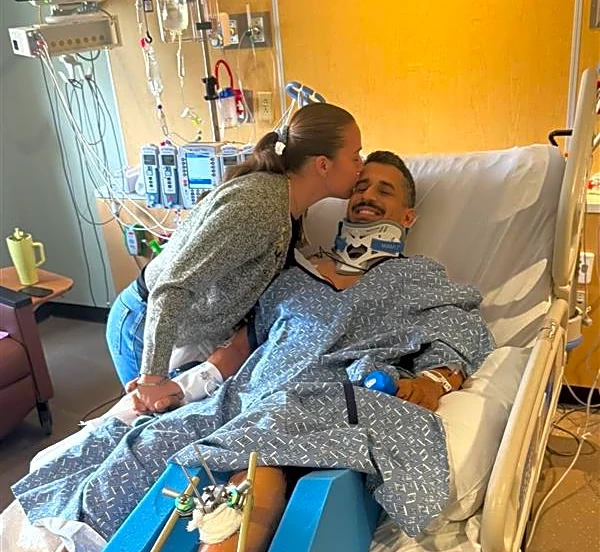
Mayich, 21, remains on life support at Barrow Neurological Institute after collapsing Aug. 20
during an outdoor workout led by an ex-Green Beret. His family's attorney said he suffered exertional heatstroke and has no chance of recovery.
Nine days after Mayich's collapse, two high school runners were hospitalized with symptoms of heat-related illness during a cross-country meet in Chandler. A week later, a University of Iowa marching band member collapsed at a home football game. He died Sept. 8 after suffering heatstroke and cardiac arrest, The Gazette in Cedar Rapids reported.
Recent emergencies, death at school sporting events
Summer heat does not stop everyday activities, which include sports. A Chandler Fire Department crew on medical standby at a high school cross-country meet at Tumbleweed Park called for more help about 9:25 a.m. Aug. 29. The crew had found multiple people who needed treatment, Assistant Fire Chief Scott Chapman said.
Two runners were taken to a hospital with symptoms of heat-related illness, Chapman said. Two other runners and an adult were treated at the scene and released.
Chandler was under an extreme heat warning that day. It was 100 degrees when the crew called for help, according to the National Weather Service.
In Iowa City, Derek Phillips, the mellophone section leader in the Hawkeye Marching Band, collapsed in the heat during Iowa's Sept. 5 home game against Northern Illinois at Kinnick Stadium, his family said on social media.
He suffered sudden cardiac arrest, and his family later removed him from life support, saying the damage to his brain was too severe. He died Sept. 8, The Gazette reported.
It was 95 degrees in Iowa City that day with heat indexes above 100, the newspaper reported. During the game, the university announced the band would skip its halftime performance because of the heat.
A football player’s death changed Arizona practice rules
Abduul Reed, 14, a sophomore, joined Shadow Mountain High School's junior varsity football team for practice on Sept. 2, 1988. Teammates had practiced since Aug. 15, but it was Reed's first practice with the team, coach Ken Sievers told The Arizona Republic at the time.
Practice began at 3 p.m., when the official temperature was 104 degrees, The Republic reported in 1992. Richard Treon, Reed's mother's attorney, said in court papers that Reed had just returned from California and had not taken part in preconditioning practices.
Reed collapsed about 5:15 p.m. while the team ran wind sprints, according to Sievers and a district spokeswoman.
"Practice was basically over," Sievers said. "When I looked up when the team was running toward me, he was on the ground."
Reed was pronounced dead at Phoenix Children's Hospital about 2 a.m. the next day.
Days later, The Republic reported that Sievers, who worked for the district as an equipment manager, was not a certified teacher. Arizona Interscholastic Association bylaws at the time said high school teams should be coached only by certificated teachers. District spokeswoman Carolyn Hoffman said Sievers could coach, because he was not the head coach.
Before Reed's death, Shadow Mountain did not provide water on the field and required players to bring their own, The Republic reported during the 1992 trial to determine who was responsible for Reed's death. Reed had not brought any.
Reed's mother, identified in court coverage as Bernice Reed-Davis, sued the district. Her lawsuit blamed her son's death on school officials' failure to provide water during the workout.
Warren Brown, an attorney for the district, argued that Reed had played football as a freshman and knew the policy. He asked jurors who was responsible if Reed “simply chose” not to drink water available from other players.
On March 4, 1992, an eight-member jury assessed $1 million in damages but found Reed 15% at fault, reducing the award against the district to $850,000.
After the verdict, Judge Lawrence Anderson told jurors that because of the news coverage, “you perhaps saved other athletes’ lives in this country.”
“It (money) really doesn’t ease the pain, but I’m glad the message is out,” Reed’s mother told reporters.
Mayich’s collapse
Mayich, a sophomore defenseman from Stoney Creek, Ontario, transferred to ASU from Clarkson University.
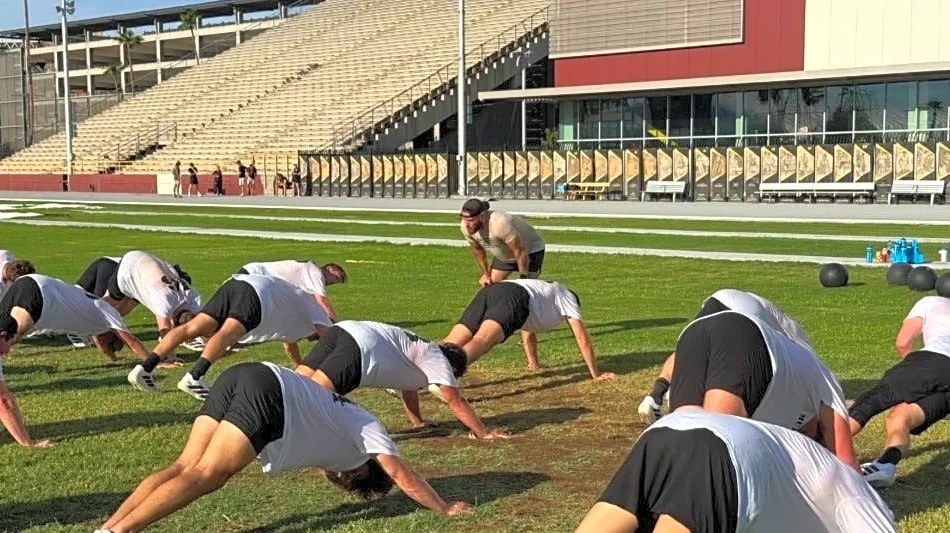
The Aug. 20 workout, on the first day of fall 2026 classes, was the first session of a planned three-day program. It was led by Tim Ziesel, an ex-Green Beret who head coach Greg Powers invited to work with the team as a volunteer.
A preliminary ASU report released Sept. 22 found the coaching staff did not submit a required training plan for review. It also confirmed Ziesel had not gone through the university's vetting process for outside consultants. All three hockey coaches and the team's athletic trainer attended the workout, according to the report.
ASU's heat-illness policy calls for athletes to adjust to the heat over seven to 14 days. Mayich arrived from Canada on Aug. 12 and took part in three earlier workouts that each included about 15 minutes outdoors, the report said.
It was 87 degrees with 49% humidity at 7:51 a.m., according to weather data in the report.
ASU's timeline of the events said Powers called a water break about 20 minutes into the workout. It does not say whether Mayich drank any water.
Seven players dispute that account. In a Sept. 28 letter to ASU President Michael Crow, they said the only water break came 35 to 45 minutes into the workout and lasted seconds. They also said Mayich got no water.
The players said the workout lasted 75 minutes, about 30 minutes longer than ASU acknowledged, and continued after two players vomited. They remain anonymous because they fear retaliation, their attorney, Timothy Casey, said.
Ziesel's attorney, Buddy Rake, said the workout was not extreme and that Ziesel left before Mayich collapsed. He rated it "a five or six out of 10" on a conditioning scale.
Mayich stumbled, dropped a medicine ball and fell during a final run shortly before 8:30 a.m., according to ASU's timeline.
ASU's policy names immediate cold-water immersion as the first choice for treating heat illness. A trainer instead used iced towels and cool water, the report said. She called 911 when his condition worsened and had players move him into the shade, according to the report.
The report did not determine what caused Mayich's collapse or name anyone responsible. Robert Carey, the family's attorney, called it a "whitewash."
On Oct. 2, the university hired former Arizona Supreme Court Chief Justice Scott Bales to lead an independent review of the incident due by early December.
ASU police are investigating separately and will send their findings to the Maricopa County Attorney's Office for review. County Attorney Rachel Mitchell declined the family's request to open her own investigation.
ASU placed Powers on paid administrative leave Sept. 30.
The university officially parted ways with Powers on Oct. 15, with Colorado Avalanche assistant Dave Hakstol named the next head coach.
ASU also reassigned hockey athletic trainer Amanda Doyle to another sport, university officials confirmed Oct. 5. Trainers are reassigned regularly, university spokesperson Jay Thorne said. Whether Doyle’s move was voluntary was unclear.
Republic reporter Robert Anglen contributed to this article.
This article originally appeared on Arizona Republic: Matthew Mayich isn't Arizona's first heat case. Here's why