




Phoenix residents could see their water bills rise as the state braces for Colorado River water supply cuts starting next year.
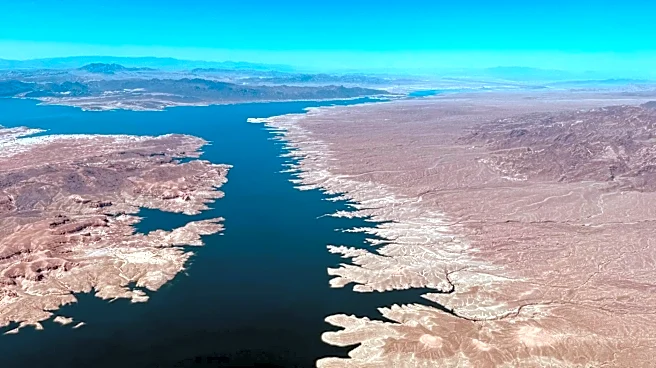
On a day Lake Mead's water levels fell to the lowest since 1937, Phoenix is weighing whether to issue a water warning to deal with the ongoing drought while it and other Valley communities wait on the federal government to finalize its plans
to curb Arizona’s use of the shrinking riverThat could prompt drought surcharges on ratepayers’ monthly bills, according to Phoenix’s Water Services Department. How much those increases cost has yet to be determined. As part of that effort, residents would be encouraged to conserve water in exchange for financial incentives.
Under the new federal framework, the river’s Lower Basin
states — Arizona, California and Nevada — are expected to see cuts of up to 3 million acre-feet of water annually.
An acre-foot of water is enough to sustain three Phoenix homes for one year on average, the city said.
In Phoenix, local water service officials are expecting drastic cuts to the city’s share of the drought-stricken river, which would largely impact how much water it’s able to continue storing underground for future use.
Water officials and local leaders like Mayor Kate Gallego have stressed that Phoenix has spent decades preparing for the looming cuts.
Such endeavors include conservation measures, including setting aside hundreds of thousands of acre-feet of water into reserves. It also includes investments in infrastructure and alternate sources.
While Phoenix has a diverse water supply and an ability to tap into additional resources, Gallego noted that none is as “cost-effective as the Colorado River,” which supplies nearly half of the city’s drinking water.
“Almost every Western community right now is looking at the higher costs for water,” she said, when asked to expound on what the cuts might mean for customers’ water bills.
Even before the federal plan was announced, Gallego added, communities were seeing increased cost pressures on their water systems.
“Losing a chunk of our Colorado River supply is a difficult decision from our federal government when people care so much about affordability,” she said. “It’s going to be a challenging time.”
What do the cuts mean for Phoenix?
Nearly 60% of Phoenix’s drinking water comes from the Salt and Verde rivers, according to the city. The rest, about 40%, is delivered through the Central Arizona Project, or CAP — the 336-mile canal system that provides the river’s water to major Arizona communities.
That’s about 120,000 to 130,000 acre-feet of water, according to Water Resources Management Adviser Max Wilson.
He said the city is expecting to lose about 20% to 30% of its yearly allocation from the Colorado River.
Phoenix's water customers shouldn't expect to face a water shortage from their taps, though, city officials stressed. Instead, they noted, the city will draw more water from its groundwater supplies to make up for the shortage from the surface water.
“There likely will be little to no water available for additional storage underground,” Wilson said. “In fact, we will likely be in the beginning stages of recovering some of our previously stored water to be able to meet demands.”
How will this affect Phoenix residents' water bills?
Under Phoenix’s Drought Management Plan, the city is at a Stage 1 Water Alert, which includes a public education program to help residents understand the impacts of the ongoing drought and the importance of voluntarily conserving water.
Amid the federal plan, Phoenix’s Water Services Department and city leadership are considering whether to move to the Stage 2 Water Warning.
Doing so would trigger more public education on conservation measures and financial incentives to curb water use. It could also allow the Water Services director to impose water-use reduction regulations, including a drought surcharge.
In an email, water officials stressed that a Stage 2 declaration doesn’t automatically mean surcharges are imposed.
“If a surcharge were determined to be necessary, it would be designed to encourage conservation, particularly discretionary water use, and to support drought response needs such as customer assistance, conservation programs, enforcement, revenue stabilization or supply augmentation,” Community Education & Outreach Program Manager Michael Gertzman stated.
What did the federal government decide?
On July 31, the U.S. Department of the Interior issued a 10-year management plan and environmental impact statement to address water shortages along the Colorado River. It’s planning to release additional details in the coming days.
The plan calls for voluntary reductions by Colorado, Wyoming, New Mexico and Utah. Arizona, California and Nevada are expected to take the brunt of the cuts, which are deeper than expected.
Officials across Arizona have commented that other states that rely on the Colorado River are not tasked with sharing the burden equitably.
Arizona is expected to be hit the hardest because the Central Arizona Project has a relatively low legal priority based on a condition in the 1968 congressional approval over the river’s use.
Shawn Raymundo covers Phoenix and Scottsdale. Reach him at sraymundo@gannett.com or follow him on X @ShawnzyTsunami.
This article originally appeared on Arizona Republic: As Colorado River shrinks, Phoenix considers raising water rates