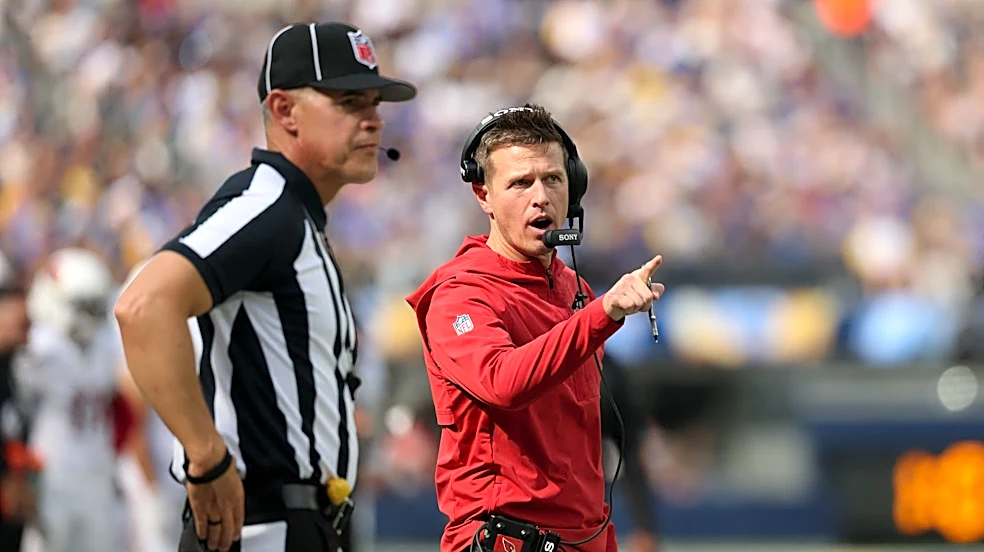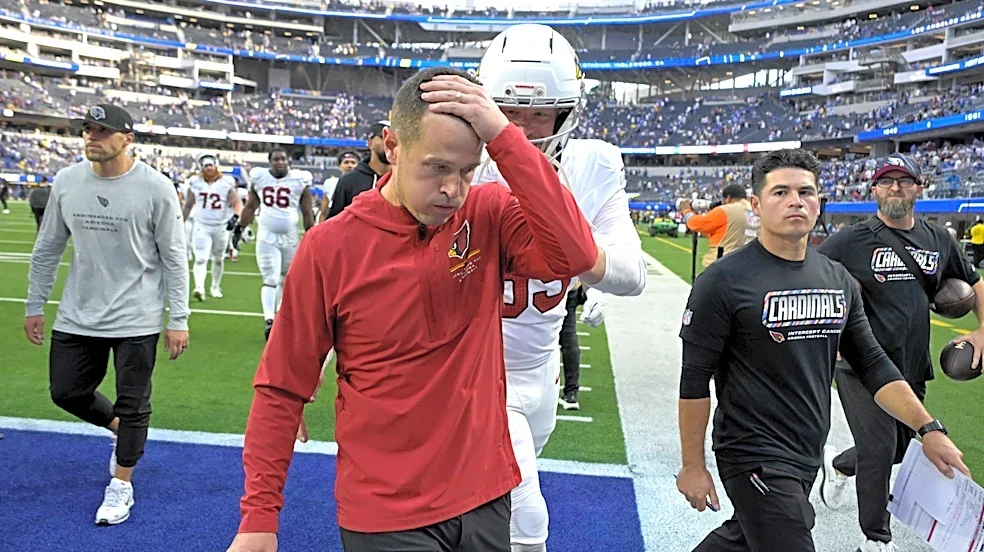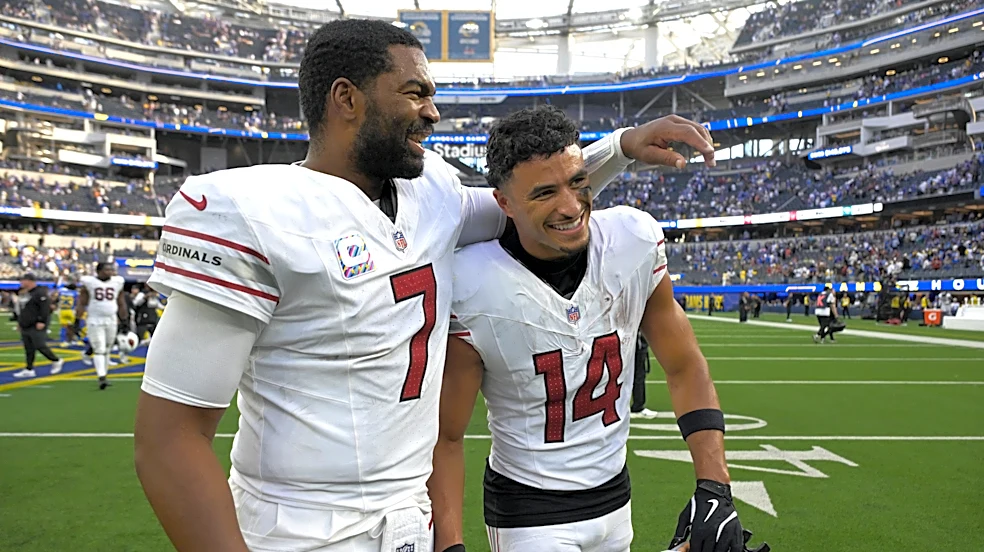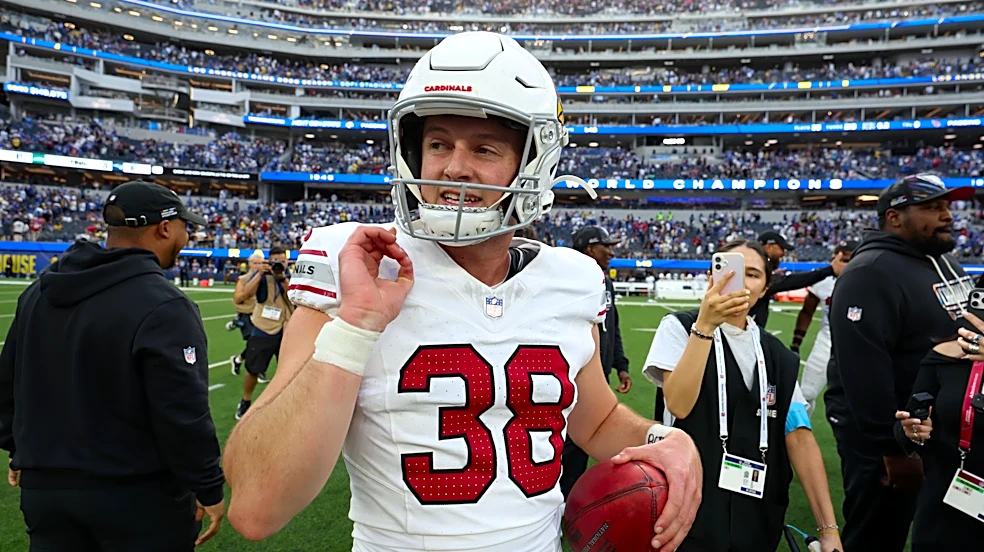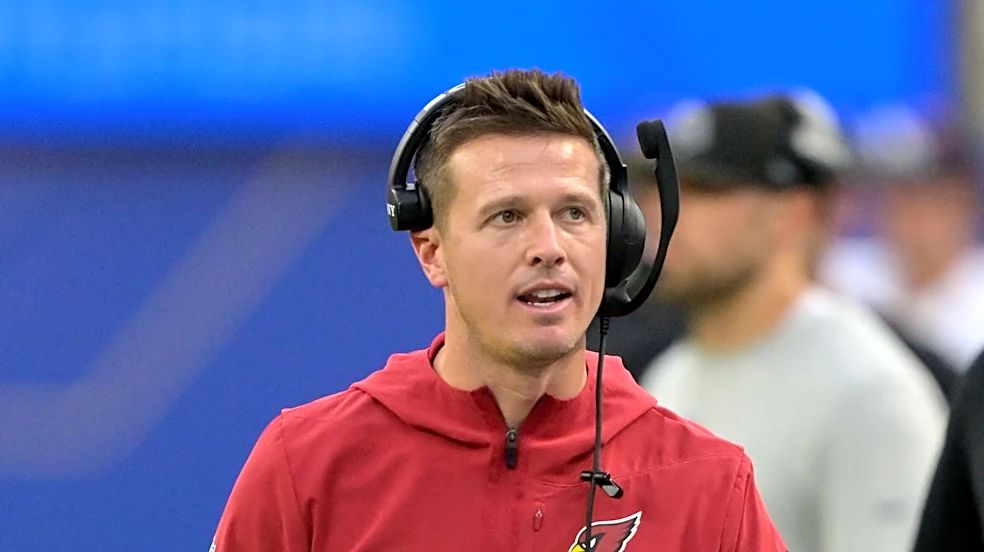


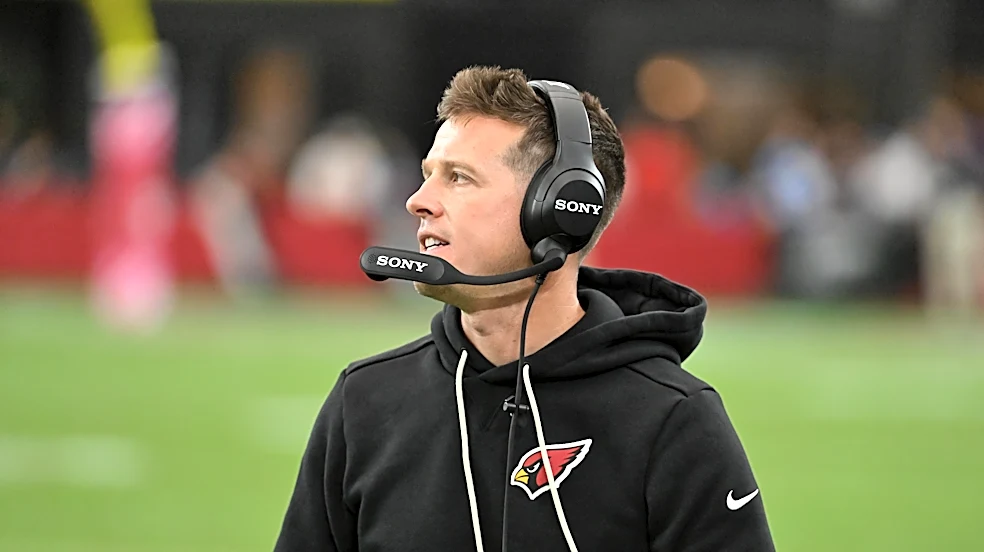

In his first season as a head coach, Mike LaFleur is facing a stacked deck.
He has a flawed quarterback, Jacoby Brissett, who is struggling to progress through his reads and who lacks the ability to create off-schedule. He has an offensive line that was porous even before two starters landed on injured reserve. He has a cadre of limited wide receivers behind Michael Wilson.
And he’s competing in the toughest division in football.
Last week, against the Detroit Lions, LaFleur couldn’t overcome those hurdles. The Cardinals’ 45-21 loss, LaFleur said, “was a total failure, starting with me.” Peppered with man coverage, his play calls provided few answers.
A week later, LaFleur responded.
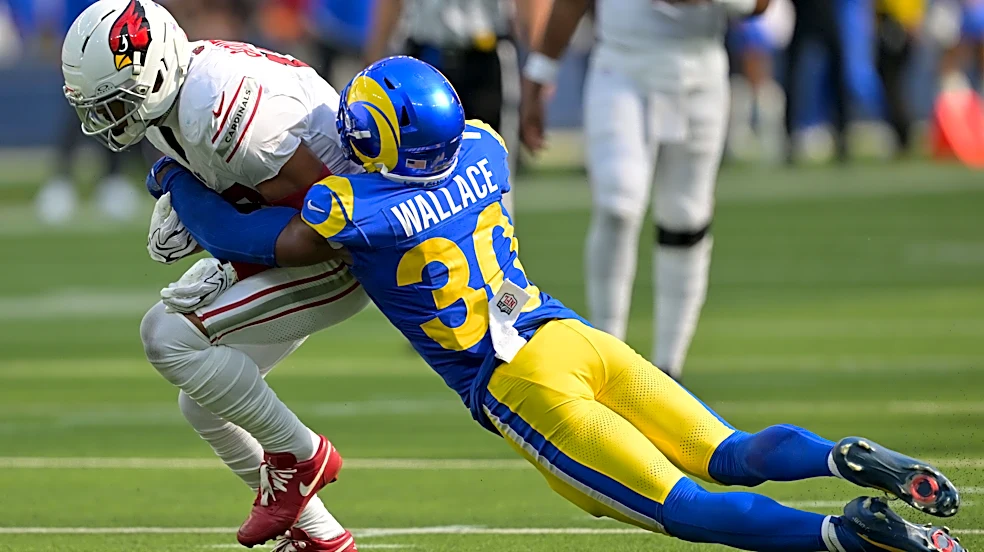
Yes, the Cardinals’ 18-16 win started with their defense. But their offense,
despite its red-zone struggles, made the win possible. The Cardinals scored on six of 10 drives, producing their second most efficient game of the year, by both yards per play and success rate.
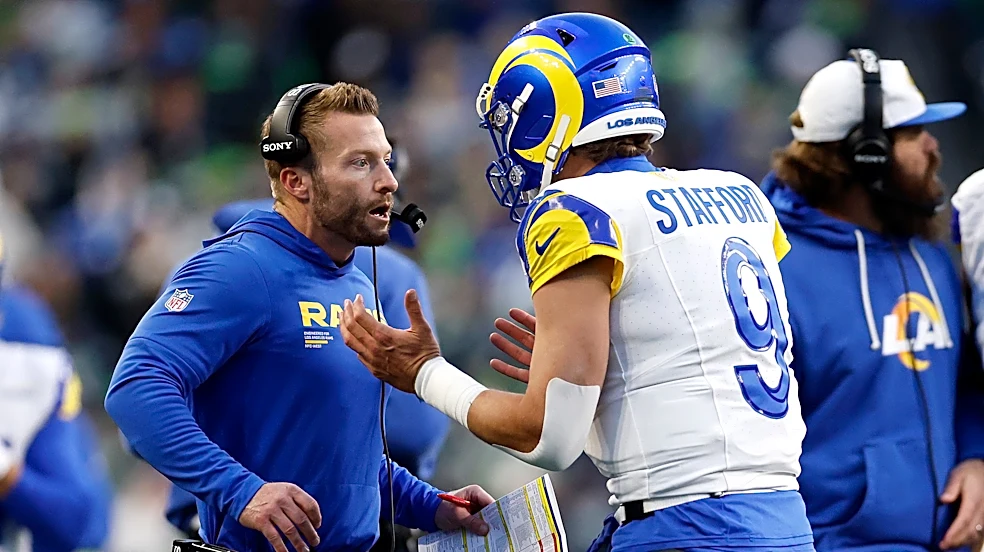
Against a Rams team with talent advantages all over the field, that was a testament to LaFleur’s ability as a playcaller.
LaFleur creates advantages with motion
The Rams, somewhat surprisingly, did not lean into man coverage, which had caused the Cardinals so many problems in their previous two games. Still, LaFleur had to find ways to create beneficial matchups against their zone looks.
He did that in part by using motion at a season-high 77.1% rate. The Cardinals have struggled when using motion this year, averaging the second-fewest yards on those plays. But the Rams defense has been exploitable on those plays, and LaFleur took advantage.
— Theo Mackie film (@theomackie_film) October 20, 2026
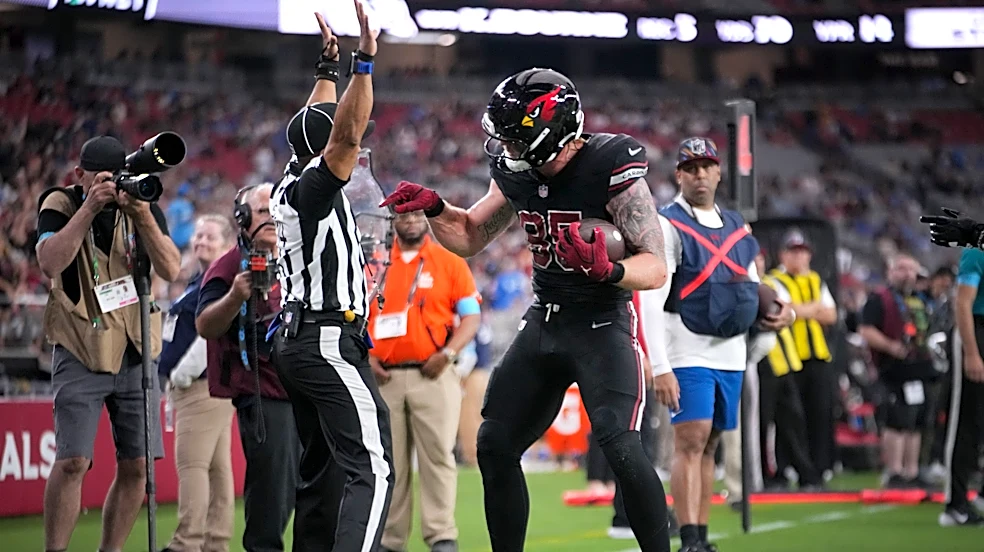
On the Cardinals’ first explosive play of the game, LaFleur used a simple pre-snap shift, motioning Kendrick Bourne outside of Trey McBride. The Rams should have redistributed their responsibilities accordingly, but their middle linebacker had his eyes on the backfield and never saw the shift.
So instead of having a double team on McBride, the Rams inadvertently had a double team on Bourne while McBride ran free over the middle of the field. The Cardinals will take that every time, and it went for 26 yards after McBride broke one tackle.
— Theo Mackie film (@theomackie_film) October 20, 2026
On another big play — this time a 12-yard pass to Wilson in the third quarter — LaFleur used motion to exploit the Rams defensive plan.
The Cardinals wanted to get to Wilson on that play, as he ran an in-breaker underneath the safety. The problem: There was a linebacker in the way.
That’s where the motion came in.
The Cardinals likely knew that the Rams wouldn’t blitz a linebacker from McBride’s side of the field. That would create too much space for the All-Pro tight end. So LaFleur originally aligned McBride and Wilson to the same side, before motioning McBride across the formation. With McBride now on the other side of the field, the linebacker to Wilson’s side was free to blitz — vacating the same space that Wilson was running into.
The blitz got home, but it didn’t matter. The Cardinals had their solution.
“We motion for a reason,” LaFleur said. “We don’t just motion to motion. And sometimes the reason is to change up a look or give our guys leverages and advantages.”
Cardinals find an answer in run game
The Cardinals' run game has mostly been putrid this year. Their offensive line has struggled to pick up its assignments, often leaving second-level defenders unblocked. Even when they do get hands on defenders, they rarely move them out of the way.
The result: a run game that averages 3.7 yards per carry (24th) and 0.7 yards before contact (31st).
But in recent weeks, LaFleur has at least found one successful changeup. The Cardinals have averaged 7.6 yards per carry on pin-and-pull runs, including Bam Knight’s 31-yard rush against the Rams — their longest run play of the season.
— Theo Mackie film (@theomackie_film) October 20, 2026
With McBride and Isaac Seumalo pinning the Rams' defensive linemen to the inside, the Cardinals got Jayden Williams and Hjalte Froholdt into space, taking advantage of their athleticism. Both Williams and Froholdt moved second-level defenders out of the picture, clearing an open lane for Knight’s run.
To some extent, that play relied on the element of surprise. Knight’s run was so successful in part because the Rams were blitzing up the middle, freeing space to the perimeter. Plus, it requires tight ends to block defensive tackles and edge rushers. That matchup typically only works if the defenders don’t know what’s coming.
As a result, no team has run more than 17 pin-and-pulls this season (the Cardinals have run 12). It’s a changeup, by design.
But while the Cardinals struggle to get the core pieces of their run game going, it’s encouraging that LaFleur has found one partial solution.
“You want to get good at something,” LaFleur said. “I don’t believe in doing every run scheme. What are you actually good at? But I do think it’s been a good changeup for us based off some of the other stuff we want to do in the run game.”
That’s a credit to LaFleur’s willingness to try different ideas. He hadn’t been on an offense that leaned into this run scheme since 2019, with San Francisco. But the Cardinals had used it in recent years under Drew Petzing and Justin Frye, their holdover offensive line coach.
So together, LaFleur and his assistants used their experience to conjure one answer for a sputtering run game.
Man coverage issues continue
While this game was a step forward for the Cardinals offense, it’s worth noting that their struggles continued against man coverage. On eight dropbacks against man, Brissett was 3 of 8 for 22 yards and an interception.
This, just a few days after LaFleur said that he needed to “scheme some stuff up a lot better to help our guys” with man coverage. On the surface, that’s discouraging.
LaFleur, though, did find better answers in this game — the Cardinals just didn’t convert.
— Theo Mackie film (@theomackie_film) October 20, 2026
Take Brissett’s interception, for example.
LaFleur criticized himself for the play call, saying that he was “killing himself” for “going to the same play too often.” And the Cardinals do use McBride on a lot of quick outs, which is what the Rams cornerback undercut for his interception.
But the responsibility is also on the quarterback to recognize that tight coverage.
And if Brissett had worked to the back side of his progression, he would have seen Jalen Brooks motioning outside, then using the cornerback’s momentum against him to create space on a crossing route. That was an effective man-beating route — Brissett just didn’t see it.
More than any play design issues, execution was the Cardinals’ problem against man coverage. On third and goal from the 3-yard line, Brissett sailed a throw to Bourne, who had space toward the pylon. And on a pair of third downs in the fourth quarter, Brooks and Bourne dropped potential first-down conversions.
Those miscues fall on the players, not the coaching staff. And they speak to the limitations of the Cardinals roster.
Finding a way to navigate those limitations — for at least one week — was an encouraging sign for LaFleur and his coaching staff.
This article originally appeared on Arizona Republic: Why Cardinals win over Rams showed exciting progress from Mike LaFleur