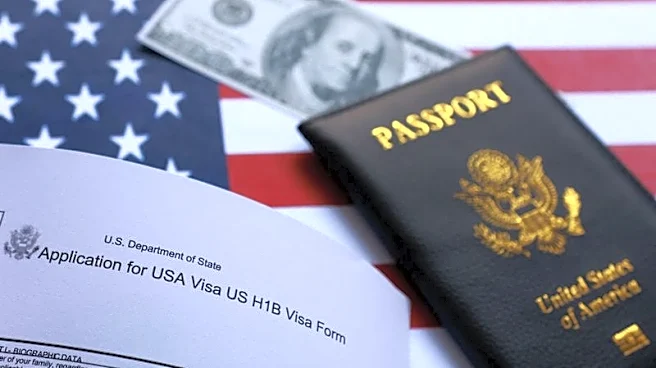




The United States Department of Justice is challenging a 2022 voter-approved law that allows undocumented students who attend and graduate from Arizona high schools to pay in-state college tuition instead of more costly out-of-state tuition.
In a lawsuit filed Aug. 27, the DOJ argues the Arizona law is unconstitutional because it discriminates against U.S. citizens from other states and encourages illegal immigration.
The United States Department of Justice also filed lawsuits against three other states that allow undocumented Dreamers to pay in-state tuition: New Mexico, Oregon and Washington. The DOJ has now sued a total of 21 states challenging laws that allow undocumented students to pay in-state tuition.
The lawsuits are part of the Trump
administration's efforts to sharply reduce both illegal and legal immigration.
"Over 30 years ago, Congress made clear that states cannot put illegal aliens before our nation's own citizens," Associate Attorney General Stanley E. Woodward, Jr. said in a statement announcing the lawsuits against Arizona and the three other states.
The lawsuit challenging Arizona's law, known on the statewide ballot as Proposition 308, argues the law rewards undocumented students by making them eligible to pay in-state tuition while U.S. citizens from other states are not eligible to pay in-state tuition in Arizona.
"Prop. 308 constitutes blatant unequal treatment favoring illegal aliens over U.S. citizens," the lawsuit states. "Worse, such preferential treatment is squarely prohibited and preempted by federal law," which mandates that undocumented immigrants can't receive postsecondary education benefits unless U.S. citizens are eligible for the same benefits.
The Justice Department's lawsuit estimated more than 3,600 undocumented immigrants per year could qualify for in-state tuition under Arizona's law, citing figures from Arizona Center for Investigative Reporting.
In fall 2025, at least 720 undocumented students received in-state tuition, including 432 at Arizona State University. Given the roughly $24,000 difference in in-state versus out-of-state tuition at ASU, undocumented students have received $10.5 million in reduced tuition, the DOJ lawsuit says.
Arizona Attorney General Kris Mayes, a Democrat, is reviewing the DOJ lawsuit, spokesperson Richie Taylor said. Mayes issued an opinion last year defending the law, which was approved in 2022 by 51% of voters.
The law is tied to whether a student attended and graduated from an Arizona high school, not their residency, so it does not violate federal law, the opinion said.
The Arizona Latino Legislative Caucus, a group of state lawmakers that support Latino communities, condemned the DOJ lawsuit. Voters approved the law because allowing undocumented students who attended Arizona schools to further their education through in-state college tuition benefits the state, the caucus said in a written statement.
"These students have attended our schools, learned alongside their Arizona peers, graduated from our high schools, and developed skills and talents that can contribute to our state’s economy. When those same students are willing to invest in their own higher education, Arizona should recognize that as an investment in our communities, not treat it as a reason to push them away," the caucus said.
The DOJ lawsuit is attempting to stop undocumented Dreamers from accessing Arizona's public colleges and universities against the will of Arizona voters, said Reyna Montoya, founder and CEO of Aliento, an advocacy group that supports Dreamers, undocumented students, and mixed-status immigrant families. Dreamers are undocumented immigrants who came to the U.S. when they were minors.
"I have no doubt that the DOJ will lose this battle in the courts," Montoya said in a statement.
She said the DOJ lawsuit is sowing confusion among undocumented students who remain eligible for in-state tuition under the Arizona law.
"For Arizona Dreamers, it is important to know that you belong in higher education and that you have the support of Arizona voters and Aliento, Montoya said. "A lawsuit does not change Dreamers' ability to pay in-state tuition."
This article originally appeared on Arizona Republic: DOJ sues Arizona over in-state tuition for undocumented students