
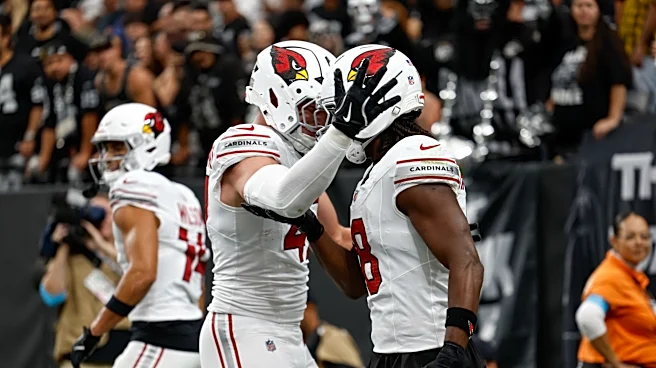
Through three weeks of the Mike LaFleur era, the Arizona Cardinals rank 18th in scoring and 23rd in total yardage. The advanced stats are even more favorable, slotting them at or above league average.
These are encouraging returns from a new coach with a flawed roster.
That is, despite one glaring weakness. The Cardinals have produced just two passing plays of at least 20 yards and four rushing plays of at least 10 yards. They have been the least explosive offense in the NFL by a significant margin.
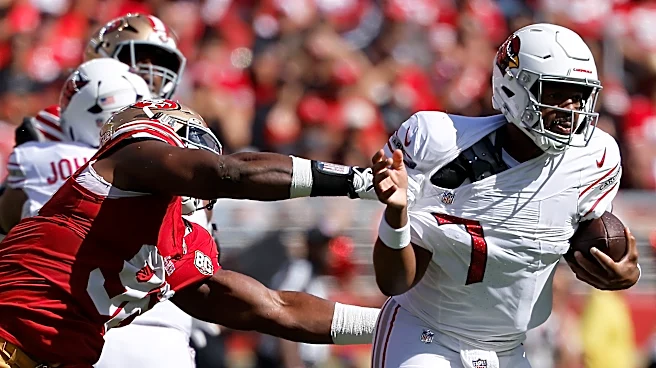
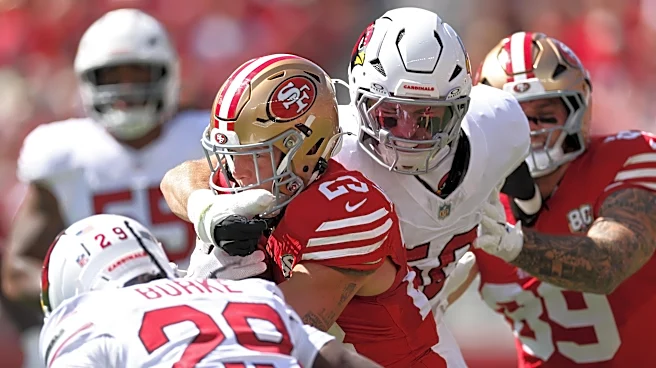
In Week 2, against the Seattle Seahawks, the Cardinals were foiled by pass protection woes that prevented them from taking downfield shots. In Week 3, against the San Francisco 49ers, they had more of those opportunities, but appeared hesitant to take
them.
These were the two clearest chances for explosives that the Cardinals missed, both to Marv. First is the one that was all over Twitter yesterday, second came on the last drive of the game. pic.twitter.com/ojxebjtbee
— Theo Mackie (@theo_mackie) September 29, 2026
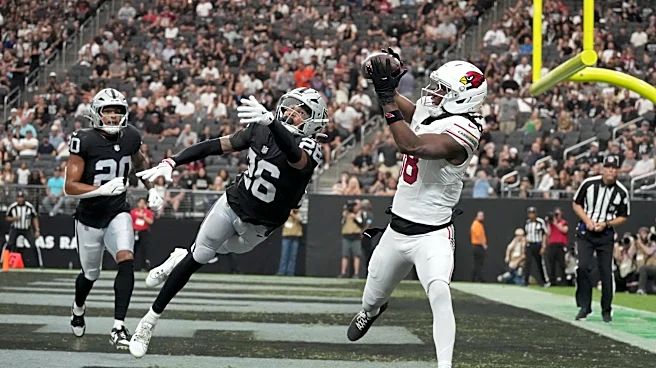
The two clearest missed opportunities were both to Marvin Harrison Jr., whose light usage has become a subject of national debate.
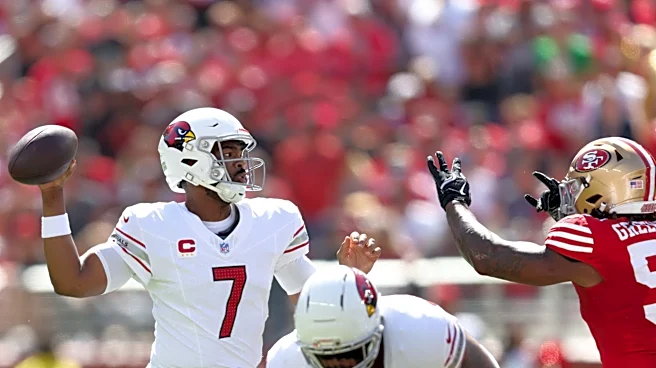
One came on the first drive of the game, when Jacoby Brissett locked into a well-covered go route from Michael Wilson. Had he progressed through his reads, he would have seen Harrison coming open over the middle for a 20-yard gain.
The other was on the Cardinals’ final drive. This time, Brissett was looking at Harrison all the way, but was wary of linebacker Fred Warner lurking over the middle. Brissett would have needed to rip the pass before Harrison entered his break, but those are the anticipation throws required to push the ball downfield against NFL defenses.
More often, the downfield opportunities came with even tighter windows. These are plays where high-end NFL quarterbacks are able to generate explosives, but they require throws with a high degree of difficulty — or receivers to make spectacular catches.
More often, the chances for explosives were like these. High degree of difficult throws where you'd like to occasionally take some chances (to Wilson on the first, Wilson then Marv on the second, Marv on the third). pic.twitter.com/QNOUN8Sfah
— Theo Mackie (@theo_mackie) September 29, 2026
There were five or six of these chances throughout the game, but these three were emblematic.
On the first, the underneath cornerback is playing with good leverage that puts him a position to make a play on either the corner route to Michael Wilson or the flat route to Elijah Higgins. He’s playing shallow enough, though, that there’s a small window available to try Wilson down the sideline.
On the second, Brissett again has a chance to get the ball to Wilson, with the 49ers only deploying one deep safety. That safety is facing Wilson, but he’s coming from the opposite hashmark. A well-placed ball would have given Wilson a chance for the touchdown. The Cardinals also had excellent protection on this play, so Brissett could have progressed to the back side and layered a pass into Harrison over the middle. Instead, he took off scrambling for no gain.
On the third, Brissett checked the ball down before the route concept developed downfield. Had he been more patient, the Cardinals had an excellent play call up for the 49ers’ coverage, with Kendrick Bourne’s crossing route occupying the safety. That left Harrison in one-on-one coverage on a deep post route, with a step of space on his cornerback.
Last season, Brissett was more willing to push the ball downfield in these situations. His average pass traveled 8.0 yards downfield and was released 2.71 seconds after the snap, per Fantasy Points Data.
This season, his average depth of target is down to 6.5 yards and his average time to throw is down to 2.26 seconds. Those are both bottom-five marks among starting quarterbacks. He’s also passing into tight windows a third as often as he was a year ago.
And yet, he's still producing results near league average.
In many ways, this is an encouraging outcome for the Cardinals offense. This season is about laying the foundation for the future, which will likely feature a new quarterback, unless Carson Beck gets an opportunity late in the year and changes the calculus.
And through three weeks, that structure has been solid, as evidenced by their down-to-down success.
“I feel like we've been efficient, kind of all year,” LaFleur said.
That was epitomized by three different play-action passes in the second half, when LaFleur was able to scheme up wide-open receivers in crucial situations.
LaFleur was cooking with his short-yardage play action designs in the second half pic.twitter.com/yFyosrzTW0
— Theo Mackie (@theo_mackie) September 29, 2026
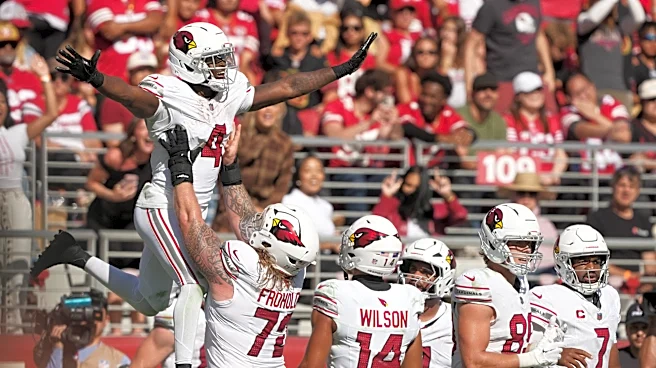
Twice, LaFleur aligned the Cardinals in three tight end sets on the goal line. With the 49ers keyed on the run, the Cardinals had open receivers leak into the flat for a pair of easy touchdowns.
Then, on a third-and-1 in the fourth quarter, LaFleur pulled out his best play call of the game. The Cardinals had already run three quarterback sneaks, including one out of this exact formation. So with the 49ers defense selling out to stop the run, LaFleur slipped Bourne into open space for a 14-yard gain.
This is well-executed offense, and it marries the run and the pass, just as LaFleur promised all summer.
Unlocking that next step — the explosives — may simply require more talent than LaFleur currently has at his disposal. That's not the fault of any one player; it's the reality of the Cardinals' status as a rebuilding roster.
“The explosive play is the right call at the right time,” LaFleur said. “With the right protection, with the receivers getting from point A to point B as fast as humanly possible, quarterback going through his progression, reading with his feet, and if it's not there because the defense dictated it, check it down. It's all-encompassing.”
So far this season, the Cardinals haven’t been able to marry those elements up at once.
It was concerning in Week 2, when Harrison appeared to be disengaged and not running routes at full speed, because he is central to the future. But if the problem is a game manager quarterback, or a journeyman right tackle, or one missed block in the run game, then the Cardinals might just be on the right track.
This article originally appeared on Arizona Republic: Why Arizona Cardinals offense is more exciting than you think