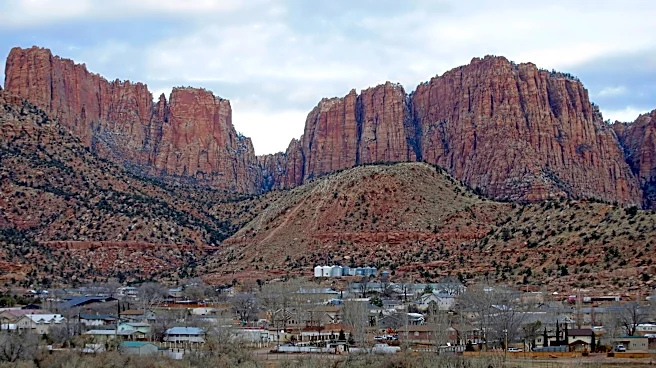









Environmental groups and an Indigenous tribe are suing the federal government over a copper exploration venture in the Galiuro Mountains that they say will threaten imperiled wildlife, including an elusive owl species.
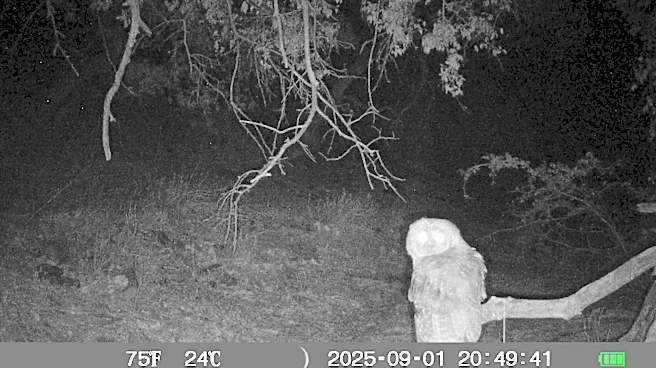
The Bureau of Land Management last summer greenlit a copper exploration project on public land in Copper Creek, where conservation groups documented the presence of threatened Mexican spotted owls. The conservation groups allege that the government ignored that evidence.
On Aug. 24, the Center for Biological Diversity, San Carlos Apache Tribe and Lower San Pedro Watershed Alliance sued the BLM and the U.S. Fish and Wildlife Service for violating the Endangered Species Act, a landmark law that exists to protect imperiled species
from threats and requires federal agencies to work toward their recovery.
Emails between the bureau and an Arizona wildlife agency reveal that the project’s timeline was expedited — leaving staff members scrambling to complete an environmental assessment in time. The complaint also argues that the bureau did not consult with the San Carlos Apache Tribe, as required under the National Historic Preservation Act.
“Copper Creek Canyon and the broader Galiuro Mountains are a vital part of the ancestral territory of the Apache people,” San Carlos Apache Tribe Chairman Terry Rambler said in a statement. “Once again, however, the Bureau of Land Management has failed to consult with the Tribe before allowing harmful activities that will degrade and destroy our cherished lands and the species occurring within them.”
Project could become sprawling mine
Four years ago, a Canadian mining company submitted a plan to the bureau to assess 1,324 acres of public land in and around Copper Creek Canyon, which holds a tributary that meets the Lower San Pedro River. Redhawk, the U.S. arm of the Canadian company Faraday Copper, was already operating in the area on privately owned parcels and state land but wanted to expand.
With 67 drill pads, Redhawk plans to reach deep into the earth in search of leftover copper deposits that went unmined in the previous two centuries. Each rig could use up to 70,000 gallons of water a month, but only two are allowed to run at any given time. The project would take two to three years. If successful, it could eventually result in a sprawling copper mine.
The bureau completed its environmental assessment for the project last summer, a process intended to consider all possible risks to the surrounding ecosystems — especially those where creatures protected under the Endangered Species Act live.
Melissa Crytzer Fry, chair of the Lower San Pedro Watershed Alliance, said the assessment failed to do that.
“BLM completely ignored our responses in the final environmental assessment,” she told The Arizona Republic in May. “They disregarded the law surrounding the Endangered Species Act.”
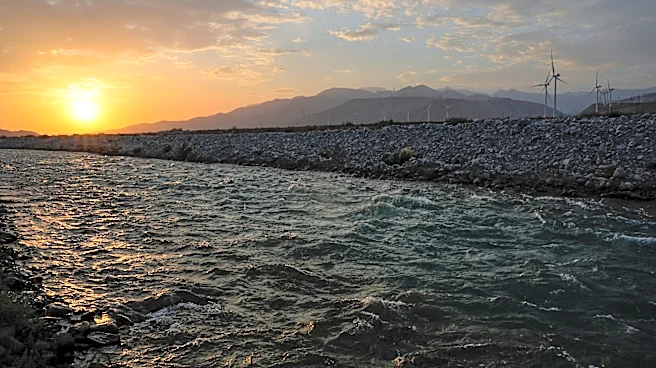
Copper Creek is part of the second-largest unfragmented landscape in the state — a rare expanse where the Santa Catalinas and Rincons meet the Gailuro Mountains and Aravaipa Canyon. Nearby, the Lower San Pedro River is a globally recognized Important Bird Area with rare and precious riparian habitat, said Jennie MacFarland, the director of bird conservation at Tucson Bird Alliance.
Drilling, light pollution and groundwater depletion could jeopardize Mexican spotted owls, which travel between mountain ranges across southeast Arizona, up into Colorado and Utah. Habitat loss is a big deal for them, MacFarland said. Drought and wildfire limit their habitat, but so can large-scale industrial projects.
“They are very sensitive to disturbance,” she said. Mexican spotted owls were listed under the Endangered Species Act in 1993. Scientists don’t know exactly how many Mexican spotted owls remain in the wild, but they estimate about 1,300.
In its February 2025 draft environmental assessment, the bureau determined that the project posed no risk to the owls because there weren’t any around Copper Creek.
But a few months later, during a public comment period, the Center for Biological Diversity and Lower San Pedro Watershed Alliance submitted photographic evidence to the bureau of the owls half a mile away from the site. The photos were taken in 2023, 2024 and 2025.

Fast-track work limits agency input
Other agencies, like the Arizona Game and Fish Department, did not have time to comment on the assessment, according to emails obtained by the Center for Biological Diversity and shared with The Republic in May.
Communication between the bureau and AZGFD shows that the review timeline was expedited by three months.
“Our office was notified in mid-May that we needed to adjust the overall Copper Creek project schedule from expected completion 9/30/2025 to 6/30/2025,” wrote a BLM staff member in an email to AZGFD. “Needless to say we have been sprinting to accommodate this schedule change between responding to public comments, consulting with US Fish and Wildlife (USFWS), and preparing an administrative environmental assessment (EA).”
In another email to AZGFD, the same staff member apologized on behalf of the bureau.
“I completely understand the position BLM has put AZGFD in. Due to the timeline and pressure with this project, I really don't think there is space to work out additional requirements,” she wrote in regard to AZGFD’s inquiry about pre-drilling surveys on the property.
The wildlife agency was notified only a few days before comments were due. A staff member at AZGFD replied that providing additional comments “just wouldn’t be realistic given the expedited timeline.”
The Copper Creek project was added to a fast-tracked permitting program after President Donald Trump issued an executive order last March prioritizing the production of “critical minerals” like copper. Dubbed FAST-41, it's meant to accelerate the permitting process and improve transparency for projects that could benefit the country. But the program, expanded under the Trump administration, has garnered criticism from conservationists who worry that FAST-41 is being exploited to quickly approve projects with lasting environmental effects.
Copper Creek is the seventh mining project to get fast-tracked approval under Trump. Other mining ventures in Arizona, like the Hermosa Mine, have also been expedited by the president.
Three days after comments were due, the bureau announced that any impact the exploration would have on the environment would be negligible — though it recognized that the project could decrease habitat quality for other threatened species, like the yellow-billed cuckoo, in the short-term due to groundwater pumping and surface disturbance. Still, it approved the project.
The lawsuit also alleges that the bureau did not consult with the San Carlos Apache Tribe on mitigating potential consequences of the project on historic or cultural sites in the area, despite the tribe’s efforts to engage with the agency.
Under the National Historic Preservation Act, the bureau should have consulted with the tribe before allowing the company to start drilling in Copper Creek, the lawsuit says. Faraday began drilling in 2022, according to the company’s vice president of external affairs, Angela Johnson. In the bureau’s environmental assessment, the agency said it sent letters to consult with 12 tribes in February 2023.
In an email to The Republic, the U.S. Fish and Wildlife Service said the agency does not comment on ongoing litigation. The Bureau of Land Management did not immediately respond to a request for comment.
Sarah Henry covers environmental issues for The Arizona Republic and azcentral. Send tips or questions to sarah.henry@arizonarepublic.com.
Environmental coverage on azcentral.com and in The Arizona Republic is supported by a grant from the Nina Mason Pulliam Charitable Trust.
Follow The Republic environmental reporting team at environment.azcentral.com and @azcenvironment on Facebook and Instagram.
This article originally appeared on Arizona Republic: Feds ignored evidence about risks of Arizona copper mine, lawsuit says