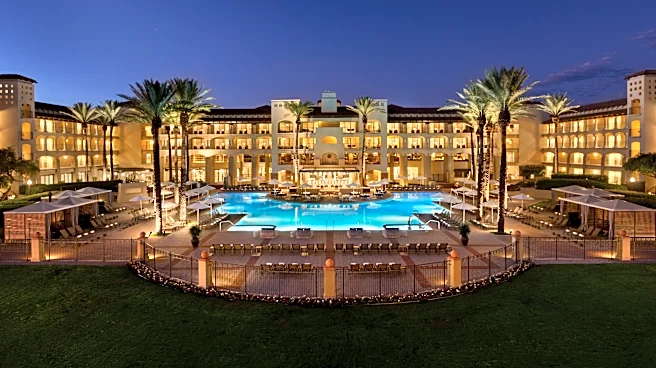






The chairwoman of the Yuhaaviatam of San Manuel Nation, Lynn Valbuena, said their newest acquisition, the Fairmont Scottsdale Princess, is another piece in the Southern California tribe's strategy of building self-reliance and a sustainable economy.
The San Manuel Investment Authority, a unincorporated governmental entity of the Yuhaaviatim, a tribe based near San Bernardino, California, announced its purchase of the landmark Scottsdale property Oct. 1. The tribe acquired the property from Strategic Hotels & Resorts for $241.3 million.
In addition to the Princess, which Valbuena said would retain its name, the 200-member tribe owns and operates the Yaamava' Casino-Resort on its homelands near San Bernardino. Yaamava' is the only Five-Diamond casino
resort in the country, she said.
Yuhaaviatam also owns the Palms Casino Resort in Las Vegas.

The tribe also owns several other non-gaming hotels, including the AAA Four-Diamond Mission Inn in Riverside, a longtime historic landmark in California's Inland Empire; the Waldorf Astoria Monarch Beach Resort & Club, a AAA Five-Diamond resort in Dana Point, California; two other boutique and extended-stay hotels in California; and two boutique and extended-stay hotels on the East Coast.
Valbuena said the Princess' new owners intend to uphold a longtime tradition of hospitality to visitors, the same that the tribe has maintained since time immemorial.
"Recently we encountered people who went to Yaamava and they said that they could not believe the hospitality and service the tribe offered," she said. The customers asked where a particular restaurant was located. Instead of just giving directions, though, Yaamava's staff walked the customers to where they wanted to to go.
"They really appreciate that service."
'We want to be good neighbors'
The tribe aims to work with local communities where their properties are located, Valbuena said.
"Out of respect we let others, whether it's other tribes or other communities in the area that we work with, know what our plans are so it's not a surprise," she said.
The Mission Inn was an example of the tribe's transparency in dealing with nervous residents.
"The community was asking now that the tribe purchased it, will we continue with the Christmas lighting every year?" She said those events the community loves, like the Fairmont's own holiday festivities, are ones they enjoy every year.
"Right now I don't see any major changes at the Fairmont," she said.
"We will continue doing what we can to build out those relationships and keep the community happy so they'll continue to keep coming to the hotel," Valbuena said.
"It's all about hospitality and the way you treat your patrons."
The tribes also appreciate that respect, Valbuena said, just as she assumed other tribes would extend if they bought or opened businesses in Yuhaaviatam's ancestral lands.
That's easier for Valbuena since she has long-term relationships with local tribes and tribal leaders such as Gila River Gov. Stephen Roe Lewis.
But Yuhaaviatam's strategy is part of a larger movement by tribes seeking to diversity their economies and grow more self-sustaining.
Tribes look to luxury innkeeping and other entertainment venues to expand their economies
Yuhaaviatam's newest purchase is part of a growing trend in Indian Country. Several tribes now own hotels, resorts or combination casino and resorts that are not on their trust lands to diversify their economies.
Some examples include tribes on both coasts and in the South.
The Sycuan Band of the Kumeyaay Nation, one of the 12 Kumeyaay tribes in San Diego County, purchased the U.S. Grant Hotel in 2003. The AAA Four Diamond historic property was a special purchase for Sycuan because the hotel's namesake President Ulysses S. Grant issued an executive order establishing Kumeyaay lands in 1875. Sycuan also owns a resort and golf club in the county.
The Seminole Tribe of Florida owns the Hard Rock brand, which operates 29 hotels and hotel-casinos with 16,000 rooms worldwide. Some properties are in partnership with another tribe, such as the Tejon Indian Tribein Central California. Others are in states with commercial gaming, like Nevada, where Hard Rock is finishing construction on a new venue in Las Vegas featuring one of its signature guitar-shaped hotel towers.
The Poarch Band of Creek Indians in Alabama also has created an international resort brand. Wind Creek Hospitality operates 10 properties in the U.S. and Caribbean with another one in the works in Chicago. Their offerings run from classic casino-only venues and casino-resorts to entertainment centers and even a greyhound racing facility.
"We're always looking for is looking to the future to keep that self sustainability using diversification so that we can have self reliance and not have to rely on federal grants like we used to before gaming," Valbuena said.
"When we opened our Yaamava' Casino in 1986, we had 400 employees," she said.
"Now we have about 8,000 employees there," Valbuena said, "and I always tell our team members know that without them we wouldn't be where we're at today."
Debra Krol reports on Indigenous communities at the confluence of climate, culture and commerce in Arizona and the Intermountain West. Reach Krol at debra.krol@azcentral.com. Follow her on X, formerly known as Twitter, @debkrol and on Bluesky at @debkrol.bsky.social.
This article originally appeared on Arizona Republic: No major changes planned at Fairmont Scottsdale Princess, tribe says