


INGLEWOOD, CA — When Mike LaFleur spoke this week about the “tough conversations” that he had shared with his staff, it was easy to offer a collective shrug of the shoulders.
The Arizona Cardinals’ defense had just allowed 45 points in yet another loss, somehow their 11th time allowing at least 30 points in the previous 17 games. That is a stunning level of ineptitude, matched only by teams like the 1996 New York Jets and 2008 Detroit Lions.
And yet, defensive coordinator Nick Rallis remained in his role. Not only that, but no playcalling duties would change.
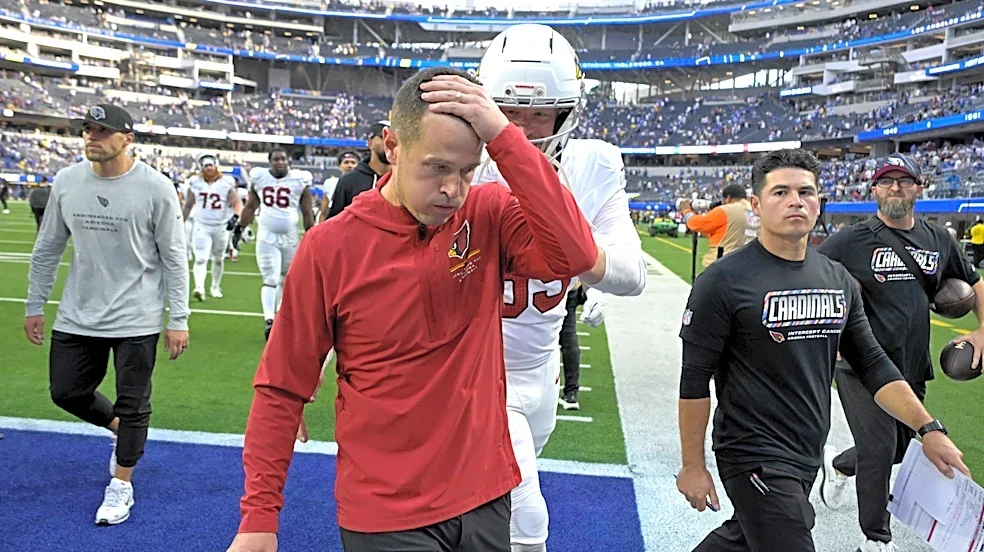
“Started having the conversations,” LaFleur said on Monday, Oct. 12. “How do we not allow this to happen ever again? How do we improve? Talked with different coaches, different players. I’ll
keep that in-house, but had some tough conversations.”
If actions speak louder than words, this was radio silence. Really? Tough conversations?
Then the Cardinals showed up in Los Angeles.
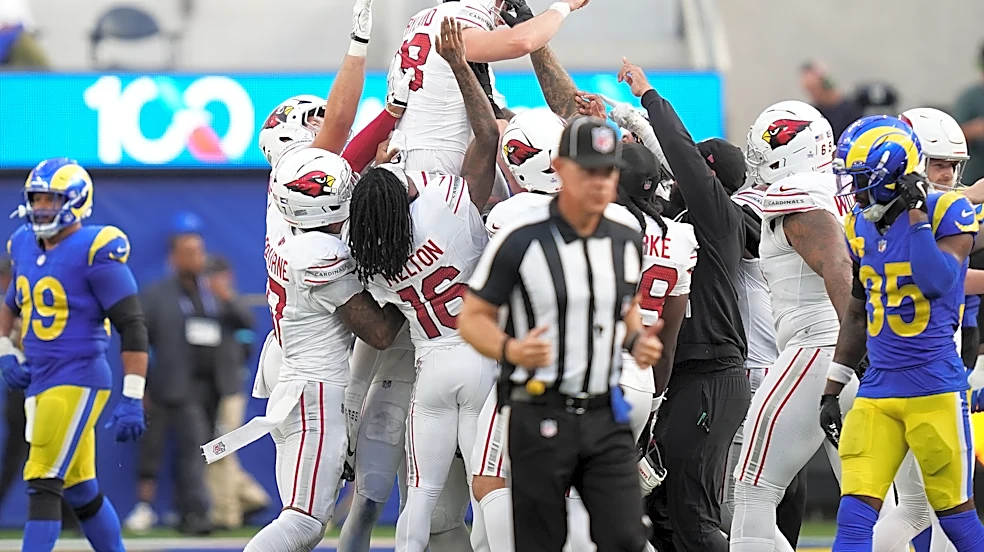
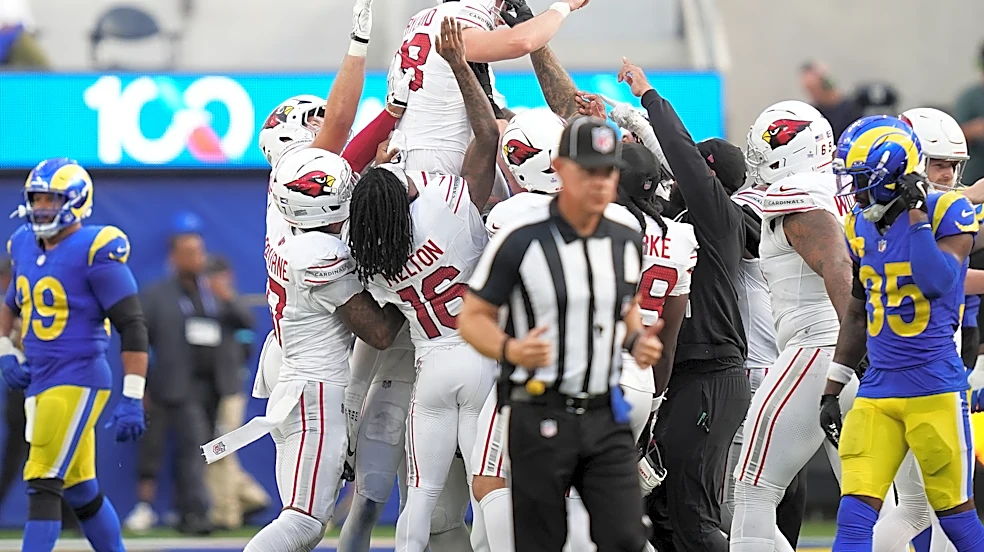
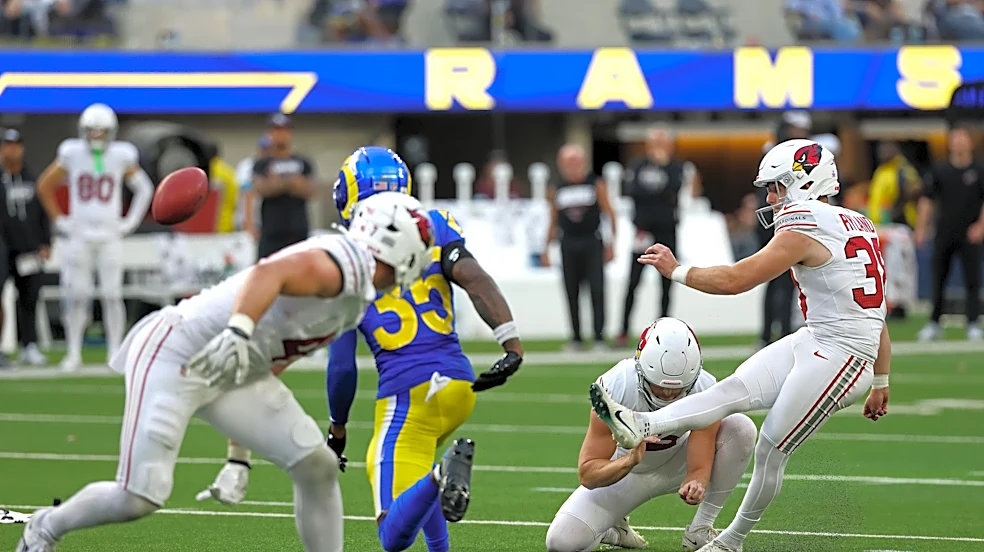
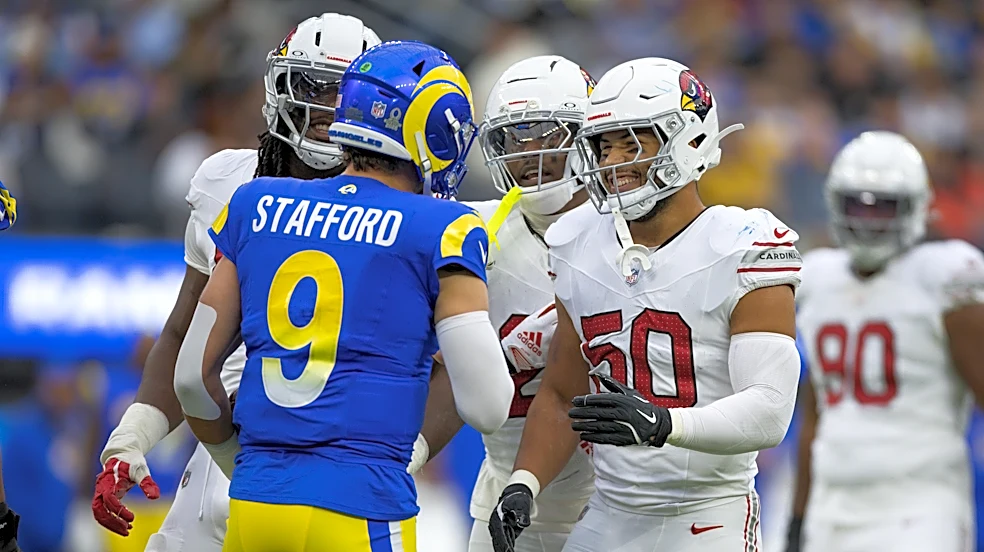
For 60 minutes, those conversations translated between the white lines. On a day when they were 12 1/2-point underdogs, the Cardinals stunned the football world with an 18-16 win. As that score indicates, it was their defense that led the way, holding a high-powered Rams offense to its lowest output on U.S. soil in 13 months.
And it began with those conversations, six days earlier.
“The biggest change was trying to play the game more on our terms, versus on responding to what another team might do,” cornerback Garrett Williams said. “Making them adjust to us, versus us adjusting to them.”
That was most evident in the Cardinals’ blitzing strategy.

Two years ago, this was a defense defined by its aggression. They brought an extra pass-rusher on 33.8% of pass plays. Only three teams blitzed at a higher rate.
Through five weeks this season, that number had dropped to 25.6%. The once-aggressive Cardinals ranked 24th in blitz rate.
Against the Rams, the aggression was back in full force. Per Pro Football Focus, they blitzed 13 times, their most of the season. That number doesn’t even include some of the more complex looks, when Rallis rushed four but brought a linebacker or a safety as part of the pass rush.
All of it was part of the plan that the Cardinals had conjured this week.
“Thinking about when our defense has played the best, you think about 2024,” Williams said. “And that was the way that we played then, too. A lot of pressures. A lot of different things like that. And that kind of showed back up again.”
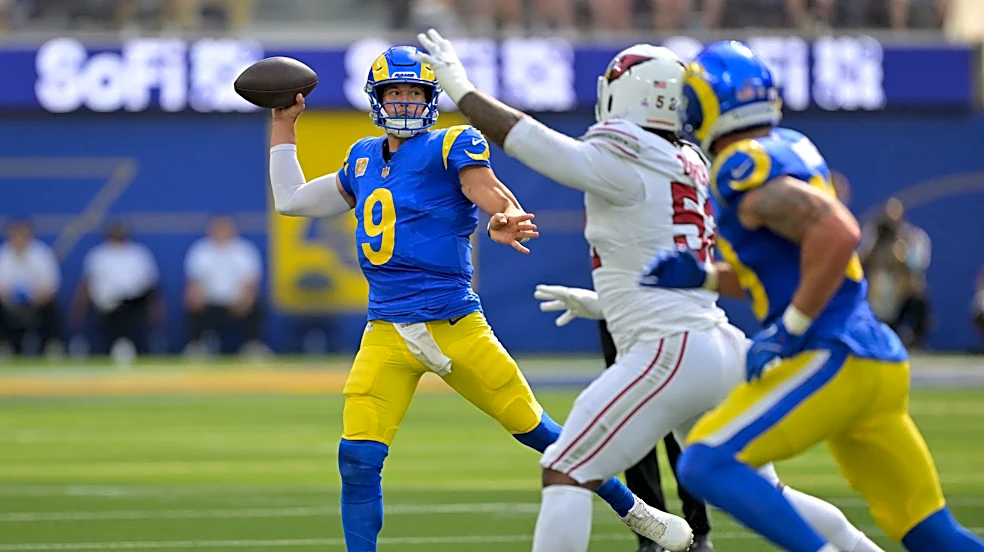
All day, it prevented Matthew Stafford from finding a rhythm.
Rallis had hinted at this earlier in the week. Asked about Budda Baker’s skill set as a blitzer, he said that the Cardinals “want to make sure we have that in our arsenal all the time.”

It just wasn’t clear that Rallis would so emphatically follow through on that promise. He ended up bringing Baker on seven blitzes, his most pass-rush snaps since Week 14 of 2022. On three of them, Baker generated pressure, including a first-half sack on which Rallis sent both Baker and linebacker Cody Simon as delayed blitzers.
“There were some plays with Budda that we know really were confusing them,” Williams said. “Just how we were communicating, how we were moving around and stuff.”
It wasn’t just Baker. Mack Wilson Sr. came on seven blitzes, his most since the final game of 2024. Jack Gibbens rushed four times, his second-most as a Cardinal. Williams, Simon and cornerback Kalen King all joined the action, too.
“Seemed like he was pressured; he was hurried,” defensive tackle Roy Lopez said of Stafford.
Down a hallway, the Rams quarterback agreed.
“I felt squeamish,” Stafford admitted.
The numbers bore that out.
Stafford did make one excellent play under pressure, early on the Rams’ go-ahead touchdown drive late in the fourth quarter. He evaded the pass rush, stepped into the pocket and fired a pass to Puka Nacua into a small window over the middle for 43 yards. That was simply two brilliant players doing brilliant things, including Nacua’s remarkable effort after the catch.
Outside of that play, Stafford was 5-for-9 for 52 yards when pressured. He took an ugly strip sack on a two-point conversion attempt, one of three sacks on the day. He threw another ball into King’s arms for a pass breakup on a blitz, and a few more into harm’s way. He looked, until the fourth quarter, like a fraction of the MVP quarterback he was a season ago.
Part of that was Stafford’s own mistakes. He should have had a 65-yard touchdown to Nacua on a busted coverage, and a long gain when Davante Adams beat Max Melton on a go route. Both of those were missed throws from a player who doesn’t miss many.
For the most part, though, this was the Cardinals’ doing.
Whether they can sustain that success for 11 more weeks is a different question. One strong performance does not erase the struggles of the past year. But for at least one week, there will be no questions peppered at LaFleur, scrutinizing Rallis’ job security.
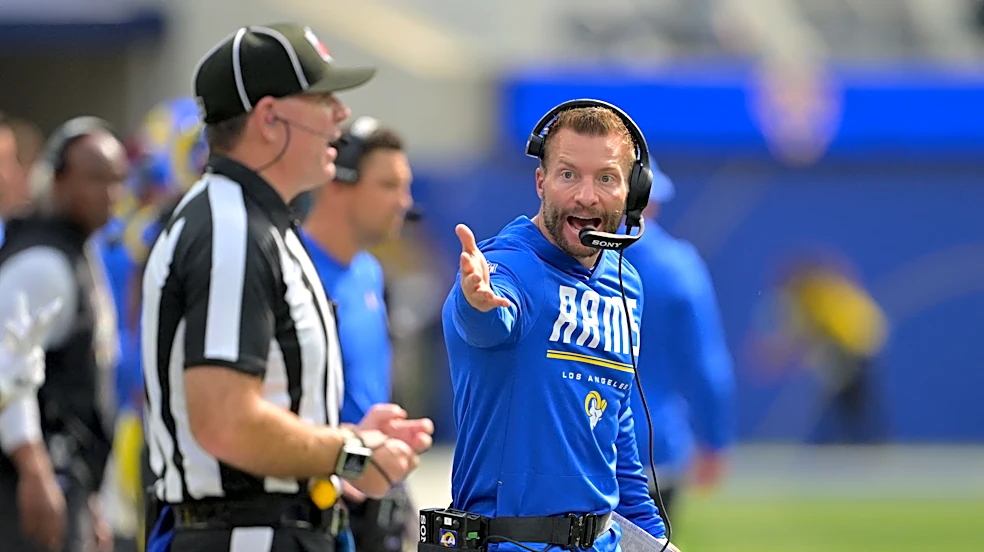
“Nick was excellent today,” LaFleur said. “I thought he put them in some incredible spots.”
It felt, for one afternoon, like 2024 all over again.
This article originally appeared on Arizona Republic: How Cardinals defense fixed its woes in stunning upset of Rams