

"A law without enforcement is not a law at all."
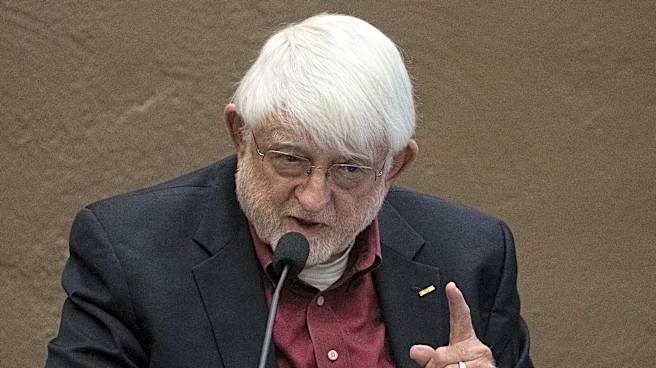
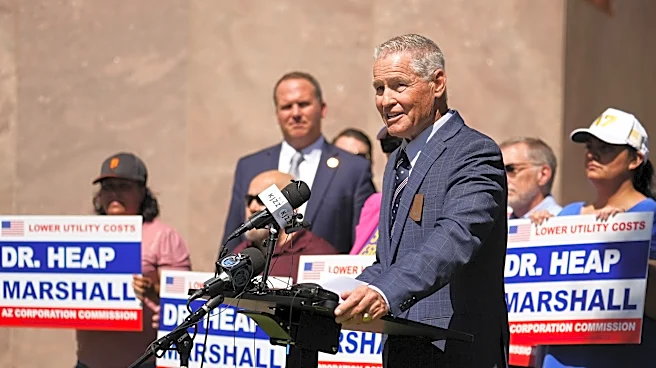
So said Vincent La, a self-described "concerned Republican voter," at the Aug. 4, 2026, special meeting of the Arizona Citizens Clean Elections Commission. At issue was whether or not Ralph Heap, a Republican candidate for the Arizona Corporation Commission, could withdraw as a "clean elections" candidate after having allegedly violated the Commission’s rules and state campaign finance law.
The Commission denied Heap’s request unanimously, 0-4.
The Clean Elections Commission allows eligible candidates to run for public office with the support of taxpayer dollars. Such candidates are said to be running "clean." Clean candidates vying for the Arizona Corporation Commission receive $147,836 in taxpayer dollars for the primary
and $221,754 for the general election. Together ($369,590), that’s roughly the price of an average home in Phoenix.
But there are rules. Before receiving taxpayer dollars, clean candidates must solicit and receive $5 donations from at least 1,500 voters. Prior to completing that task, the most that clean candidates can spend prior to completing that task is $36,959.
And that puts Heap in a bit of a pickle.
According to a complaint filed with the Commission, Republican activist Lisa Everett, "first became concerned after seeing hundreds of large campaign signs through the West Valley and stretching across Arizona. They were impossible to miss ― solid blue signs with the words, 'Dr. Ralph Heap for Arizona Corporation Commission.'"
Heap claims in his campaign finance report that those signs cost his campaign a grand total of $644.47.
Anyone who has run for office can tell you that’s nonsense. Those large street signs aren't cheap. When I ran in 2024, I paid about $50 per sign for the printing, the rebar that holds up the sign and the installation. For 1,000 signs ― the number Everett estimated that Heap had ― that adds up to $50,000 total. And as noted by Vincent La, the "concerned Republican voter" who spoke at the Commission meeting, Heap appears to have installed his signs in tandem with candidates Kimberly Yee and Alex Kolodin. Those two candidates reported about $70,000 in expenditures on signs.
This means Heap has two problems. The first is that the dollar amount spent on signs that he reported in his campaign finance report ($644.47) is almost certainly false. The second problem is that the real amount ― whether $70,000, or even just $50,000 ― is significantly more than the $36,959 that Clean Elections rules allowed Heap to spend at this point in the campaign. According to Clean Elections executive director Tom Collins, "there is substantial evidence" that Heap violated campaign finance laws and Clean Elections rules.
The Clean Elections Commission will assess Everett’s complaint and possible penalties at a future meeting. But by denying his request to withdraw, the Commission keeps Heap squarely within its punishment purview. That punishment could include fines under A.R.S. § 16-942 exceeding $100,000 or even "disqualification of a candidate or forfeiture of office."
We talk a lot about what campaign finance rules should be. For example, it’s almost axiomatic among Democrats that the U.S. Supreme Court wrongly decided Citizens United ― the case striking down limits on independent political expenditures by corporations and labor unions.

And Arizona is no stranger to these conversations. The century’s most significant piece of federal campaign finance legislation, the McCain-Feingold Act, is named after our very own John McCain. More recently, in 2022, former Arizona Attorney General Terry Goddard finally succeeded in his "long crusade" to have Arizona voters pass anti-"dark money" legislation.
But while we talk a lot about what campaign finance laws should be, we pay less attention to the enforcement of campaign finance laws as they exist. And in Arizona, for the most part, our regulatory and enforcement system is patchwork and toothless. It’s nearly impossible to aggregate information about Arizona donors. Try finding information on campaign donations in the hotly contested Scottsdale city council race and then compare that with the donors in, say, the latest Maricopa County sheriff election. Good luck.
And even if you do find that information, understand that the numbers are entirely based on an honor system. There's no way to independently verify a candidate's self-reported campaign finance numbers. I could have easily taken a $1 million check during my campaign and never have reported it. Only the donor and I would have known.
The present case of Ralph Heap proves a few things. First, there are candidates who are either, at best, sloppy and inattentive with their paperwork, or, worse, knowing violators of campaign finance law. Many escape punishment.
And second, the Citizens Clean Elections Commission might be the exception to our state's lax campaign finance enforcement. We should lean into that strength and consider housing all of Arizona’s campaign finance reports and enforcement under the commission. No more searching different city and county websites, only to find static PDFs. And no more relying on investigation and enforcement of campaign finance laws by people who have a million other responsibilities outside of campaign finance. And it makes sense to have campaign finance be overseen by a bipartisan board that appoints non-partisan staff.
In sum, Arizona's campaign finance system needs to improve.
As Vincent La said, "law without enforcement is not a law at all."
We should enforce the law.
Stephen Richer is the CEO of Republic Affairs, a legal fellow at the Cato Institute and a former Maricopa County recorder. Contact him at Stephen@StephenRicher.com.
This article originally appeared on Arizona Republic: Arizona's campaign finance rules are toothless. Fix them | Opinion