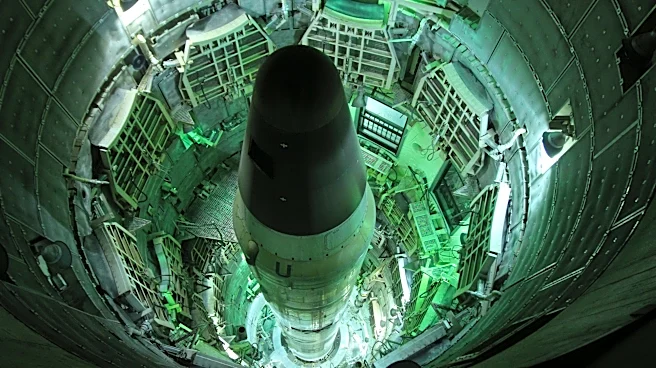







It was the height of the Cold War, with the United States and the Soviet Union each seeking a nuclear deterrent. Davis-Monthan in Tucson was one of three Air Force bases around the country overseeing underground silos that housed the Titan II intercontinental ballistic missiles, or ICBMs.
The Titan II missiles, operational from 1963 to 1987, were meant to survive a nuclear attack and then retaliate. Fifty-four missiles in all were commissioned at 18 sites each in Arizona, Arkansas and Kansas. The sparsely populated southern Arizona desert was an optimum region.
The Titan II was the largest and most powerful of the ICBMs. It was 103 feet tall, weighed 330,000 pounds, had a range of up to 9,300 miles and could launch in about a minute. The Titan II’s
warhead had three times the power of all of World War II’s bombs, including the two atomic bombs dropped on Japan. There was one Titan II missile per site, with each silo placed about 7 miles from each other to ensure that sites could survive.
Because of high maintenance costs and several accidents, the missiles were retired in the mid-1980s.
The Titan II was the longest-serving missile and later became part of the space program, launching satellites and spacecraft.
The Titan Missile Museum in Green Valley south of Tucson houses the last of the decommissioned missiles in its original bunker and offers tours to the public.
Missile silos up for sale
This article originally appeared on Arizona Republic: Arizona once was home to 18 nuclear missiles. You can still see one