








One day after authorities in Mississippi disclosed that kratom was a common factor in the recent deaths of two college students, Arizona filed a lawsuit against the makers of a popular kratom product.
Arizona Attorney General Kris Mayes on Sept. 23 sued Oklahoma-based Botanic Tonics and its founder Jerry Ross in Maricopa County Superior Court, alleging that the company's ubiquitous feel free kratom shots, which are easily purchased in Arizona, are being deceptively marketed as benign wellness products when in fact they are highly addictive.
The 2-ounce feel free shots, which are the target of the Arizona lawsuit, are sold in blue bottles and found in convenience stores, gas stations, vape shops and online venues. While feel free shots are marketed
as a mood booster and energy product, the lawsuit says Botanic Tonics and Ross "failed to adequately warn Arizona consumers about the risks associated with consuming feel free even as they became aware that consumers were reporting addiction, withdrawal, and other serious adverse effects."
Botanic Tonics did not immediately respond to The Arizona Republic on Sept. 23, but in a Jan. 30 email wrote to The Republic that its product label "went through compliance review" to ensure feel free meets federal and state laws, though it did not say who conducted the review. The company statement said "we are clear that we make a powerful product, it is only for healthy adults, and that it is not intended for everyone."

The Arizona lawsuit was filed one day after authorities in Mississippi said they are investigating the deaths of two University of Mississippi students — two males, one who was 18 and one who was 20 years old. The Lafayette County Metro Narcotics Department said in a news release that the department has not confirmed the deaths are connected but said packaged kratom sold from a retail store was found in both investigations.
Mayes has been advocating for more consumer awareness of kratom for more than a year and during the last state legislative session worked on a bill with Rep. Quang Nguyen, a Prescott Valley Republican, to revise labeling and product standards for kratom products and to raise the minimum age for buying kratom from 18 to 21, among other things. The bill failed to make it out of the state Senate.
Too many people are still getting caught unaware that kratom can have the same effect on the body as an opioid, said Dean Francis, founder and president of the Virginia-based End Kratom Addiction, a nonprofit group that created after Francis' son, a college athlete, spent years addicted to kratom that he purchased as a powder supplement, believing it would boost his athletic performance.
"People have no idea what they are taking and that is why it is so unfair," Francis said.
Here are eight things to know about kratom:
Kratom is a botanical herb from a leafy tropical tree
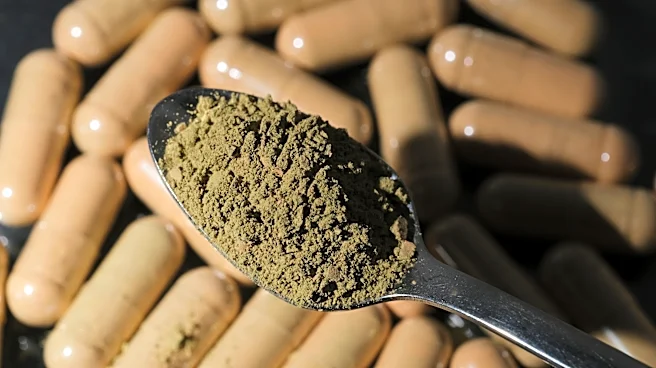
The kratom leaf is a bitter-tasting botanical herb from the Southeast Asian Mitragyna speciosa tree. It has been used in traditional medicine for hundreds of years, often in tea, to treat coughs and diarrhea, to increase productivity and combat fatigue, for pain relief, and as a substitute for opium. In low doses it's a buzz similar to caffeine, and in higher doses it has the sedative effect of an opioid. Health risks include cardiovascular problems, high blood pressure, respiratory depression and seizures.
Some kratom users say products made from the kratom leaf are an essential and safe alternative to prescription painkillers. If people are getting addicted, they say, it's because they're misusing it and often using other potent substances at the same time.
Kratom-related deaths have happened in Arizona
Pima County reported nine kratom-related deaths in 2025, up from four in 2024. In Maricopa County, total deaths involving kratom more than doubled between 2024 and 2025 from 13 to 32, county medical examiner records show. The age range for the kratom-related deaths was 20 to 69 and the vast majority were male.
In most kratom deaths, other drugs are involved, too
Most of the deaths list other drugs as being present, too, often fentanyl, methamphetamine and cannabis. A 2019 federal analysis of 91 kratom-involved deaths over 18 months found that in approximately 80% of those deaths, those who died had a history of substance misuse.
Kratom-related calls to poison centers have been increasing
The Phoenix-basedBanner Poison and Drug Information Center and the Tucson-based Arizona Poison and Drug Information Center, which handles all Arizona calls from outside of Maricopa County, went from a combined 40 calls in 2024 to 115 calls in 2025. Nationally, there were 3,802 kratom-related poison calls in 2025, which was more than double the 2024 number.
Some of the more common side effects to kratom addiction include hair loss, dehydration, dry skin, numbness in the hands and feet, digestive problems and severe constipation, according to the nonprofit Quitting Kratom Support.
Warnings about kratom often target synthetic 7-OH
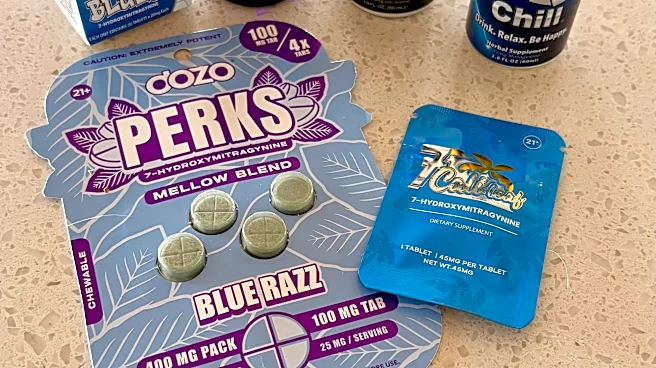
The American Medical Association in June expanded its policy on kratom products to underscore the potential harms to children and adolescents and highlight concerns about products containing concentrated 7-hydroxymitragynine — known as 7-OH — a potent opioidlike compound found naturally only in trace amounts in the kratom plant.
Synthetic 7-OH products have in the last few years become more available, according to industry experts. Four-tablet packages of 7-OH can cost upward of $40. A slew of social media posts on platforms such as TikTok and Instagram describe the negative effects of using kratom products, including using 7-OH for pain relief, with some people claiming it ruined their lives.
Arizona's 2019 kratom law is ineffective
Arizona already has a kratom law, called the Kratom Consumer Protection Act, which took effect in 2019 before the proliferation of 7-OH products.
Among other things, it bans retailers from selling synthetic kratom products, including synthetic 7-OH. Retailers seem to be ignoring the law because it's easy to purchase in Arizona, critics say it has no teeth and indeed, no one has ever been prosecuted under the law, the Arizona Attorney General's office confirmed Sept. 23.
“In its current form, Arizona’s kratom law asks prosecutors to clear a high-bar just to prove a misdemeanor. Most law enforcement agencies simply don’t have the labs, experts, or budget to do that on a routine basis," Mayes said in a 2025 consumer alert about kratom products.
Francis of End Kratom Addiction says that Arizona's law is a "scam" that was written by the kratom industry.
Kratom products do not go through clinical trials
Companies such as Botanic Tonics sell kratom products as herbal supplements, so they aren't federally regulated and don't go through clinical trials. There are no prescription or over-the-counter drug products containing kratom or its known alkaloids that are legally on the market in the United States, according to the U.S. Food and Drug Administration.
"They are not pharmaceutical companies. This is addiction for profit," Francis said about the companies that sell kratom products. "This is massively profitable and highly addictive. If they had to go through clinical safety trials, that could really limit sales and that is their concern."
Some states have full kratom bans
Some critics argue that if Arizona is going to crack down on kratom, targeting only concentrated synthetic kratom products is confusing and not comprehensive enough. Others are fighting to keep all types of kratom legal.
Some countries and several U.S. states and jurisdictions including Ireland, Sweden, Vermont, Tennessee, Alabama, the city of San Diego in California and Sarasota County in Florida, have prohibitions on all kratom products, not just 7-OH.
The U.S. Department of Defense in 2025 said it would ban the use of all kratom products among active members of the U.S. military, as well as its reserves, because the products (not just synthetic 7-OH) pose a health danger and for that reason are a threat to "combat readiness and national security."
USA TODAY contributed to this article.
Reach health-care reporter Stephanie Innes at stephanie.innes@usatodayco.com or follow her on X: @stephanieinnes or on Bluesky: @stephanieinnes.bsky.social.
This article originally appeared on Arizona Republic: What is kratom and could the products kill you? What to know