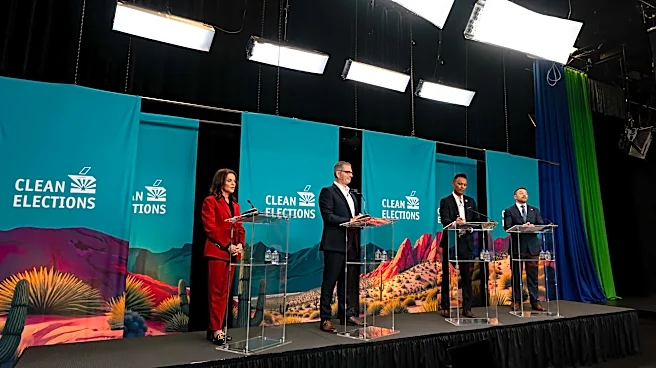

Arizona taxpayers help fund televised debates as part of the state's Clean Elections program, an election-year ritual designed to let voters hear from opposing points of view as they prepare to cast their ballots.
But this year, many of the state's congressional incumbents and front-runners aren't participating.
All but two of Arizona's sitting U.S. House members have declined invitations to participate in the publicly funded debates ahead of the Nov. 3, 2026, general elections.
Democratic Rep. Adelita Grijalva will square off Aug. 26 against Republican Daniel Butierez. And GOP Rep. Juan Ciscomani plans to debate Democrat JoAnna Mendoza on Sept. 10, his campaign told The Arizona Republic, though they are still working out some details.
The rest
of the delegation turned down the Clean Elections invitation. That includes Republican Reps. Eli Crane, Abe Hamadeh and Paul Gosar, as well as Democratic Rep. Yassamin Ansari. An aide to Rep. Greg Stanton told The Republic that due to a scheduling conflict he will not attend the Clean Elections debate, but will participate in a forum hosted by Arizona PBS in September.
The fact that many of Arizona's congressional front-runners would decline opportunities to debate is not particularly new, or surprising, analysts told The Republic. Candidates often decline to debate if they feel they have a sizable lead, don't want to risk making a mistake on TV, or don't want to draw unnecessary attention to their opponent.
Add to that the GOP's long-standing skepticism toward Clean Elections, and the program's relatively limited viewership, "there's all kinds of tactical reasons for Republicans generally, and even some Democrats" to skip the affair, said conservative political consultant Chuck Coughlin.
Underdog candidates often jump at the chance to debate, because it gives them an opening to reach voters and media attention that they might struggle to get otherwise.
Another congressional front-runner who ducked the Clean Elections invite: Mark Lamb, the former Pinal County sheriff whose campaign has been dogged by scandals. His Democratic opponent, Elizabeth Lee, will have the debate stage for herself.
"If you're in an overwhelmingly partisan district, there's no reason to give your opponent an opportunity to land a blow," Coughlin said.
Debates have become a flashpoint in governor's race
The topic of TV debates has become a flashpoint in one of Arizona's most highly watched races.
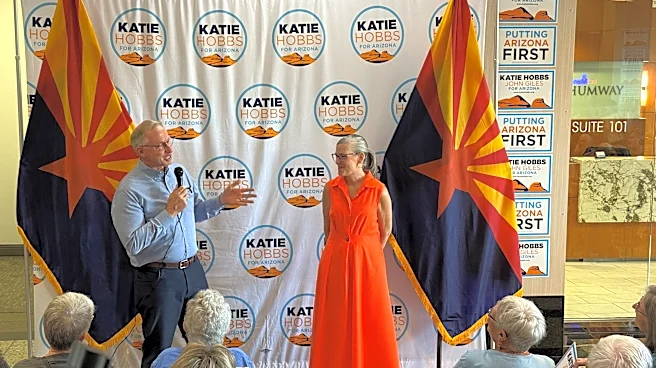
Outgoing U.S. Rep. Andy Biggs, the Republican nominee for governor, has made a point of criticizing his Democratic opponent for refusing to debate him. Gov. Katie Hobbs' campaign manager announced Hobbs will skip the debates "because face-to-face engagement with Arizonans is more effective than a stage designed for short soundbites and political theater."
"Katie Hobbs can avoid the debate stage, but she won’t get to avoid voters in November,” Biggs' spokesperson, Drew Sexton, shot back.
Hamadeh has joined in the criticism of Hobbs, even though he's skipping his own debate.
"If the 'guardians of democracy' aka the fake news media truly cared about ‘democracy’ there would be daily pressure on Katie Hobbs to defend her record to Arizonans and debate Andy Biggs," he posted on social media on Aug. 2. "Democracy dies in darkness, and it’s a quick death when the media are the ones killing it."
An aide to Hamadeh did not return a request for comment.
Across the board, participating in the Clean Elections system has become less appealing since 2010, the year a U.S. Supreme Court decision opened the door to big money in politics and diminished the appeal of accepting public funding for elections, Coughlin said.
"The prevalence of dark money and unlimited campaign, and coordinated campaign, contributions from partisan sources eliminates the need to do this ... unless the candidates themselves feel some sort of code of honor about living up to voters' commitments," he said.
Debates used to be a core part of many politicians' strategies developing their brand and platform, Coughlin said. The political climate is different now.
"Today, that just doesn't happen anymore because it's just the vilification of the other party," he said.
The debates have become even more fraught as Arizona's political temperature has risen in recent years.
An Arizona PBS debate was a matter of contention in the gubernatorial race four years ago. An investigation by The Arizona Republic found Arizona State University President Michael Crow and his aides took into account Lake's false view that the 2020 presidential election was stolen and gave preferential treatment to Hobbs, offering the Democratic candidate a one-on-one sit-down interview even though she refused to debate Lake.
Other groups, especially in the business community, often host candidate interviews or forums as a way to build relationships with candidates or decide who they will back in hard-fought races. But those generally aren't public-facing.
Arizona PBS, the other network that typically hosts congressional candidate forums, hasn't yet finalized its debate schedule, according to its senior marketing director, Jeremy Cauthen.
In Arizona's 1st Congressional District, neither Republican Jay Feely nor Democrat Amish Shah had agreed to debate as of mid-August, but the details and timing were still "to be determined," according to the Clean Elections' website.
Candidates offer varied explanations, or none at all
Candidates offered varied explanations for their decision not to participate in the debate — or none at all.
A Lamb spokesperson declined to comment on why the former sheriff was skipping the debate. Lamb, in general, has taken an unorthodox approach to his campaign. Earlier this year, he spent much of his time launching a new ranch getaway business in Tennessee, The Republic found, and has continued to make social media posts from out of state since he won the Republican nomination in July.
Ansari suggested her absence was due to an oversight.
"I am a big supporter of public debates and of the Arizona Clean Elections Commission, and would have joined had we received the invite in time," Ansari said in a written statement to The Republic. "This year my time will be spent focused on supporting Arizona Dems up and down the ballot and flipping the House majority."
Rory McShane, a political consultant with Gosar's reelection campaign, defended the incumbent congressman's decision not to debate Democrat Danielle Sterbinsky, a Navy veteran and human resources professional.
"We don't debate socialists," McShane said. "We beat them."
Tom Collins, Clean Elections executive director, said he was not in a position to immediately comment on the federal candidates' reasons for attending the debates or not. Whether they participate, he said, is "their choice."
This article originally appeared on Arizona Republic: Many of Arizona's top congressional candidates will skip debates