





The Gila River Indian Community may be the next Colorado River water user to sue the federal government after Arizona joined Nevada on Oct. 16 in a lawsuit challenging the Interior Department over its plan to manage water supplies on the drought-stricken river.
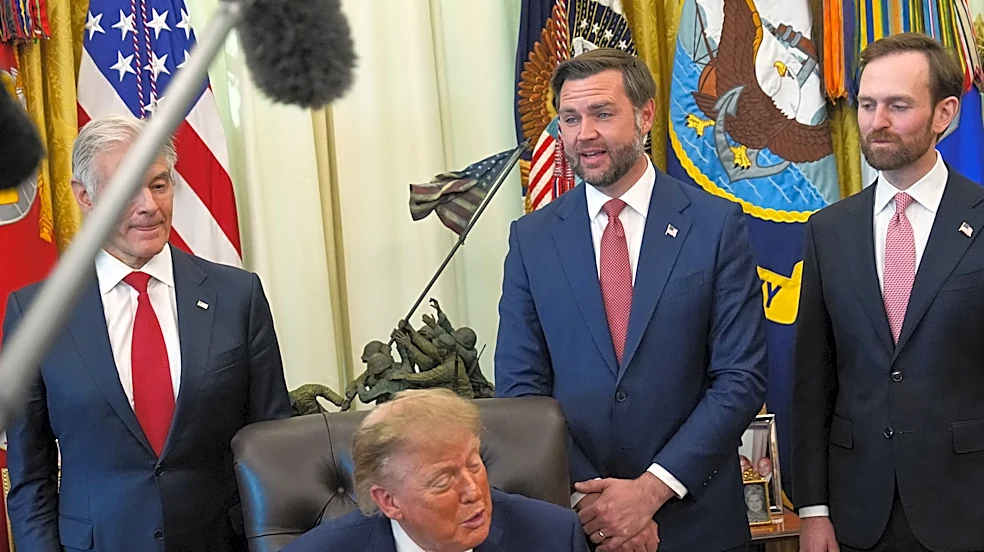
Nevada filed suit in federal district court on Aug. 24, three days after Interior Secretary Doug Burgum signed the plan to restrict water use in Arizona, California and Nevada, collectively known as the Lower Basin states. The plan will govern management of river operations at least through 2028.
Gila River issued a statement on its Facebook page Oct. 16 about Arizona joining Nevada's lawsuit. "The Arizona Department of Water Resources' action is intended to protect the interests of all
in Arizona as this litigation proceeds forward, and the Community supports ADWR in this move," said Gila River Gov. Stephen Roe Lewis.
"It is unfortunate that we have arrived at a place where litigation is becoming the only way to resolve the complex issues regarding future Colorado river operations," he said.
Other tribes continue to press for a greater role in developing management plans that honor their senior water rights guaranteed by federal law and a century of court rulings.
Meanwhile, a Yuma farmer said a lack of leadership over the past 30 years has resulted in the current crisis. And some water managers on the upper river still maintain they are suffering greater losses than the three downriver states and say a lawsuit won't help cover those losses.
Ten Tribes Partnership says, 'We have the solutions'
The Arizona tribes with the two largest allocations of Colorado River water said they are closely monitoring the actions taken surrounding Interior's plan to manage water in the basin for the 40 million people, 30 tribes, eight states and two countries that rely on the river.
The Gila River Indian Community's historic 2004 water rights settlement, negotiated by Lewis' late father, attorney Rod Lewis, allotted Gila River 635,000 acre-feet, of which 311,800 acre-feet is delivered through the Central Arizona Project Canal.
Lewis said the tribe was developing its own plans for litigation. Those plans could include joining Arizona and Nevada or starting its own lawsuit.
The tribe has had its own concerns about Reclamation's plan to manage river operations, which include slashing allocations to the three Lower Basin states by 1.23 million acre-feet over the next two years. Those guidelines were issued Aug. 21 by Interior Secretary Burgum.
Interior oversees the U.S. Bureau of Reclamation, which manages water throughout the West. Reclamation is still without a permanent leader.
The Colorado River Indian Tribes, which holds the state's largest river allocation, had no comment on the litigation, but Chairwoman Amelia Flores said tribal governments cannot remain on the sidelines as decisions are made about how the Colorado River is managed.
Flores spoke on Oct. 14 at a meeting of the Ten Tribes Partnership, a coalition of the tribes whose lands lie along the Colorado River's mainstem.
"We need to be included. We have the solutions," Flores said, as reported by CRIT Media. She told the group that CRIT's water rights must be protected and tribal governments must have a meaningful role in river management decision-making.
John Bezdek, CRIT's water attorney, said the tribe was concerned about proposals to spread water shortage proportionally among water users, regardless of their established rights. He said such “pro rata” cuts could erode the priority system that protects senior water rights, including CRIT's.
Such reductions would violate Supreme Court decrees, Bezdek said, undermine the Winters Doctrine, which protects federally reserved tribal water rights, and raise constitutional concerns.
Elected officials and agencies disagree
Arizona's U.S. Rep. Greg Stanton, a Democrat, said Arizona has played a leading role in water conservation and uses less water now than the state did 50 years ago. He backed the state's decision to join Nevada in court.
"Gov. (Katie) Hobbs and the state of Arizona are right to challenge the Trump administration’s decision to leave extreme, disproportionate cuts to our share of Colorado River water on the table," Stanton said on X.
"We will keep working toward a fair and equitable long-term solution for the entire Basin," Stanton said. "But let there be no doubt: Arizona will defend our water rights and fight for the future of our state."
An Interior spokesperson took an opposing stand.
"Gov. Hobbs is wrong, and it’s unfortunate to see Arizona playing politics instead of working toward meaningful solutions," the department told The Arizona Republic in a written statement.
The agency said it would always operate in good faith with basin states, tribes and water users who value constructive conversation, and asserted that the Trump administration is committed to reaching a "responsible, durable agreement" that protects infrastructure and provides certainty for the millions who depend on the river.
Still, the agency said, "Litigation won’t create a single additional drop of water or change the hydrologic realities facing the Colorado River Basin. Press releases can’t replace the challenging work of finding solutions."
The Central Arizona Water Conservation District, which operates the CAP Canal, said it was aware that the state filed to join the lawsuit. CAP said the litigation was meant to protect Arizona's rights and prevent the implementation of Reclamation's plans that "violate the Law of the River, might impose devastating and unlawful cuts on Arizona, and require no reductions from the Upper Basin."
"The current litigation in Nevada potentially impacts Arizona’s Colorado River water," a spokesperson for CAP said. The district is considering its next steps and will respond to this development in due course, the agency said. CAP's spokesperson said they are still optimistic that an agreement among the lower basin's three states will be achieved, which they said would be the best path to manage cuts imposed by the federal government in 2027 and 2028.
Upper Basin: 'The day has come for Arizona to use its stored water'
In an Oct. 19 meeting of the Upper Colorado River Commission, water managers echoed the Interior position that litigation is no solution.
"There are drought rates and water restrictions all across Colorado," said Becky Mitchell, Colorado's chief water negotiator and member of the commission. "Denver is not even permitting any lawn watering and hasn't since Oct. 1."
Some water users in Colorado have had water deliveries drastically reduced, and some dams such as the Blue Mesa hold only 17% to 25% of their normal capacity.
But, she said, Upper Basin states have not had the luxury of storing millions of acre-feet for dry times, nor are they compensated for reducing their usage.
Mitchell, who chairs the commission, said water sent down from the Upper Basin to Lakes Powell and Mead was delivered to Arizona and stored, unused, underground for a rainy day or a dry day.
"Since 1990, Arizona has created about 15 million acre feet in long-term storage credits in its underground aquifers.
"Well, that dry day has arrived and it's time to make use of those," she said. "The largest reservoir in the Colorado River system right now currently exists underground."
Like Interior, Mitchell said that litigation will not provide one more drop of water. But she offered a solution: "Use only what the system provides."
'We haven't had any leadership on this issue for 30 years,' farmer claims
One Arizona farmer acknowledged that the ongoing situation on the Colorado has been hard on everybody across the watershed.
John Boelts, a Yuma farmer and president of the Arizona Farm Bureau, said the current crisis illustrates one hard fact: "It highlights that for the last 30 years we really haven't had any leadership on this issue."
Boelts, who grows 3,000 acres of fresh vegetables and melons, durum wheat, cotton, forage crops and seed crops pointed to the lack of political leadership and an understanding that advance planning created prosperity in the Southwest as the key issue.
"There hasn't been any real planning for how to develop more wet water resources," he said.
Water managers have known that the river is grossly overallocated since the 1950s and '60s, Boelts said. He likened the situation to "expecting that the glass will always be half full, even if you're pulling more out of the glass than the glass has possible."
The current system benefits from leaders who had created plans to harness the river in the late 19th- and early 20th centuries, he said. But because agriculture in Arizona and Southern California has become more efficient, uses less water and grows more with less, it has created a situation where cities who have never planned years ahead like farmers did believe they can just grab the extra water.
"People have been very, very comfortable and complacent, and haven't done anything for 30 years, so now we're all in crisis mode.
"Phoenix did not build the water infrastructure necessary to build a city of that size," Boelts said. "They just figured they'd do like Southern California and go get it."
Boelts suggested water augmentation and storage projects like desalination as other possible solutions.
Putting strong leadership in place to guide river management may not happen any time soon. In June, reports indicated that President Donald Trump was planning to nominate Aubrey Bettencourt, an agricultural expert and member of a longtime farming family in Hanford, California, to head the U.S. Bureau of Reclamation, which manages water projects throughout the West.
The last nominee, former CAP general manager Ted Cooke, was pushed out in 2025 after Upper Basin states protested, believing that he would favor Lower Basin interests.
Bettencourt is working at Reclamation as a principal deputy commissioner, "exercising the delegated authority of the Commissioner."
Boelts said that in any case, framing the situation as cities versus agriculture is not productive.
"It's kind of like being in Phoenix area in the 1990s and they started talking about how we're 20 years behind building freeways," he said, "or if you want shade today, you should know you needed to plant a tree 20 or 30 years ago."
(A previous summary at the top of this story included incorrect information about which tribe was considering legal action against the federal government.)
Debra Krol reports on Indigenous communities at the confluence of climate, culture and commerce in Arizona and the Intermountain West. Reach Krol at debra.krol@azcentral.com. Follow her on X, formerly known as Twitter, @debkrol and on Bluesky at @debkrol.bsky.social.
This article originally appeared on Arizona Republic: Tribes weigh legal action against feds over Colorado River cutbacks