
Arizona voters will choose their next governor this November, a top-of-the-ticket race that could significantly shift the state's policy trajectory if the Legislature remains in Republican hands.
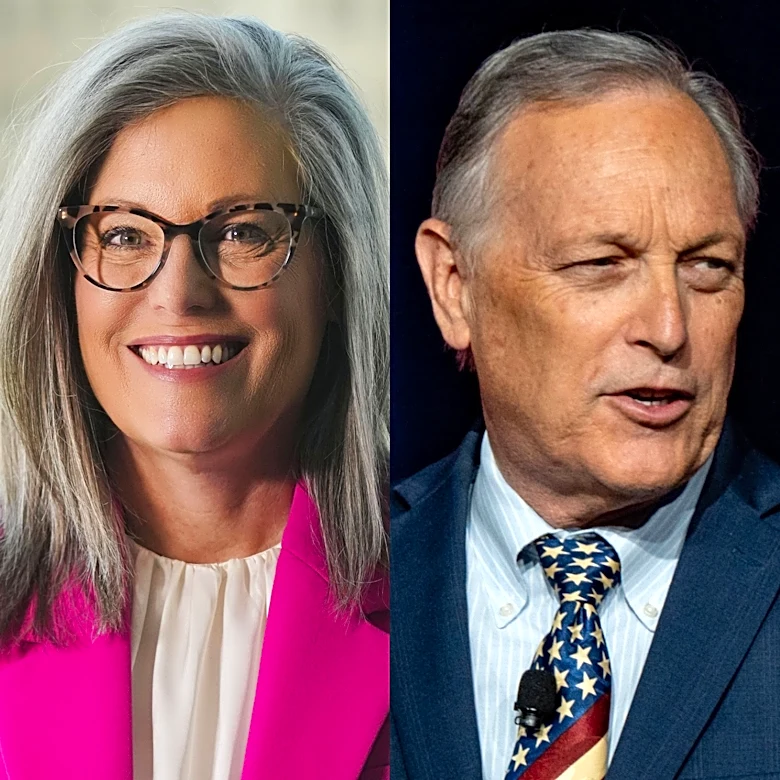
The marquee race on Nov. 3 pits Democratic incumbent Gov. Katie Hobbs against Republican Rep. Andy Biggs. Two other third-party candidates, Teri Hourihan and Risa Lombardo, are on the ballot and could pull enough support to be decisive in an otherwise close race.
Hobbs began the cycle as her party's most vulnerable incumbent governor, according to race raters, but she now leads Biggs in recent polling in a national environment that favors Democrats.
She has a massive fundraising advantage and has won statewide races twice before, whereas Biggs has only
held a safely Republican congressional seat that helped establish him as one of Washington's most conservative members. The gubernatorial race has taken an overwhelmingly negative turn, with both candidates lobbing more attack ads than outlining a policy plan for the future of Arizona and its 7 1/2 million residents.
Here's what you need to know about the race before ballots go out Oct. 7. Election Day is Nov. 3.
Katie Hobbs, Democrat
Hobbs is a former state lawmaker who served four terms in the state House and Senate. She was elected Arizona secretary of state in 2018, a position that raised her national profile two years later as she defended Arizona's election results against President Donald Trump's false claims of fraud in the 2020 presidential election.
Hobbs defeated GOP opponent and Trump ally Kari Lake to win the Governor's Office by about 17,000 votes in 2022.
As governor, Hobbs has used her executive power to notch wins, including on groundwater use and conservation, but major policy changes have been frequently stymied by the Republican-controlled Legislature. She's better known for the 541 bills she has vetoed in the past four years, fulfilling her pledge to serve as a backstop against Republican legislation even as she has governed with a middle-of-the-road approach. Hobbs has leaned into issues like border security, dispatching the National Guard to Arizona's border with Mexico, and has echoed her GOP predecessor by signing new laws that help businesses or cut red tape.
Her administration has been criticized for a lack of transparency since Day 1, and lingering questions about a donor who received more favorable terms in a state contract under Hobbs' leadership have dogged the governor's reelection campaign. An Arizona Auditor General investigation into that situation is ongoing, while another probe found insufficient evidence to support a bribery charge against Hobbs.
Former Republican Mesa Mayor John Giles, who is no longer registered with either political party, is Hobbs' pick for lieutenant governor.
Latest coverage:
- Fact check: Did Hobbs end every data center tax break?
- Four years in: Hobbs reflects on challenges, wins
- Who gets the credit?: Hobbs touts tax cuts shaped by GOP
- 2026 stakes: Will Hobbs’ 4th year help or hurt?
- Budget standoff: Hobbs ends veto blockade as talks resume
- Mixed message: Biggs hits Hobbs over interviews — but dodges some himself
- Standoff deepens: Hobbs rejects Republican budget, calls it reckless
- Mexico trip questions: Hobbs says funding is “none of your business”
- Criminal probe: Mayes seeks interview with Hobbs in Sunshine Residential investigation
- Water ruling: Judge overturns Hobbs groundwater restrictions
- Capitol clash: Hobbs says bills will be dead on arrival
- Education fight: Hobbs vetoes school salary transparency bill
- Charlie Kirk highway? Hobbs rejects GOP-backed bill
- Energy pitch: Hobbs adopts GOP-style “all-of-the-above” approach
- Need help paying bills? How to apply for Arizona utility aid
- Why she leads: Hobbs ahead of Biggs, Schweikert in matchups
- Local clash: Southern Arizona leaders push back against Hobbs on mine plan
- Board shake-up: Hobbs removes school choice advocate from ed board
- License plate veto: Hobbs blocks Charlie Kirk tribute bill
- Ethics push: Hobbs proposes reforms after ‘pay-to-play’ claims
- Missing moment: Hobbs absent as Dem governors protest Trump snub
- New resource: Hobbs launches ‘Know Your Rights’ site for Arizonans
- New probe: AZ House hires Trump‑tied firm to investigate Hobbs
- Dem split: Hobbs says Mayes should retract ICE remarks
- Top priority: Hobbs makes affordability focus of 2026 agenda
- Voucher fight: Hobbs targets school choice program for reform in 2026
- Big picture: Governor leans pragmatic in divided state politics
- “Potential case of pay-to-play”: Republic reporting prompts GOP investigation of Hobbs
- National divide: Trump Guard plan splits Arizona governor candidates
- Back on the ballot: Hobbs announces reelection bid, vows to protect voting access for Arizonans
- Child care funding:2025 budget includes funding to reduce wait for child care
- Medical debt relief: Hobbs announces program to get rid of medical debt
Andy Biggs, Republican
Biggs has represented the southeast Valley's ruby-red Congressional District 5 in the U.S. House of Representatives for 10 years. He is a former leader of the U.S. House Freedom Caucus, the chamber's most conservative bloc, and previously was a state lawmaker. He was elected to the Arizona Legislature for seven terms across both the House of Representatives and Senate. Biggs was chosen by his peers as Senate president in 2012 and held the role until his departure for Congress four years later.
A libertarian-leaning conservative, Biggs has opposed tax increases and advocated for a narrow role for government to defend constitutional rights. Those views have led to controversial votes, including a 2011 proposal to reduce Medicaid enrollment to one-tenth of its size at the time and his repeated attempts to repeal Obamacare, formally known as the Affordable Care Act.
Biggs is tethered closely to Trump and carries his endorsement. Biggs has supported the president's war in Iran and aggressive tariff policies, both of which have driven up costs. Those positions could be significant liabilities in a year when polling shows voters are concerned about pocketbook issues. His allegiance to Trump has also forced him to take seemingly contradictory positions, for example, on releasing the investigative files related to financier Jeffrey Epstein and on Trump's massively expensive Big Beautiful Bill.
Biggs won the Republican nomination to challenge Hobbs in July, carrying 74% of the vote in a four-way primary in which he trounced fellow Rep. David Schweikert, R-Ariz. He has said if he is elected he would sign many of the bills Hobbs has vetoed in the past four years.
Biggs has named Sine Kerr, a former state senator and dairy farmer, as his running mate.
Latest coverage:
- Democrats disagree: Lawmakers reject Biggs' bipartisan characterization
- Voucher showdown: Biggs' deal collapses, fight heads to voters
- Housing vote: Schweikert, Biggs oppose bipartisan bill
- Republican debate: Here's where the candidates stand on key issues
- GOP showdown: Debate stays measured, not combative
- Mixed message: Biggs hits Hobbs over interviews — but dodges some himself
- Trump weighs in: President says Biggs would be “great” in governor’s race
- Money gap: Biggs builds advantage as GOP rivals compete for resources
- Pain at the pump: High prices put affordability front and center in race
- Why she leads: Hobbs ahead of Biggs, Schweikert in matchups
- 2020 still looms: Past efforts to challenge results shape 2026 contest
- Field clears: Biggs emerges as GOP front-runner after rival exits
- Federal oversight fight: Biggs pushes to end sheriff’s office monitoring
- Fallout grows: Arizona Republicans condemn racist chat remarks
- Shifting ground: Some Republicans changed positions on Epstein files as pressure mounted
- National divide: Trump Guard plan splits Arizona governor candidates
- Early stakes: Top Republicans ramp up ads, fundraising a year out
- Double endorsement: Trump throws support behind Biggs and Taylor Robson
Teri Hourihan, No Labels Party
Hourihan is a licensed professional counselor. Her business, Teri's Health Services, offers behavioral health care services. At its largest, the business counted 250 employees, but after a state crackdown on Medicaid fraud in 2023, employment dropped to 19, she said. Hourihan has said that her grievances with how the government and courts handled the crackdown are driving her campaign.
Hourihan said if she is elected she will address the rising cost of living, start a universal child care program, defend school choice and accountability for education dollars, and promote government accountability — among other policy goals. She has been critical of both parties and their nominees, Hobbs and Biggs, pledging to work across party lines if she is Arizona's next governor.
She chose Angela Harrolle Mohan as her running mate. Mohan is a real estate broker and former chief executive officer of The 100 Club, a nonprofit that supports families of first responders who are killed or severely injured in the line of duty.
Latest coverage:
- Q&A: No Labels candidates for governor talk priorities before July primary
Risa Lombardo, Green Party
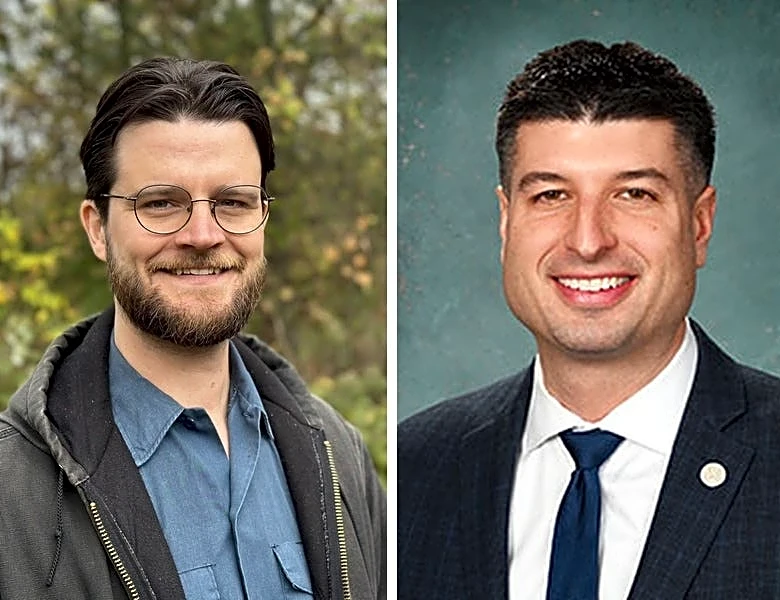
Lombardo won the party's nomination in July — over the objection of the party's leaders who said Lombardo was a sham candidate running just to pull votes from the two major party candidates. The party raised concerns that Lombardo was a Republican just trying to split votes.
Reporting by The Arizona Mirror showed Lombardo was a Republican precinct committeeperson just days before she indicated her interest in running for governor as a Green Party candidate. Lombardo told the news organization and Phoenix New Times her candidacy was legitimate and she had also previously voted as a Democrat.
Lombardo is a retiree who previously did clerical work for Phoenix law firms. She picked intensive care unit coordinator Lisa Castillo as her running mate.
This article originally appeared on Arizona Republic: What to know about Arizona's race for governor