
Just one month after it began, the Arizona Cardinals' 2026 season has flown off the rails.
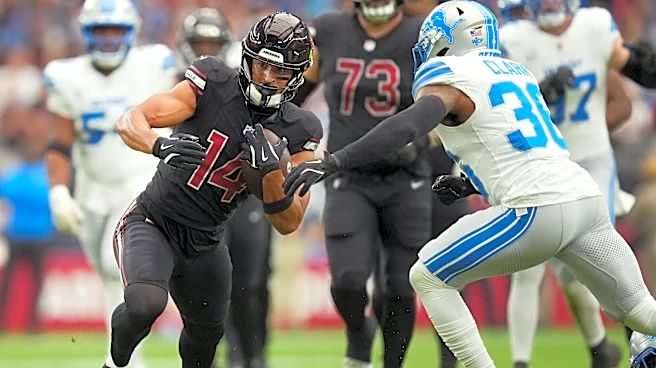
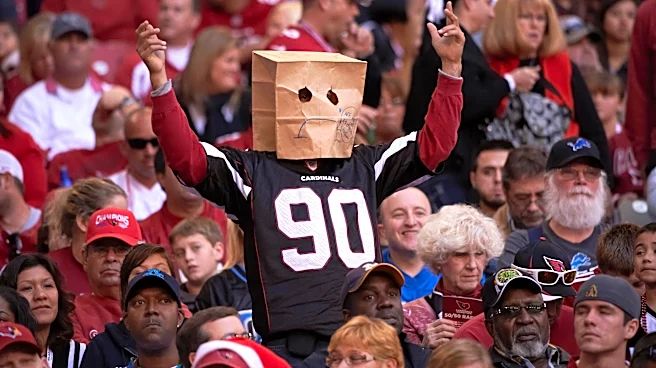
They are 1-4, with an offense that ranks 22nd in points scored and a defense that lands dead last in points allowed. This week, they lost their ninth consecutive home game in a 45-21 demolition at the hands of the Detroit Lions. They oscillate between close losses and blowouts; wins are only scattered in as a sporadic treat.
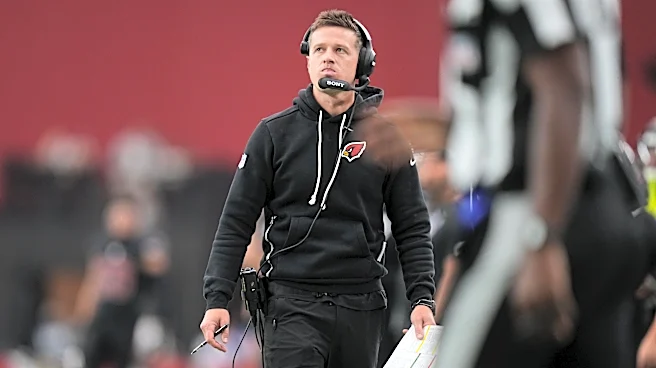
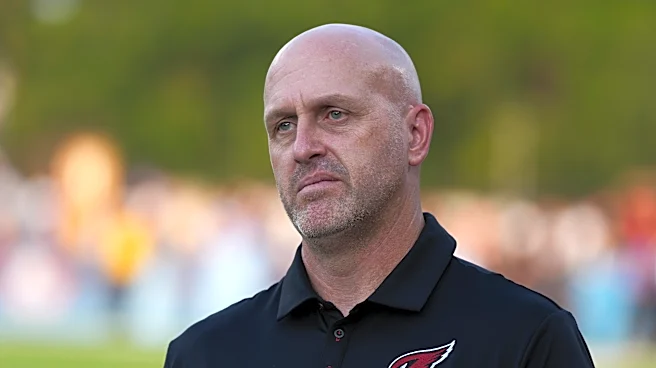
All of this has sent ire flowing in the direction of head coach Mike LaFleur, who has stood firmly behind quarterback Jacoby Brissett and retained defensive coordinator Nick Rallis. And certainly, there are areas in which the current roster can be better.
But the Cardinals' predicament is about talent.
After the loss to the Lions, they
are now 16-40 under general manager Monti Ossenfort, who became the fourth-fastest general manager to 40 losses this century.
Nearly four years after Ossenfort was hired, the Cardinals do not have a viable franchise quarterback. Their offensive line has been a mess since the start of last season. Their pass rush is on its fourth consecutive year as a bottom-10 unit. And their secondary struggles to cover much of anything downfield.
Put another way: Who are the building blocks on the Cardinals roster?
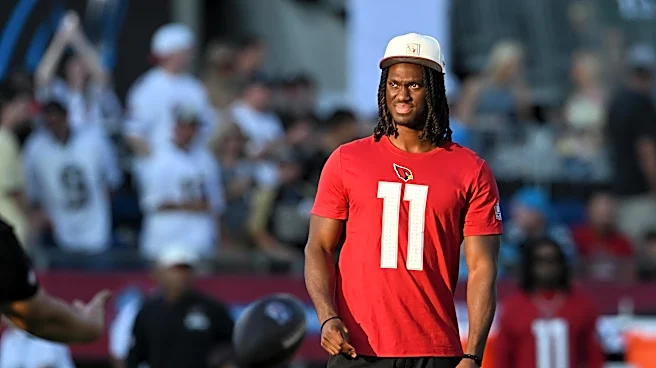
Trey McBride and Michael Wilson are foundational pieces, no doubt. Jeremiyah Love might be, but he’s off to a slow start, hampered by workload concerns. Paris Johnson Jr. might be, but it will be difficult to extend him this offseason after a season-ending torn biceps injury. Walter Nolen might be, but he’s been surprisingly quiet this year.
Anyone else you’d like to submit? Will Johnson and Garrett Williams haven't been healthy enough to tell. Carson Beck and Chase Bisontis haven't yet played an NFL snap. Budda Baker and Josh Sweat are veterans who may not align with the Cardinals timeline. Hjalte Froholdt, Mack Wilson Sr. and Roy Lopez are nice players, but they’re not going to hoist a franchise out of the ashes.
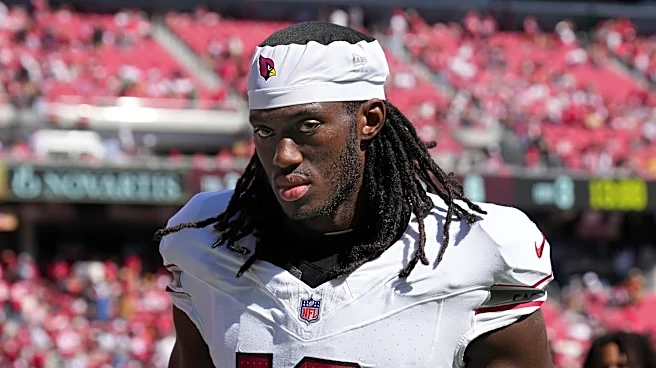
And when the Cardinals traded Marvin Harrison Jr. over the weekend, they penned the final chapter for a player who was supposed to be the exception, lifting them out of the abyss.
The Cardinals declined a request to make Ossenfort available to reporters after that trade. In the past decade, 11 former top-five picks have been traded away while on their rookie contracts. Before Ossenfort, all but one of the general managers who made those deals held a press conference in the week following the trade.
The bigger picture, though, is more concerning. Unless the coming months bring a miraculous turnaround, the Cardinals will be left with three options this offseason, each equally uncomfortable.
Option 1: Fire both Ossenfort and LaFleur
The Cardinals could opt for a clean slate this winter. They’ll likely hold a top-five pick and, with it, the opportunity to select a new franchise quarterback. Maybe it would be best to start over, entrusting that decision to a new general manager who could hand-pick the head coach best suited for developing the new quarterback.
But that would be awfully harsh on LaFleur, who was handed an undermanned roster, viewed almost unanimously as a bottom-five group in the NFL. Even a 3-14 finish would match expectations, and coaches are seldom fired for matching expectations. Plus, would future prospective candidates want to accept a job with that precedent?
That being said, firing first-year coaches is surprisingly common — there have been 20 such cases this century, including Arizona with Steve Wilks in 2018. But typically, those fall into one of two categories: Either the situation is an unmitigated disaster, with internal strife and inexplicable in-game decision-making, or the development of a young franchise quarterback is being squandered. Wilks had a foot in both buckets.
The current Cardinals, obviously, can’t fit into the second category, given they don’t have a young franchise quarterback. And for now, the locker room appears united behind LaFleur. Unless that changes, he will deserve another opportunity with a more talented roster.
Option 2: Fire Ossenfort, keep LaFleur
Ossenfort’s record speaks for itself. He’s made 17 picks in the first three rounds but has never acquired a Pro Bowler, a distinction that appears unlikely to change this year. So the Cardinals could keep LaFleur while searching for a new general manager.
But that risks creating an incongruity. If the new general manager is selecting a new franchise quarterback, shouldn’t he also be selecting the head coach that he believes is best suited to develop that quarterback?
Since 2000, four first-year head coaches have been retained while their general manager was fired. Combined, they produced a 36-58 record after the general manager’s dismissal. None ever reached the playoffs.
Expand the parameters, and 28 total head coaches this century have been retained after a general manager change. That group does include some significant success stories, like Andy Reid (in Kansas City) and Sean McDermott.
Most of those cases are either previously established coaches (like Reid) or new hires who hadn’t yet coached a game when the general manager was dismissed (like McDermott).
Ron Rivera, though, provided a counterexample in Carolina. He was retained after two losing seasons, despite a general manager change. Three years later, the Panthers were in the Super Bowl.
Maybe that’s the blueprint. But with a new quarterback coming, it’s a tight line to walk.
Option 3: Keep both Ossenfort and LaFleur
Here, the Cardinals could offer LaFleur a longer runway while maintaining the cohesion between general manager and head coach.
The risk, of course, is that they would be entrusting yet another top-five pick to a general manager who has not been able to maximize those selections. They would also be retaining a general manager whose record leaves him with few peers.
Unless the Cardinals finish with at least six wins, Ossenfort will become the ninth general manager since 2000 with 20 wins or fewer through his first four seasons — despite the benefit of working in the 17-game era.
Of the previous eight, three did not make it to the start of Year 5. Each of the other five produced a losing record across the remainder of his tenure.
But again, there’s a counterexample, this one right here in Arizona. Through four seasons, Rod Graves was 20-44. Two years later, he guided the Cardinals to their lone Super Bowl appearance.
Graves, though, did not have to draft a new quarterback, with Kurt Warner already in town. That’s the key piece here, complicating every step of the Cardinals’ decision.
Perhaps the worst part is that this was all so predictable last winter, when the Cardinals made the decision to keep Ossenfort while firing Jonathan Gannon.
At that point, their roster woes were already clear. So too was the murky situation at quarterback. There were no standouts available in free agency, and the draft was always unlikely to have a viable option at No. 3 overall.
So on Jan. 5, when the Cardinals fired Gannon, the odds of their 2026 season becoming a success already sat somewhere between slim and none.
Maybe owner Michael Bidwill looked at that situation and decided, then and there, that he trusted Ossenfort for the foreseeable future. There’s a benefit to stability at general manager, where decisions must be made with the franchise’s long-term interest in mind. If Bidwill felt confident in Ossenfort’s ability to navigate another multi-year rebuild, prioritizing continuity was logical.
But that day, his message signaled urgency.
“We've done a quick turnaround in our not-too-distant past,” Bidwill said. “I am looking forward to that, and I hope it's gonna be in the first year, not in the second year.”
It’s not going to be in the first year, barring a miracle. And that raises questions about where the long-term vision has been all along.
This article originally appeared on Arizona Republic: After slow start, Cardinals again facing uncomfortable decisions