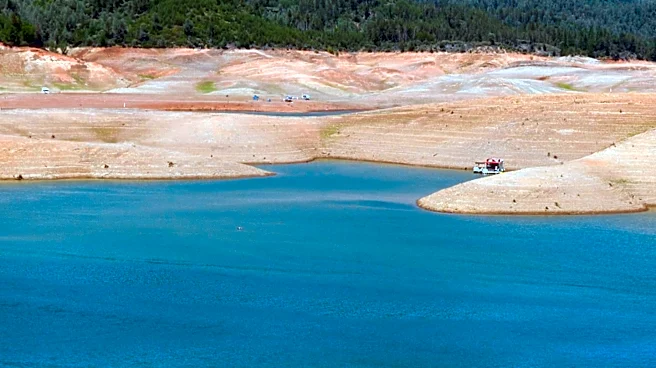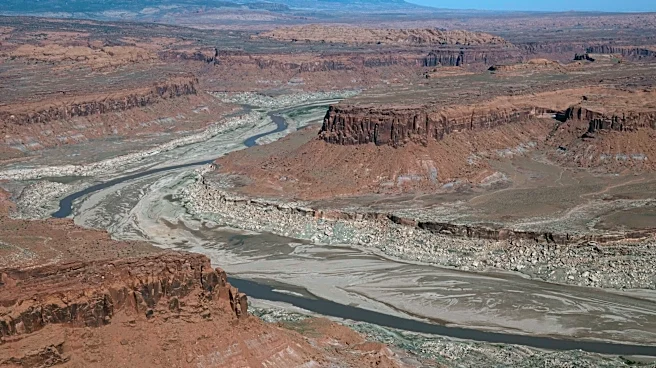





There's an argument gaining traction in Arizona that sounds simple enough. We live in the desert. The Colorado River is drying up. So maybe Arizona needs to stop growing.
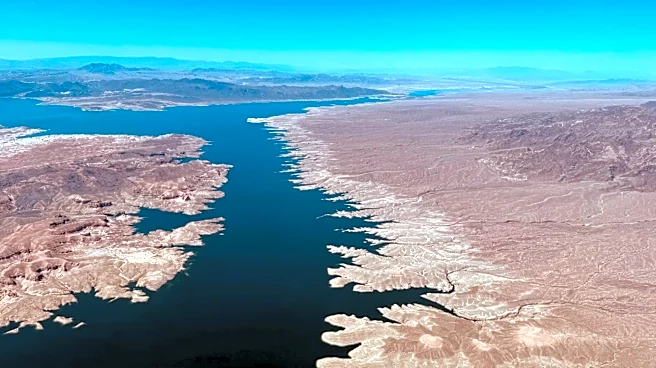
I understand why that resonates. If you're watching Lake Mead fall, hearing about federal water cuts, and then reading about another semiconductor plant, housing development or data center, it's easy to assume they're all fighting over the same shrinking glass of water.
They're not.
Rusty Childress made the case for that argument in The Republic last week. He's right about the seriousness of the situation. He's right that Arizona could face the deepest cuts in the basin. He's right that not every project penciled out on paper deserves to be built. But he's dead wrong about the most
important thing: Arizona's growth is not the cause of the shortage, and building less won't fix it.
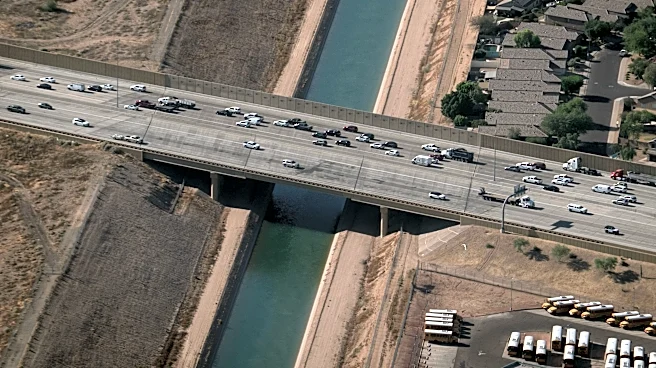
Start with the water itself. Arizona doesn't have one giant bucket that every home, farm and employer draws from. Different communities rely on different combinations of Colorado River water, groundwater, in-state surface water, reclaimed water and stored supplies.
Agriculture is by far the largest user of water in Arizona. Industrial water use accounts for about 7 percent of the state's total. That doesn't mean industry gets a free pass or that every project belongs everywhere. It means that when someone tells you Arizona's water crisis is a growth problem, they're pointing at the smallest slice on the plate.
Here's the part almost nobody explains. In much of Arizona, when irrigated farmland becomes housing, that land uses less water than it did before. An acre of cotton uses more water than an acre of houses. The new subdivision isn't adding demand. It's reducing it. That's the entire premise behind the ag-to-urban law the Legislature and Gov. Katie Hobbs passed last year.
That kind of efficiency is nothing new for us. Arizona has added millions of residents over the past 40 years while using roughly the same amount of water it used decades ago. We did it by investing in conservation, reuse, recharge and storage. Growth didn't prevent those investments. Growth helped pay for them.
Data centers deserve a straight answer, because they've become the villain in this story. They are not all built or cooled the same way, and newer facilities increasingly use closed-loop and air-cooled systems designed to cut water demand. Large industrial projects should also be expected to help pay for the treatment, reuse, and infrastructure their growth requires. If those expectations need to be tougher, make them tougher. It's not a reason to stop building.
What gets lost in that debate is what growth actually pays for.
When a major employer invests billions of dollars here, it hires people, supports suppliers and small businesses and pays into the tax base at a higher rate than a homeowner does. Those revenues help pay for roads, schools and public safety. Take that growth off the table and those bills don't disappear. They just fall more heavily on the people already here.
Housing is part of this equation too. Arizona already has an affordability problem. If our answer to water scarcity is simply to build less, we should be honest about what comes with that: fewer homes, tighter supply and your kids priced out of the state they grew up in.
None of this means Arizona should approve every development proposed anywhere.
A 100-year assured water supply designation shouldn't, in fact, count as proof of anything if it rests on optimistic assumptions about water nobody has found yet. A designation is a document. It is not water. If a project can't demonstrate a real supply, it shouldn't be built.
That's responsible growth. It's a completely different argument from "Arizona's growth is the problem."
And that difference matters right now, because the second version lets Washington off the hook.
The federal government is weighing Colorado River rules that could force Arizona into the deepest reductions in the basin while asking far less of other states. We've already conserved. We've already invested. We've already planned for a smaller river. Arizona's leaders, Republican and Democrat, have been united in saying every state drawing from this river needs to share the responsibility.
There are hard choices ahead. Water will get more expensive. We'll need more conservation, more reuse, more infrastructure and more new supplies. Some proposed developments won't make sense in some places.
But retreating from growth isn't a water strategy.
The river drew a boundary. It didn't draw a wall around Arizona's economy. Building less won't refill Lake Mead. All it will do is make life more expensive for the people already living here.
Danny Seiden is the president and CEO of the Arizona Chamber of Commerce & Industry.
This article originally appeared on Arizona Republic: Don't blame growth for Arizona's water crisis | Opinion