





Thomas Culpepper needs a job.
Culpepper has experience in landscaping, restaurant work and painting — and a felony conviction.
He said he’s been putting in between five and 10 job applications every day. Culpepper thinks getting his foot in the door with a job would help him turn his life around.
“I just need a job,” Culpepper said. “A job, and just get myself going.”
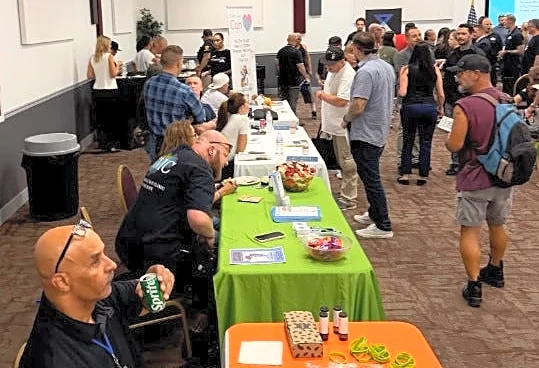
Culpepper was one of the attendees of a Sept. 3 resource fair and launch of the Phoenix chapter of TimeDone, a national organization that advocates for members with a past arrest or conviction. The chapter is advocating for policies to remove barriers and stigma for "second-chance" applicants, who often have a higher rate of unemployment.
Every seat was filled at the meeting in Glendale,
which occurred just a few days before Labor Day. More than two dozen service providers set up tables.
Saad Soliman, the national director of TimeDone at the Alliance for Safety and Justice, said it was common for the national organization’s events to have standing room only. At some events, they’ve had to turn people away, which Soliman said speaks to the need for workforce reentry support.
Soliman called barriers to workforce reentry an economic development issue.
“The labor force, because of unnecessary exclusionary policies that are administrative, that we’re seeking to address, is lacking a very, very valuable labor force of adults that are capable of performing this labor: skilled, credentialed, trained, and most importantly, desirous of the opportunity and valuing the opportunity,” Soliman said.
He added that employers who hire workers with old criminal records report that while second-chance and fair-chance employees are difficult to recruit, they are easy to retain.
Soliman said applicants with criminal records may feel the stigma limits their opportunities.
“Adults living with arrest and conviction histories don’t even believe that it’s possible, so they stop themselves from even applying,” Soliman said.

Vincent Valenzuela, the new Arizona statewide chapter coordinator for TimeDone, got involved in the prison reentry world after developing an app to help people serving time maintain a relationship with their children by delivering gifts. He was inspired to create the app while serving a 14-year sentence.
“One of the biggest things that affected me is, I would be laying in bed and my son’s birthday would be the next day,” Valenzuela said.
Valenzuela’s son was 3 when he went to prison. When Valenzuela emerged, he was 16. The Tucson native was convicted of second-degree murder and assault with a deadly weapon.
When he left prison in 2022, Valenzuela said it was challenging to find a job and safe housing. He worked 28 days straight for a property owner he was acquainted with, doing yardwork and other odd jobs to afford the first and last month’s rent on a home.

He remembered applying for jobs, and facing the box asking if the applicant had a criminal record.
“Seeing that box, you’re just kind of like, ‘Man, if I check it, it’s over,’” Valenzuela said. “They’re not even gonna do a background check. They’re just gonna say no.”
Unable to find a job, Valenzuela decided to go through an apprenticeship program instead and learn how to install and repair HVAC systems. A friend, who also had been previously convicted, ultimately recommended him for a job.
“That was the only reason I got a job, because somebody that worked somewhere vouched for me to get the job,” Valenzuela said.
Valenzuela said he understands why business owners may be wary to hire people with past criminal records.
“If I was a business owner, you automatically go with the path of least resistance,” Valenzuela said. “But at the same time, if you have someone coming, willing to work, put in the work, they actually can prove there’s nothing wrong with giving people second chances.”
Brandon Varner knows firsthand how work can change lives. First convicted of armed robbery, and then again for burglary, robbery and organized retail theft, Varner has spent about nine years in prison, starting at 21.
Varner got sober about two years ago after hitting “rock bottom.” When he emerged from prison the second time, he initially struggled to find a job. After several rejections, however, Varner was hired as a peer support navigator by Cornerstone Healing Center.
He said his job motivates him to stay sober.
“I’ve got a lot of people looking out for me,” Varner said. “And then, I can share that with my clients now.”
Alaina Mencinger covers energy, tech and utilities. Reach her at Alaina.Mencinger@usatodayco.com.
This article originally appeared on Arizona Republic: How 'second chance' hiring changes lives in Phoenix