






Picture this: a Valley resident boards an electric aircraft near Sky Harbor and arrives in Tucson 20 minutes later. A family heading to Flagstaff boards another at Deer Valley Airport and avoids gridlock on Interstate 17. In Yuma, a patient in need of specialized medication from a Phoenix pharmacy gets it in 45 minutes, rather than four hours.
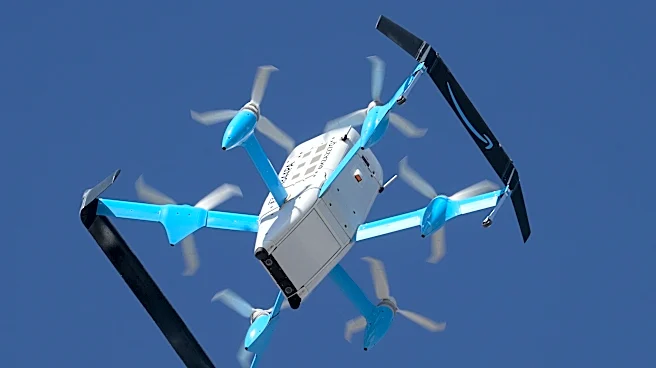
This is advanced air mobility, or AAM. It moves people and goods using electric aircraft that take off and land vertically and fly at lower altitudes than commercial jets. It includes drones and passenger aircraft about the size of a large SUV.
A new report prepared for the Maricopa Association of Governments lays out where the industry stands. My conclusion: Arizona could become the advanced air mobility
capital of the country ― but only if we act now.
We've done this before
A decade ago, driverless cars sounded like science fiction. Today, Waymo is simply part of how the Valley gets around. Research from the Insurance Institute for Highway Safety found Waymo vehicles in Phoenix were involved in 76 percent fewer crashes than human drivers. Commercial drones and AAM will have to earn trust the same way ― with transparent safety data the public can see for themselves.
Why Phoenix
Sky Harbor's structured airspace, layered with established helicopter routes, gives us a predictable, already-mapped environment that industry experts call a logical starting point for AAM corridors.
Then there's our airport system: Sky Harbor, Mesa Gateway and general aviation fields stretching from Scottsdale to Buckeye already form the bones of a vertiport network. Add our year-round flyable weather and AAM aircraft ranges from 30 to 150 miles, and we have a near-perfect setup.
Amazon already flies delivery drones here, Zipline has announced plans to enter the Valley and Wing and Walmart are targeting Phoenix for 2027. Flying beyond visual line of sight, once one of the industry’s biggest delivery hurdles, is now authorized for some operators, including Amazon in Phoenix.

Why now
Last year, an executive order launched the FAA's eVTOL Integration Pilot Program to fast-track real-world testing. Eight projects were selected. Arizona wasn’t chosen to lead one. That distinction went to Utah's uFLY, a five-state testbed in which Arizona is a partner alongside Oregon, Idaho and Oklahoma. A foot in the door, not the head of the table, and a reason to keep pushing for a bigger role as this program unfolds.
One major difference from Waymo: Arizona controlled the autonomous vehicle regulatory environment. With drones and AAM, the FAA controls the airspace, not us. Phoenix's leverage is land use. We don't control the skies, but we control the ground beneath them, and that's enough to shape how this industry takes root here.
What to do
Phoenix should build on the Aviation Department's own framework and adopt vertiport-ready zoning, get utilities ahead of future power demand, and launch public engagement now. State law limits our airspace and drone-rule authority, except for takeoff and landing in city parks, so zoning and infrastructure are where local leverage lives.
The state must fund the Advanced Air Mobility Fund, which exists on paper without appropriations, and press for a lead role in the next round of pilot programs.
MAG should use its convening authority to align zoning across city lines and fold AAM corridors into our long-range transportation plan.
The choice
The question isn't whether advanced air mobility becomes part of American transportation. That's already decided. The question is whether Phoenix designs this network, or imports someone else's.
Ten years ago, we let a new technology prove itself on our streets and it paid off with safer roads and a national reputation for innovation. We have the airports, the climate and the land to do it again. What we need now is the will to act, and I'm ready to work with local, regional and state leaders to make it happen.
Ann O’Brien is a Phoenix city councilmember.
This article originally appeared on Arizona Republic: Phoenix could lead America's flying-taxi future. Let's act | Opinion