



Few words were needed to convey the overwhelming shock and devastation that gripped the nation as terrorists hijacked planes and crashed them into the World Trade Center and Pentagon on Sept. 11, 2001.
Nearly 3,000 died. Thousands more were injured. The nation was changed.
"I saw bodies falling out — Oh, God, jumping, falling," a Washington Post headline read. "Trapped survivors call for help on cellphones," read The Arizona Republic. The nation "saw evil" and the president was promising "to avenge lost lives," Chicago Tribune headlines said. In the Boston Globe, a columnist wrote, "In an unfathomable way, we now know terror and vulnerability."
As the nation shifted between horror and grief, time also paved the way for other emotions. Anger. Fury.
Vengeance.
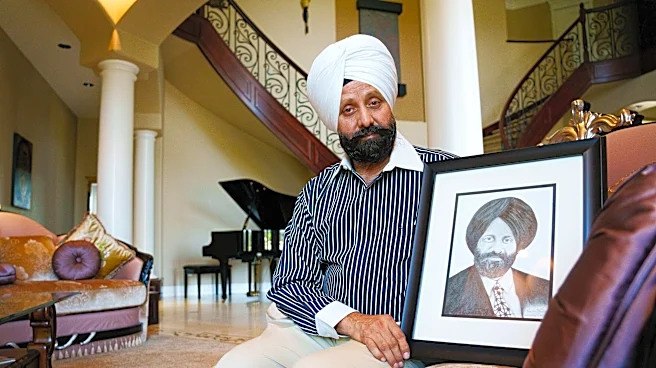
Balbir Singh Sodhi became the country's first hate crime victim after 9/11, just four days after the attacks, in Arizona. The 50-year-old east Mesa gas station owner wore a turban and a long beard as part of his faith. He was Sikh, but he was shot and killed by Frank Roque, who said he wanted to "kill a Muslim" in retaliation.
Then-President George W. Bush sought to recalibrate the nation in a speech at the Islamic Center of Washington, D.C. two days later.
"The face of terror is not the true faith of Islam. That's not what Islam is all about. Islam is peace," Bush said. "These terrorists don't represent peace. They represent evil and war."
But in the years after the terrorist attacks of Sept. 11, 2001, Muslims in the U.S. have described Islamophobia as ripping and rippling through the country like a current — always there but changing in intensity. In Arizona, that tide has risen, with Muslims pointing to a series of incidents, many in the past year.
A bill targeted "Sharia law" in the Arizona Legislature this past session. A violent attack on a north Phoenix mosque and refusals by police to accommodate Islamic headwear have ostracized Muslims and prevented them from practicing their faith. Lawmakers have called for the Council on American-Islamic Relations, a group that defends Muslims' civil rights, to be deemed a "terrorist" organization, leaving Muslims feeling further threatened.
The religion's most vehement critics, including government officials and elected representatives, have justified the demonization on the grounds that Islam is not a religion but rather a radical ideology incompatible with American values.
Yet Islam is the second-most popular religion in the world, drawing 2 billion followers behind Christianity's 2.3 billion, according to Pew Research Center. Hinduism and Buddhism are next at 1.2 billion and 300 million, respectively.
International security scholars have recognized extremist groups from all of these religions and have stressed that blaming religious motivations for 9/11 obscures the root cause of extremist violence.
Robert Pape, a professor of Political Science at the University of Chicago, assembled a database after 9/11 of suicide attacks around the world from 1980 to 2003. His research found that 95% of such suicide terrorism resulted from foreign occupation, not Islamic fundamentalism.
The Center for Strategic and International Studies, in a 2017 analysis on Islamic extremism, said while "the threat of Islamist terrorism within the United States and Europe has been all too real," the more serious threats are the clashes between moderate majorities and extremist factions within Islamic regions.
"Far too little attention" was being given to the problems that "can feed extremism and violence for decades to come," the analysis said. Some of those problems included population decline, failed governance and inadequate economic development.
To defeat extremist violence, the U.S. needs to address those causes, work collectively with largely Muslim states to combat threats and "address the forces that alienate Muslims" within its own borders, the report said.
Failure to address prejudice against Muslims "and confusing the true teachings and history of Islam with extremism ... achieves the very goal that extremist movements have in using terrorism: isolating Muslims from the rest of the world and pushing moderate Muslims toward extremism," the analysis said.
Arizona Muslims who've born the brunt of such stigma and worked on the front line to push back against it have questioned why there seems to be, in their view, broad acceptance of Islamic discrimination. They point to the U.S. Constitution's First Amendment that protects religious freedom and forbids the government from restricting people's right to believe and exercise the faith of their choosing.
Despite the threats, local Muslims said they remained committed to and find hope in the American ideals of freedom and diversity.
"In a lot of ways, being different is what America is supposed to be. The country is made up of so many religions, cultures, backgrounds, experiences. We're not all supposed to look the same. We're not all supposed to believe the same thing or practice faith the same way. Wearing a hijab doesn't make me less American," said Salam Jabaieh, a Muslim graduate from Arizona State University.
Conservative leaders target Muslim practices, groups
Arizona Republican lawmakers made myriad attempts to regulate Islam over the past year that Muslim advocates have rebuked as fearmongering.
State Sen. Janae Shamp, R-Surprise, proposed a bill that would've prohibited Islamic religious rules, known as "sharia," from supplanting state or federal laws or the U.S. Constitution. The bill passed the state House and Senate on party-line votes, despite fellow GOP Rep. Alexander Kolodin of Scottsdale calling it out as a "distraction" to make people "think we're doing something about an issue." It was vetoed by Gov. Katie Hobbs, a Democrat.
Rep. John Gillette, a Kingman Republican, drafted a concurrent memorial urging Congress to designate the Council on American-Islamic Relations, better known as CAIR, as a terrorist group, just days after Texas Gov. Greg Abbott did the same. Florida's similar effort was struck down by a federal judge for "using an executive office to make a political statement at the expense of others' constitutional rights." Arizona's effort passed along party lines but has no effect beyond making a statement.
Rep. David Livingston, R-Peoria, proposed that Arizona recognize the West Bank on official government documents instead by their Biblical titles, Judea and Samaria. The West Bank is a largely Palestinian territory, but hundreds of thousands of Israelis have built settlements there, which a United Nations court in 2024 said was illegal. Arizona Republicans in both chambers passed the measure, but like Gillette's, it was merely a statement and has no real effect.
The policy efforts have been joined by inflammatory rhetoric about Islam at multiple levels of government.
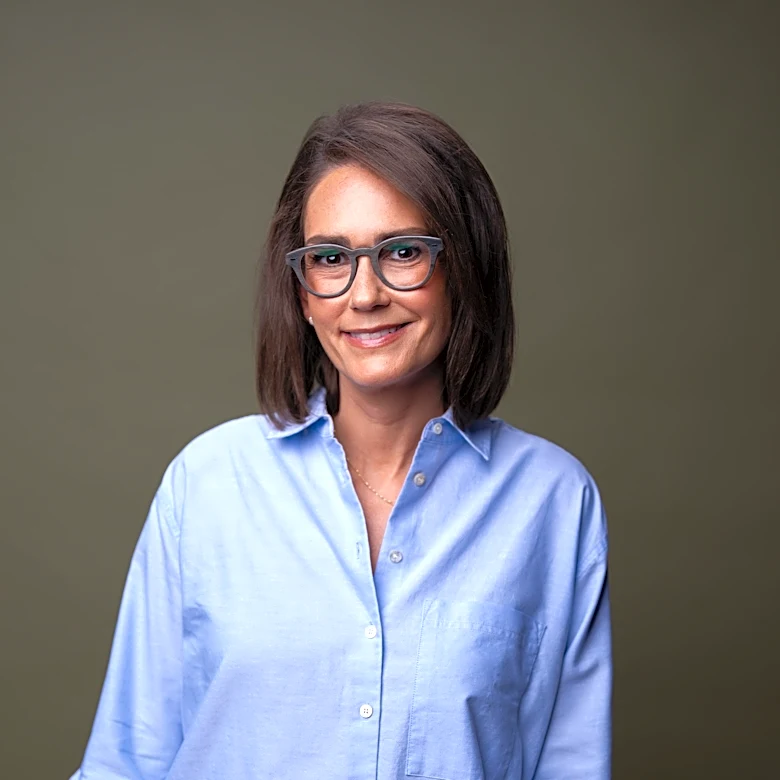
Gillette, in 2025, called Muslims "savages," and suggested some should go back to their "s---hole" countries. Janelle Bowles, a Peoria Unified School District governing board member, posted a photo online in August that said Islam was a political organization run by terrorists, not a religion. Sam Stone, chief of staff to Maricopa County Recorder Justin Heap said on X.com in August, that "Islamists" and communists were trying "to acquire the reins of power" to "subjugate" the public.
Shamp, Gillette, Livingston and Stone did not respond to request for comment from The Arizona Republic.
Bowles previously told The Arizona Republic that as a school board member, she represents every student regardless of their religion, and her posts were only a reflection of her Christian faith.
"These beliefs never should be confused with discrimination in America. We fully uphold religious liberty while teaching that every person is respected," she said. "Like every American citizen, I have the my First Amendment right to express my religious beliefs and my faith publicly."
Rhetoric and policy endangers Muslims, advocates say
Local Muslim leaders say the sort of fiery rhetoric and anti-Muslim proposals coming from political leaders has stigmatized and endangered the community.
In March, a man named Michael Dominguez attacked a Phoenix mosque where children were present by shooting a BB gun.
Mohamed El-Sharkawy, founder and director of the Arizona Muslim Police Advisory Board, blamed the attack on comments made by federal leaders about the war in Iran. U.S. Secretary of State Marco Rubio had called the leadership of the Islamic Republic of Iran "lunatics." U.S. House Speaker Mike Johnson, R-Louisiana, said "Iran and its proxies" had a "misguided religion."
CAIR, in a statement, blamed it on "the resurgence of 'anti-Sharia' bills nationwide," and called out Shamp and Gillette's bills.
The Maricopa County Attorney's Office indicted Dominguez on nine felony counts related to drug use and aggravated assault and criminal damage. CAIR AZ leaders were disappointed, though, that no hate crime charges were pursued.
"This is just an example of what I think we see on a regular basis ... that we're the villain, it's OK to discriminate against us and it's reasonable to have feelings of mistrust against Muslim Americans because, you know, we do terrorism," said David Chami, a Muslim attorney who works with CAIR.
Chami, who is based in both Phoenix and Dearborn, Mich., said he felt like the outcome would've been different if it had been a synagogue.
"I have no problem protecting Jewish Americans when they're being targeted; we should. But, you know, you just have to apply the same vigor to protecting one group as you do another. ... We're not seeing that from our government officials," he added.
Fighting for the right to wear the hijab
Muslims in Arizona have also faced hurdles battling for the right to wear headwear.
Four women sued multiple police departments and Arizona State University after male officers removed their hijabs while arresting them at pro-Palestinian campus protests in 2024.
The women alleged the officers violated their First Amendment rights by denying their request for religious accommodations, such as removing their hijabs only in front of female officers. An Arizona district court judge dismissed several of their claims, though one against the Maricopa County Sheriff's Office remains.
The complaint had said the Sheriff’s Office had been sued for the "exact violation before, in 2009, by a Muslim woman named Eman Mabrouk. Yet violations persisted, culminating in a 2024 DOJ investigation into forced hijab removals during protest arrests."
Jabaieh, one of the plaintiffs, said she was in jail for 26 hours without the covering she'd worn since she was in high school.
"You wouldn't want somebody to take off your shirt," Jabaieh said. "I felt stripped, and I felt exposed. I felt scared. I felt humiliated. I felt small."
She called wearing the hijab "something that was deeply personal between me and my religion that was taken out of my control."
The incident echoed other interactions she's had throughout her life related to her faith, including a man asking her as a teenager whether she was married.
"I was like, 'Oh, no sir, I'm 15,'" Jabaieh recalled telling him. "He was like, 'Yeah, but your people do that, right? Like Muslims, y'all get married at six, eight, nine?"
Chami, Jabaieh's attorney, said it's those stereotypes and resulting fears of discrimination that have prompted some in his family to avoid giving their children traditionally Islamic names. For his own four children born in the decade after 9/11, however, he intentionally did so.
"In my view, it was important to make sure when people met them – and because I expected my children would have a positive influence on the people that they met – that they would be impressive individuals, that they would be positive role models," he said.
At the end of the day, Chami said he believes a "significant majority of people in this country are good people."
"Some of the people who don't like us are just really misinformed, and their perspective changes when they actually meet Muslims," he said.
Taylor Seely's role covering First Amendment issues at The Arizona Republic / azcentral.com.is made possible by a collaboration among Freedom Forum, Journalism Funding Partners and the USA TODAY Network. Freedom Forum does not provide editorial input.
Do you have a story about the government infringing on your freedoms? Reach her at tseely@arizonarepublic.com or by phone at 480-476-6116. She can be reached on Instagram at @taylor.azc.
This article originally appeared on Arizona Republic: Arizona Muslims fight back against discrimination 25 years after 9/11