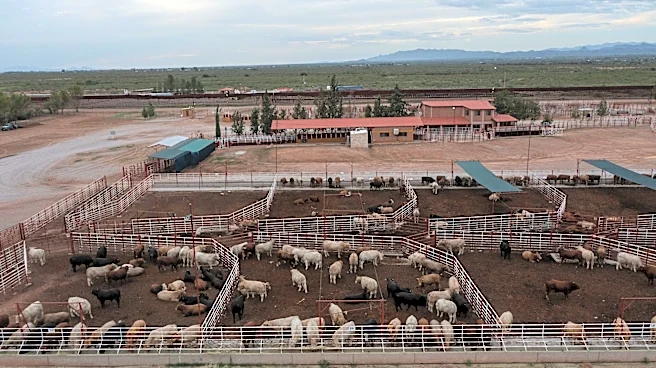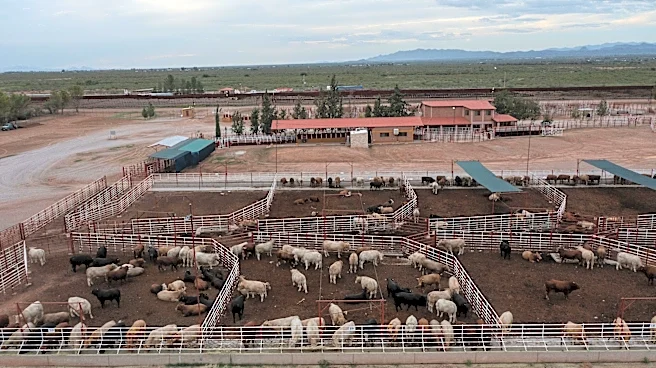

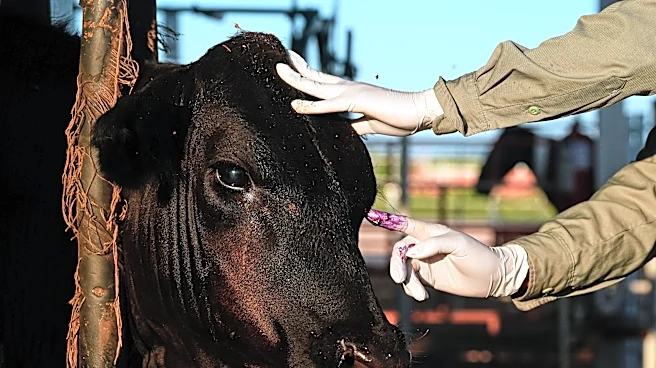
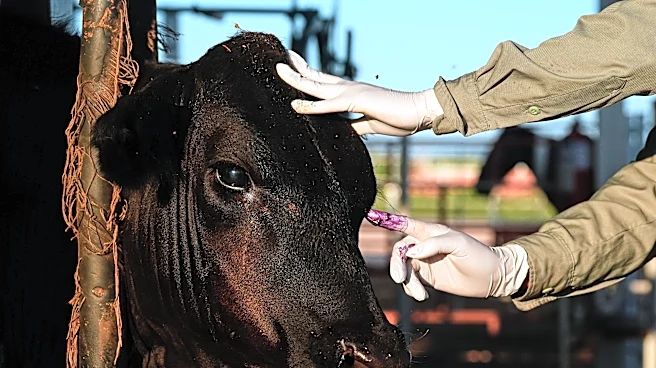

More than 700 calves trotted through the open gates of the Mexico-U.S. border wall Aug. 24, some 15 months after the U.S. Department of Agriculture banned livestock imports due to fears of spreading New World Screwworm cases.
The Arizona port of entry, in Douglas and its sister Mexican city of Agua Prieta, is the first to see resumed cattle trade. It's a long-awaited event for Mexican ranchers and U.S. cattle feeders who lost millions of dollars with the ban.
The reopening is possible because of enhanced inspection protocols, strong partnerships with the Soronan cattle industry and evidence of effective pest containment in Texas, USDA Secretary Brooke Rollins told The Republic in July.
The New World Screwworm is a parasitic fly that lays its eggs
on the open wound of warm-blooded animals, where the maggots then burrow and feed on live tissue. The parasite, historically devastating for the cattle industry and eradicated from North America decades ago, made its way back into Mexico in November 2024 and has spread over 30 Mexican states. The United States has onlytwo active cases in Texas, and about four dozen contained cases.
The reopening of imports through Arizona, which normally sees some 25% of all cattle imports into the United States, will be capped at 750 head of cattle per day and then expanded to 1,200-1,400 head per day. Two ports of entry in New Mexico could follow for reopening.
The Agriculture Department increased inspection protocols and announced $25 million for the construction of a facility in Arizona to disperse sterile New World Screwworm flies. New rules require screening cattle with a detector dog, and fitting them with radio-frequency identification ear tags. There's also the routine inspection by both USDA experts and by the Mexican federal agency responsible for maintaining the health of livestock, SENASICA.
Reopening will support producers and ease economic strain
Members of the Regional Livestock Union of Sonora celebrated the first cattle crossing of 719 calves. The ban represented a 40% loss in sales that adds up to about $280 million, said Juan Carlos Ochoa Valenzuela, president of the group.

The Arizona Cattle Feeders' Association and Cattlemex, a leading importer of live cattle in Arizona, estimated the losses in the Copper State at $261 million, including food and lodging, transportation, feed sales, operational costs and employment.
"This is a start in the right direction, but it's still not going to be enough to make up for the lost jobs, the lost revenue, and the lost economic benefit that Mexican cattle bring to the U.S. economy," said Jourdan Bell, a producer with Cattlemex, based in Tubac.
In an emailed statement to The Republic, USDA officials said the agency heard directly from "valued stakeholders across the livestock industry" who wanted the ports of entry reopened "to support producers, maintain efficient trade flows, and reduce economic strain caused by prolonged closures."
On Aug. 19, Mexican authorities confirmed a parasitic infection caused by the New World Screwworm in a five-year-old cow in the Sonoran municipality of Álamos, about 400 miles south of the Douglas port of entry.
The state of Sonora with its federal counterparts activated emergency surveillance and containment, and dispersed sterile flies around the area. Mexico recently opened a sterile fly production facility in Chiapas with the support of the United States.
A tax exemption to lower beef prices
Benefits to the consumer won't come quick. Economists doubt the resumed exports will bring relief to record-high brief prices.
The United States has the smallest herd numbers in seven decades and rebuilding inventory will take time. Also, imports will only resume on the Arizona port of entry for now, which represents a portion of the total Mexican cattle imports in a year.
"The opening of the border in Douglas is not going to do anything for relieving high beef prices until at least another six months out," Russell Tronstad, a University of Arizona professor and extension specialist, told The Republic in July
Feeder cattle being imported into the U.S. will need to be fed for another 6-12 months before they reach their slaughter weight, he added.
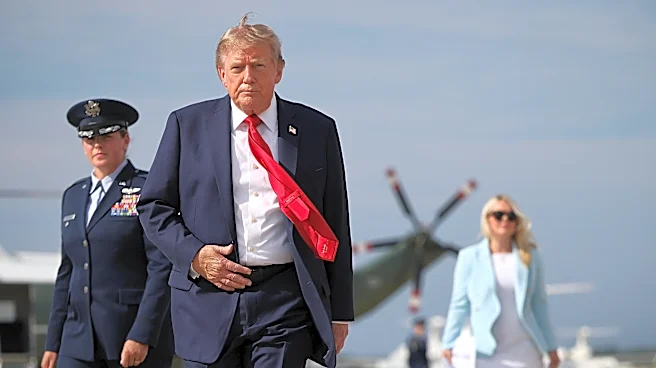
In an attempt to address high beef prices, President Donald Trump announced he would exempt from tariffs 300,000 metric tons of imported ground beef for the next 90 days. The move triggered backlash from U.S. ranchers and some Republican lawmakers.
"The benefit that live cattle from Mexico bring to the United States is that they create jobs," said Bell, with Cattlemex, adding that border closures have also coincided with the historic increases in beef prices.
"The more beef we have processed here, the lower the price of beef is," she said.
"Dropping tariffs and increasing those beef imports is not benefiting the U.S. livestock producers. And ultimately, not even the consumer."
Clara Migoya covers agriculture and water issues for The Arizona Republic and azcentral.
This article originally appeared on Arizona Republic: Cattle imports resume at Arizona border. What it means for beef prices