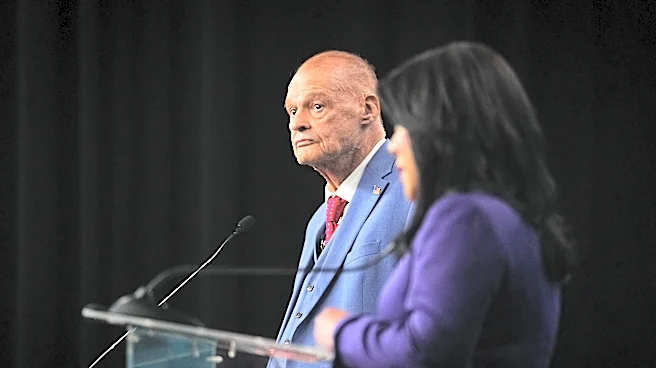

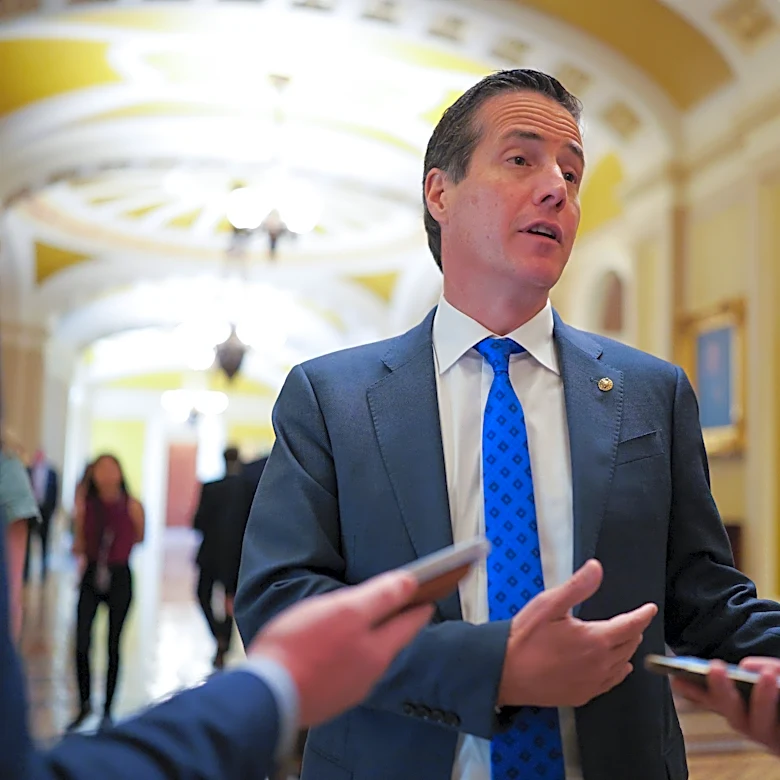



For nearly five decades, Tom Horne helped shape Arizona education and politics as a school board member, legislator, superintendent and attorney general.
A loss in July's Republican primary for state school chief brought that long public career to a close.
Horne, 81, lost the Republican nomination in the race to Kimberly Yee by more than 6 percentage points.
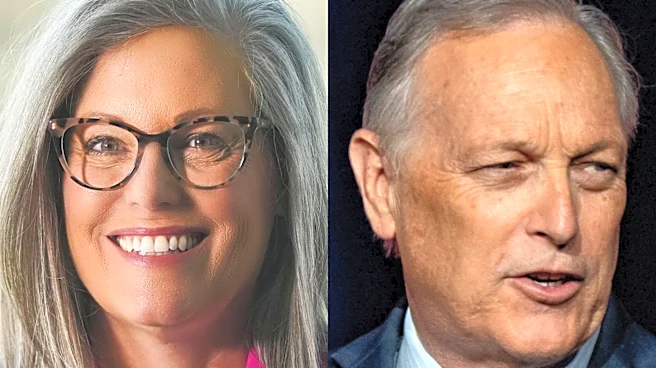
Yee, 52, is finishing her second term as state treasurer and was due to be termed out when she was tapped by state Sen. Jake Hoffman last year to compete against Horne. Hoffman had been dissatisfied with Horne’s views on implementing some restrictions on the controversial program.
Horne chalked his loss up to Yee’s endorsement from conservative activism group Turning Point Action. Some voters
may choose a Turning Point candidate without paying attention to the candidates themselves, Horne said. And he thinks that may ultimately end up hurting the Republican Party.
“A lot of times the people they support don’t necessarily appeal to independents. And without independents, you cannot win a general election,” Horne said.
Those concerns have left Horne skeptical about Yee's chances against Democratic nominee Teresa Leyba Ruiz.
He noted in an interview with The Arizona Republic that while Republicans make up the single largest share of voters, roughly 65% of Arizona's electorate are not registered with the GOP. And after a bruising primary in which the two candidates repeatedly accused each other of dishonesty, Horne said he does not plan to campaign for his party's nominee.
"I think I'm going to stay out of it," he said.
Successful but rocky career
Horne graduated from Harvard Law School in 1970. The same year, the Securities and Exchange Commission accused him and his company, T.C. Horne & Co, of breaking the federal agency's trading rules. In 1973, the agency banned him from trading for life.
Horne started a 24-year stint as a Paradise Valley school board member in 1978. He stayed on the board until he handed every one of his children a high school diploma.
He changed his party registration from Democrat to Republican in 1996, and voters elected him to the state House of Representatives in his north Valley district from 1997 to 2000. He lost a bid for the state Senate, then won two terms as school superintendent starting in 2002.
Horne's a classically trained pianist and pushed for more arts education in schools. In 2006, his administration launched the AIMS test, which all high school students had to pass before graduating. It was replaced in 2015. He also gave a look at his future role in the job: He authored a law to ban ethnic studies, then used it to end a popular Mexican-American studies program in Tucson. After a lawsuit in 2010, a federal court ruled the law unconstitutional in 2017, saying it was enacted for racial and political reasons.
Horne completed his second term and left the office after voters elected him state Attorney General in 2010. In that office he helped defend Republican issues, including an appearance in the U.S. Supreme Court over a 2004 voter-approved ballot measure that required proof of citizenship to vote.
His four-year-term was punctuated by a campaign-finance investigation that included surveillance by the FBI. During the probe, agents tailing him watched as he got out of his car after hitting a parked vehicle, looked at the damage, then fled the scene with his companion to hide an extramarital affair, according to the FBI at the time. His companion, Carmen Chenal Horne, was a longtime employee he married in 2020 after his wife, Martha, died.
The long-running saga over Horne's 2010 campaign included Horne's denials he ever coordinated advertising with an independent group, a threat of hundreds of thousands of dollars in fines and in 2017, a court ruling that the evidence didn't support the allegation. The scandal proved fatal to his 2014 reelection bid, and he was forced to pay $10,000 for unlawfully using his staff to help with his campaign.
Horne said he doesn’t plan on running for office again and instead plans to focus his attention on opening a new charter school in Glendale. He got the idea from his wife.
Fifty percent of its students will be from high-poverty areas, he said.
Horne touts legacy of better outcomes, security
One of Horne’s proudest achievements in his term has been the reinstatement of Project Momentum, which allows education department staff members to visit low-performing schools, typically in low-income areas, and look for potential improvements. After the governor’s office decided not to continue funding the program, Horne got the Arizona Department of Education to step in.
While participation in the program was previously optional, it became mandatory for D- and F-rated schools not already receiving federal improvement support under Horne’s administration.
Horne has also been an advocate of upping police presence in Arizona schools, which has been a controversial topic in Arizona for a number of years. Under Horne’s administration, the number of police officers in schools increased from 117 to 552.
Before Horne leaves office in January, he’s committed to opening a new School Safety Center. There’s more to school safety than police officers, he said, citing a state finding that a number of schools were out of compliance in safety measures.
Horne could lose some of his legacy when he leaves office.
If Ruiz beats Yee in November's general election, she has already pledged to dismantle a hotline that allows people to report school lessons Horne considers inappropriate, such as those including social-emotional learning or critical race theory. The hotline has generated tens of thousands of prank calls but no evidence of any investigations.
ESA program was Horne's albatross
Horne's term coincided with the rise of the state's universal Empowerment Scholarship Account program, which provides $7,000 or more of taxpayer money annually to families that can cover private-school tuition and education-related expenses. The program had 11,000 students enrolled in 2022 but in 2026 had over 100,000 students and cost the state over $1 billion a year.
Under his leadership, the office struggled to police the program's fraud and abuses, including improper purchases with public money, which The Republic and other news media outlets have covered regularly. A state Auditor General's report released in May showed the department failed to adequately oversee the program, resulting in likely fraud and abuse. Horne's office criticized the report and auditor general staffers as unfair.
The program's rapid growth and repeated controversies helped make school vouchers one of the defining political issues of Horne's tenure. This year, public school advocates collected signatures for a ballot measure that would impose income caps and new regulations on the program.
Horne said he has concerns about what will happen to the ESA program if either Yee or Ruiz take office. Yee, he said, could face pressure from Republicans like Hoffman to approve noneducational expenses. If that happens, the ESA program as a whole will lose its credibility and collapse, he said.
“There will be pressure on her. We’ll see what happens if she takes office. If the Democrat takes office, she’s going to be against it anyway,” Horne said.
Asked about Horne's claim of "pressure," Yee said she's focused on problems Horne should have addressed over the past four years "while Tom Horne is apparently focused on concocting outrageous conspiracy theories."
Horne said his office will soon be rolling out AI to help audit ESA expenses. ClassWallet — the vendor through which most ESA purchases are made — is developing an AI model. Horne's agency is simultaneously developing its own model so the two can check each other, he said.
Horne reiterated that it is nearly impossible for four employees in his office to adequately oversee the more than 2 million expense requests submitted in the past year.
Horne said he thinks the AI system will be capable of solving all of the auditing problems — if his successor keeps it in place.
Horne attributed the misuse in public spending to “honest mistakes,” disagreeing with the report from the Arizona Auditor General’s Office. He said the AI will be able to audit the purchases better than the office is currently equipped to, but that it will take time for the systems to learn.
This article originally appeared on Arizona Republic: Tom Horne has run his last race. Here's what's next