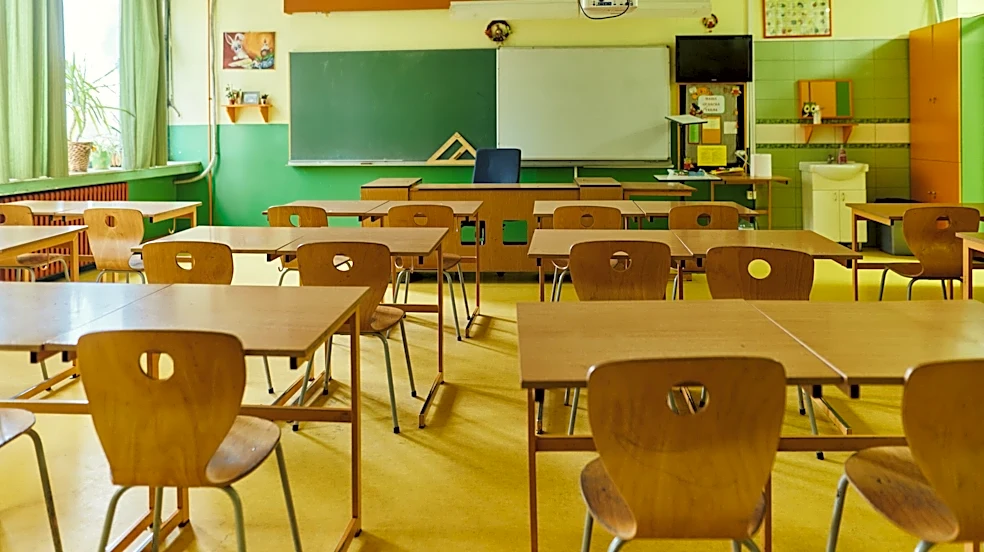





Proposition 320, if passed, would allow Arizona voters to determine how much of a school district's budget should go toward direct instructional spending.
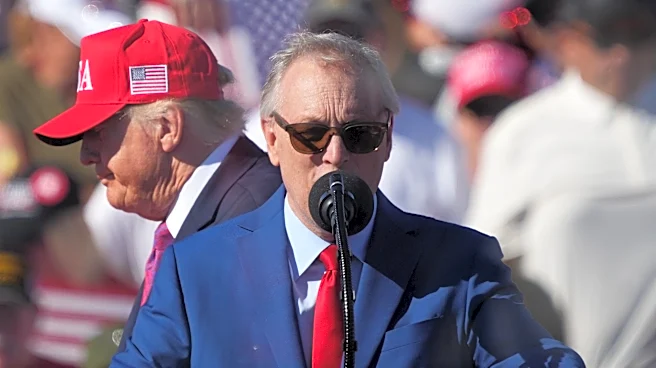
The 2026 ballot measure was supported by Republican Sen. Jake Hoffman and Rep. Matt Gress. It was introduced in the Arizona Legislature by the Republican majority and referred to the ballot, a tactic often used by lawmakers to avoid vetoes from Democratic Gov. Katie Hobbs.
Proposition 320 would require all school districts in Maricopa, Pima and Pinal counties, as well as districts with more than 7,500 students, to devote at least 60% of their operational budget for direct instructional expenses.
The state auditor general would define "direct instructional expenses."
If a district isn’t hitting
that threshold, it would be required to raise classroom spending by 0.5% each year until it is.
If approved, the state could see major changes to school district budgets, because the the majority of them fall below the required threshold.
Failure to meet the requirements could result in millions of lost dollars from the Classroom Site Fund, which is a financial stream given to public and charter school districts.
Supporters of the proposition say it could lead to higher teacher pay, but critics argue the measure would result in students losing critical resources.
Questions remain about how Proposition 320 would be applied, and Arizona voters might not know the full impact of the measure until after the midterm election Nov. 3.
Which school districts would be affected?
Administrators and public officials are turning to the auditor general's instructional spending percentage to predict their school district's standing. Only two school districts in Arizona's three largest counties reached an instructional spending percentage of at least 60% based on the latest report from the auditor general.
Arlington Elementary School District in Arlington reached 62.8%, and Red Rock Elementary School in Pinal County District reached 60.5%.
A spokesperson for EVIT and West-MEC, two career and technical education school districts in the Phoenix metro area, said there didn’t appear to be a definitive answer yet on whether career and technical education districts would be affected by the proposition.
Jenneth McGovern, chief financial officer at Pima County JTED, a career and technical education district in Tucson, said the auditor general confirmed career and technical education districts would be subject to Proposition 320.
Gress said additional "legal research" was needed to determine whether career and technical education school districts would need to comply with the measure's requirements.
The measure would not apply to public charter school districts or private schools.

Would Proposition 320 increase teacher pay?
The state's auditor general has tracked school districts' instructional spending since 2001. In February, the auditor general said the state average fell to its lowest-ever recorded average, at 52%.
Matt Beienburg, the director of education policy at The Goldwater Institute — a libertarian think tank that testified in support of Proposition 320 at the Arizona Legislature — said schools used to average roughly 59% of their budget on instructional spending. Proposition 320, he said, would have school districts return to that percentage.
According to Beienburg, Proposition 320 should lead to higher teacher salaries by requiring school districts to prioritize spending within the classroom. While the measure does not add any additional funds, the state has previously increased funding for teacher salaries with the introduction of the Classroom Site Fund and former Gov. Doug Ducey’s plan to increase teacher pay by 20%.
According to a 2022 report from The GoldwaterInstitute, teachers only saw an average of 16.5% increase in their salary from these new funding streams instead of the roughly 30% increase they should have seen, along with additional inflationary adjustments.
“Voters have been asked to approve funding increases, which they did. And yet,” Beienburg said, "we have seen a decline in the share of funding actually going to the classroom.”
He also said any changes would be gradual. With only a 0.5% adjustment required per year, some districts would have 15 to 20 years to comply with the 60% threshold.
Jimmy Arwood, Arizona School Boards Association governmental relations director, said school funding has not kept up with inflation, and any adjustments in state funding haven't accounted for district additional assistance or school facilities.
A report from theArizona Center for Economic Progress found that the 2% increase in school funding for inflation did not cover the rising costs of electricity, minimum wage increases and diesel for buses.
Arwood also said that the state average for instructional spending used to be closer to 60%, but that was a result of more adequate funding for public schools. His opinion: Proposition 320 would not result in higher academic performance or teacher salaries.
Instead, he said school districts will have to cut resources if the proposition passes, which could lead to even greater challenges. Fewer resources available would lead to lower student attendance, he said, which impacts the state and federal dollars schools receive for every seat they fill.
“There's not a single line in Proposition 320 that increases teacher pay. And additionally, you can't just cut other categories and move it straight to teacher pay,” he said.
What counts as 'direct instructional expense'?
Proposition 320 permits the Arizona auditor general to define which expenses count towards direct instructional expenses.
The auditor general currently uses the U.S. Department of Education's National Center for Education Statistics definition of “instruction” for its instructional spending percentage, which includes classroom staff, supplies, field trips and athletics. The definition does not include instructional support services such as media specialists, speech pathologists, social workers, or literacy coaches, among other positions.
According to Arwood, the auditor general has previously said she would not change the current definition for Proposition 320.
What happens if the measure passes and districts fail to meet 60%?
Under Proposition 320, school districts below the 60% threshold would need to increase their spending beginning in the 2027-28 school year. For every year school districts did not comply, they could lose a quarter of their Classroom Site Funds. According to the auditor general, that funding is responsible for an average of roughly $12,000 of an Arizona teacher’s salary.
The superintendent of public instruction could waive the requirements for a year but could waive a school district more than twice in 10 years.
Republic reporter Helen Rummel contributed to this article.
Coverage of education solutions on azcentral.com and in The Arizona Republic is partially supported by a grant from the Arizona Local News Foundation’s Arizona Community Collaborative Fund.
This article originally appeared on Arizona Republic: Proposition 320 could change how schools spend their money. What to know