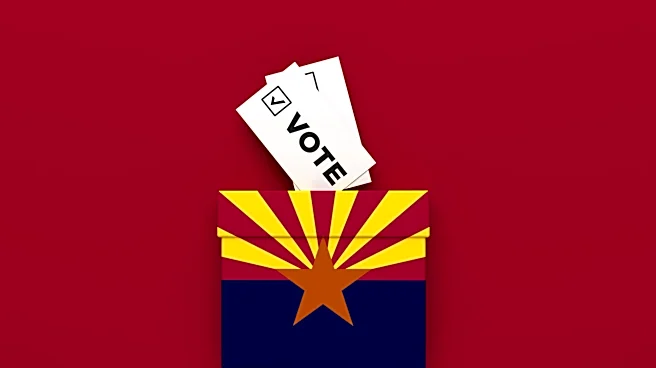




Voters will be able to hear arguments both for and against a ballot measure that could change Arizona election administration if approved in November.
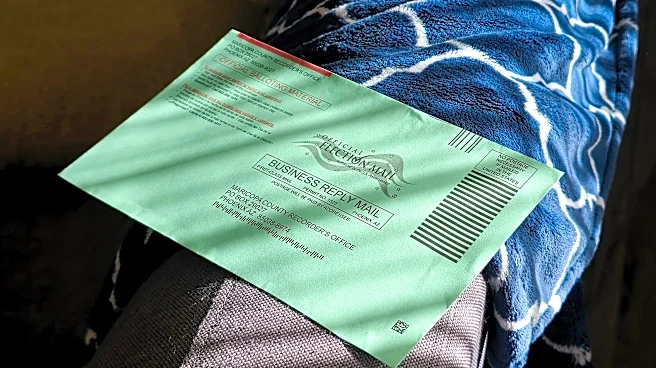
Proposition 144, which was placed on the ballot by the Legislature's Republican majority, would require voters to show valid government-issued identification before voting by mail and would ensure Election Day voters have the option for their ballots to be tabulated at their polling places. Two speakers will debate the measure at 6 p.m. Oct. 1.
Speaking in favor of the measure will be Greg Blackie, deputy director of policy at the Arizona Free Enterprise Club, a conservative advocacy group. Randy Keating, a Tempe councilmember will speak in opposition.
Proposition 144's supporters have argued the
measure would promote more secure elections and faster results. Opponents contend it would threaten mail-in voting accessibility by adding unneeded regulations.
The measure also includes a provision prohibiting anyone from knowingly accepting money from a foreign national used to influence an election, something already prohibited by federal law.
Proposition 144 specifies that only citizens can register and vote in Arizona and that elections "shall be decided solely by the votes of eligible citizen voters." Arizona already requires full-ballot voters to provide documented proof of citizenship upon registration and valid ID at polling places to receive a ballot. Federal-only voters are required to check a box certifying that they are a citizen under penalty of perjury. Election officials review voter rolls often to confirm only eligible voters are registered.
A recent investigation from Maricopa County Attorney Rachel Mitchell, a Republican, found that eight noncitizens voted in Arizona elections from 2012 to 2025. No more than three voted in any one same election, meaning the numbers were too small to sway an election. Maricopa County has 2.5 million registered voters.
When analyzing a similar measure earlier this year, the Joint Legislative Budget Committee said the proposal would "both increase and decrease the cost of election administration." Those costs could not be determined because analysts said they weren't able to predict how the rate of voting methods would fluctuate under the measure.
Helen Rummel covers state politics and higher education for The Arizona Republic. Reach her at hrummel@azcentral.com. Follow her on X, formerly Twitter: @helenrummel.
This article originally appeared on Arizona Republic: What to watch in Arizona’s Proposition 144 debate