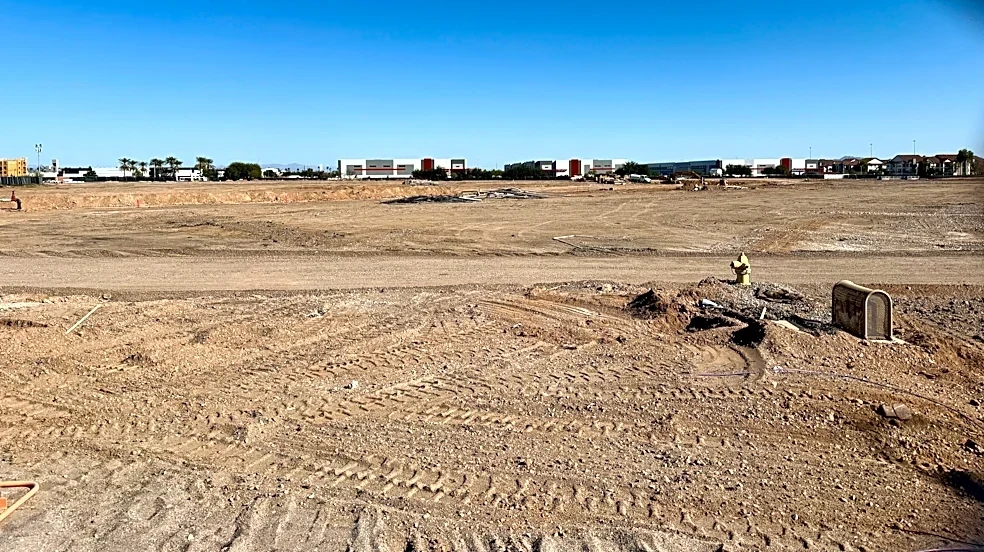




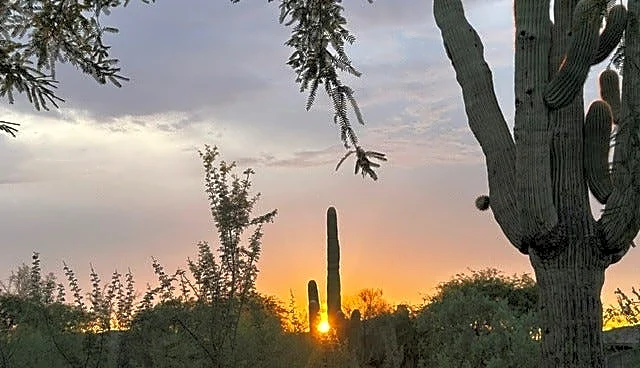

Developers want to build a community larger than Tempe and more populous than Glendale, all while preserving the Sonoran Desert base of the White Tank Mountains, which is home to over 500 animal and 600 plant species.
The Howard Hughes Corp., developers of the 58-square-mile master-planned community Teravalis, is working with the White Tank Mountains Conservancy to preserve the pristine desert at the western foot of the White Tanks.
The collaboration comes as Howard Hughes Corp. continues to build Teravalis, which alone would become Arizona's fourth most populous city if it incorporated. Instead, it will be just one community within Buckeye, whose population is slated to grow to second only behind Phoenix.
With the West Valley growing rapidly,
the environmental nonprofit White Tank Mountain Conservancy Group formed to team up with other nonprofits, private businesses and local governments, including the city of Buckeye, to preserve the wildlife in and around the mountains.
Several current and former elected West Valley leaders serve on the organization's board. Former President of the Arizona Region for Howard Hughes Corp., Charley Freericks, presides over the White Tank Mountain Conservancy's board.
Teravalis is an approved master-planned community nestled between the White Tank and Belmont mountain ranges, expected to house over 340,000 residents when completed. For comparison, that is larger than the current populations of Tempe and Flagstaff combined.
It has been a year since the first residents moved into the Teravalis' first neighborhood, Floreo, which has approval for about 8,500 homes and where homebuilding continues.
Floreo has the required 100-year certificate of assured water supply from the Arizona Department of Water Resources. Howard Hughes is part of a group of developers suing Gov. Katie Hobbs' administration over a 2023 moratorium on new assured water supply designations.
The White Tanks conservancy has been "at the table" with Howard Hughes Corp. since the formation of Teravalis and during its planning of the development, said Sharma Torrens, executive director for the conservancy.
The nonprofit uses data it has gathered from its partners at the Arizona Game and Fish Department to educate the developers on how to preserve habitats.
One key focus is protecting wildlife corridors, which link habitats and where wildlife migrates "to find mates and resources and everything they need to survive," Torrens said.
Losing them would be devastating.
"You're talking about potentially losing all of those species for forever," Torrens said.
The conservancy does not compel developers to take specific actions, but has suggested ways of incorporating wildlife corridors into Teravalis.
"Historically, as most of us know, much of the development that has occurred wasn't very thoughtful and sustainable. We just kind of acted and put the development in, and the effect is one, you block off the corridors," Torrens said. "And it becomes very hard to restore an area and bring it back to life."
Attempting to restore a natural habitat after a development is put in place is a costly effort, said Collin Beach, a research biologist with the Arizona Game and Fish Department.
"We can try to restore it, but we can only do much and it's costly," Beach said.
It is more productive and less costly to "maintain the natural condition as development occurs around it," he said.
"We say it's far better to plan ahead than to pay later," Torrens agreed.
Buckeye consistently ranks as one of the fastest-growing cities in the country.
Teravalis is just one of 30 master-planned communities approved in Buckeye.
When Buckeye approved its general plan in 2018, the Maricopa Association of Governments projected the city's population to reach over 310,000 people by 2040. It currently has around 114,000 residents, according to census data.
The 27 master-planned communities are projected to add another 800,000 residents when they are completed.
The city, at full build-out, can grow to more than 1.1 million people, which would make it the second most populous city in Arizona.

Why protecting mule deer is critical
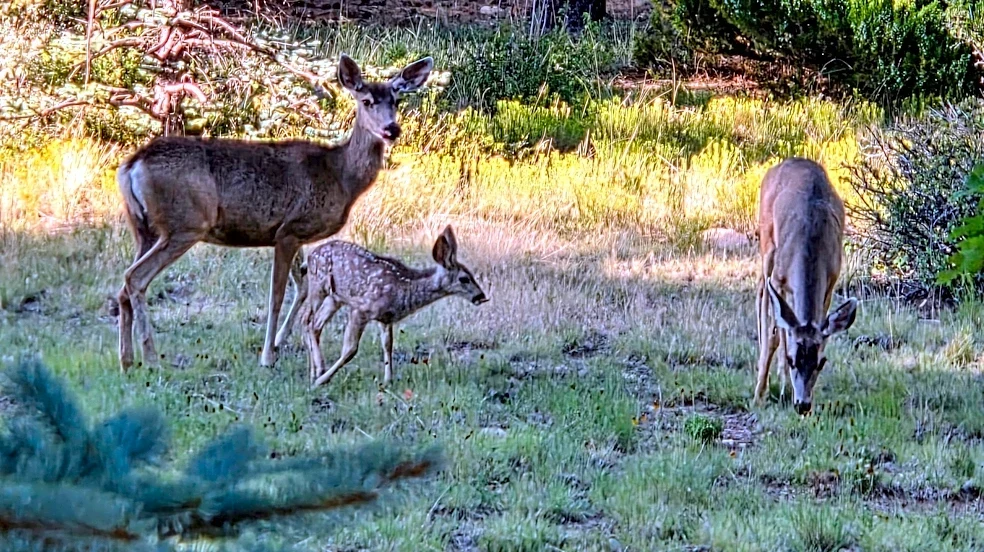
The key focus of the White Tank Mountain Conservancy is working with the game and fish department on ensuring the mule deer can live in the areas surrounding the development, Torrens said.
The conservancy has focused on mule deer because they are the largest mammals in the area and are "highly sensitive to human activity," Torrens said. Loud noises from vehicles and bright lights can affect the movement of deer and other animals in the area, she added.
"The thought process behind it is if the mule deer feel comfortable and have room to move through the area, so does everything else," Torrens said.
The Arizona Game and Fish Department works in tandem with the White Tank Mountain Conservancy, city of Buckeye and developers in planning around the deer because they are one of the largest and most numerous mammals in the area that have the greatest need for connectivity at a landscape scale," Beach said.
When designs are made around the deer and other large species, "you're also designing for all those species below them as well," he added.
"So if they (the deer) get cut off in the White Tanks, there's a chance, it's not given, but there is a chance that we lose mule deer in the White Tank Mountains," Beach said.
Near Teruelis, there is a 13-mile corridor between the western area of the White Tank and Belmont Mountains leading to the Vulture Mountains near Wickenburg, Torrens said. This is an important corridor for the mule deer and several other species because it is a key migration route, Torrens said.
Game and Fish Department data from collared deer help the White Tank Mountain Conservancy educate developers on the animals' movements, she added. The conservancy educates developers on whether the deer's movements have changed and if they moved further north.
"Continually gathering data will ensure that the animals can ultimately move through the Belmont Mountains," Torrens said. "As long as the animals have options."
What else are developers doing for the environment?
Howard Hughes set aside about 20% of the land from Teravalis, about 7,000 acres, as open space, according to the community's website.
The outdoor space and trail networks are "the number one thing that people are interested in" when choosing their homes in Terevalis, said Kate Kaminski, current president of the Arizona Region for Howard Hughes. Kaminski said Howard Hughes coordinated with the conservancy on a "thoughtful design for wildlife."
She said the larger Terevalis master plan will have networks for mule deer and other native species so they can move from the White Tank and Belmont Mountains "in a natural manner."
"That is something we've committed to as an organization," Kaminski said.
Terevalis will also feature "tactfully placed" street lights that are "full shielded" and "full cut off" to keep the community's light pollution very minimal, said Brian Rogers, vice president of ABLA, one of the firms involved in the design of Terevalis. He said the design team created an "overlay for a dark sky."
"So you should be able to see the sky just like crystal clear out here," Rogers said.
In addition to preserving wildlife corridors and mitigating light pollution, the developers scrapped plans to build an eight-acre lake, intended to be part of the landscaping to welcome guests arriving at the neighborhood's massive multipurpose community center.
Developers realized the lake evaporated massive amounts of water, so the idea was scrapped, she said.
Instead, developers moved the water to a million-gallon tank underground. The plan is to use the water to irrigate the common spaces that have natural turf, Rogers said. The homes at Terevalis will not have natural turf in the front or back yards, he said.
The only areas that will have natural turf are common spaces, such as the soccer fields and those near parks, scattered throughout the community, Rogers said.
Desert will be harmed regardless of efforts, critic says
Regardless of developers' efforts, sprawling developments will have an impact on the desert, said Sandy Bahr, executive director for the Grand Canyon Chapter of the Sierra Club, which lobbies the state legislature for policies that preserve Arizona's natural habitats.
As the developments push into the Sonoran Desert, there will "be a lot of species that would lose their habitat and that usually means that a lot of them die," Bahr said.
Bahr said some animals, like coyotes, can adapt and learn to live alongside people, but many other animals, such as burrowing owls, are territorial or too small to easily leave their homes.
Other small animals sensitive to development include kit foxes and badgers, Beach said.
"You can't just assume that when you build something that you're not pushing the wildlife out of the area," Bahr said.
David Ulloa Jr covers the southwest Valley communities of Avondale, Buckeye, Goodyear, Litchfield Park and Gila Bend. Reach him at david.ulloa@azcentral.com. Follow him on Instagram & X, formerly Twitter, @davidulloa_ii.
Like this story? Get more West Valley news straight into your email inbox by signing up for our free weekly West Valley Newsletter, which comes out on Tuesdays.
This article originally appeared on Arizona Republic: Can a city bigger than Tempe grow in the desert without destroying it?