





Mexican authorities have confirmed nine cases of cattle infection by a flesh-eating parasite in the state of Sonora, about 300 miles south of the international border.
The first case was reported Aug. 19, five days before the reopening of the Douglas port of entry to cattle trade after a ban of more than year to all livestock imports into the United States. By Aug. 28, nine cases of parasitic infection had been confirmed in Sonora by Mexico's agriculture and animal health agencies.
A day after the first case was detected, the U.S. Department of Agriculture posted on social media that it had no plans to change the reopening and remained confident in the enhanced protocols for pest monitoring and cattle inspection.
"We added the most complete entry
inspection protocols possible," read a statement on USDA’s NWS rapid response X account.
"This includes enhanced surveillance, rapid diagnostic capacity, pre-treatment processes weeks in advance, layered inspections before and at the port, sophisticated communication and coordinated response protocols designed to protect American agriculture."
The parasite, a fly that lays eggs on open wounds, is a threat to animal health, but it's not a disease or a food safety issue. However, the parasite can be a big threat to wildlife, pets and livestock.
The spread of the parasite is facilitated by humans trucking cattle across borders. USDA shut the southern border to all livestock imports in May 2025 citing risks from the spread of northward movement of the screwworm parasite.
Other animals can also be vectors and the flies can move on their own up to 12 miles a day. In June, though all southern ports were closed to cattle imports, Texas reported its first case of New World screwworm. Currently, the Lone Star State has two active cases and 45 inactive cases.
When treated, animals recover quickly from maggot infestation, myasis and infections caused by the parasite. Beef is safe to consume. The U.S. Food and Drug Administration has approved multiple drugs to treat animals against the parasite.
Millions of sterile flies released in Sonora, with daily monitoring going on
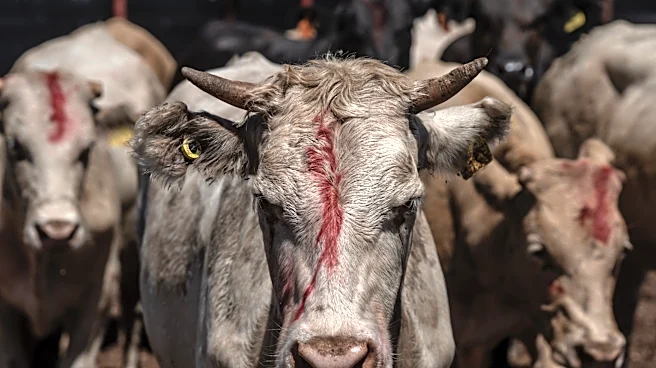
The first screwworm case in Sonora was in a 5-year cow in the municipality of Álamos. It was the only one of a 40-animal herd that had myasis. Seven more cases were later confirmed in that municipality, and one more in the municipality of Yécora. All were on cattle.
"The first barrier against the screwworm" is with cattle ranchers, because they constantly check herds for any signs of the parasite and make reports, said Francisco Sandoval, a communication specialist with the Secretary of Agriculture, Ranching, Hydric Resources, Fisheries and Aquaculture in Sonora. Training and outreach with ranchers, to prepare for case detection and treatment, began over a year ago.
The Mexican agency has released a total of 11 million sterile flies in only nine days around Álamos, Yécora, and neighboring municipalities. They expect to reach 22 million by Aug. 31.
They also have some 150 veterinarians and technicians on the ground doing inspections and applying doramectin injections on cattle to prevent screwworm infestation. They coordinate with multiple Mexican and U.S. agencies for surveillance.
Sterile fly releases are not being done by plane, as in southern Mexican states, but by vehicle, for a more targeted approach, Sandoval explained. Three releases are scheduled per week for a total of 10 weeks. About 100 million sterile flies are dispersed across Mexico and Texas per week, according to USDA.
Numerous insect traps are also installed across southern and central Sonora, and checked daily to identify any screwworm, Cochliomyia hominivorax, flies. Authorities haven't detected any screwworm cases in pets or wildlife, Sandoval said.
Arizona added a 3rd layer of protection in cattle trade
Sonoran cattle go through multiple export exams at the ranch of origin by authorized veterinarians, weeks ahead of the export date into the United States, and are issued an export health certificate. They are inspected again by Mexico's official veterinarians and the USDA's Animal and Plant Health Inspection Service personnel at the Agua Prieta quarantine station, by the U.S.-Mexico border, and dipped in tick-killing pesticide.
To this multilayer inspection, the USDA also added to the process electronic ear tags and detector dogs. There is also a new layer of inspection by the Arizona Department of Agriculture that didn't exist prior to the screwworm outbreak in Mexico and the border shutdown.
Once the cattle crosses the border into Arizona, an accredited veterinarian inspects each animal and issues a certificate of inspection, AZDA Director Paul Brierley explained. The agency hired two new people for this role. The cattle load can then be trucked to an Arizona feedlot or to other states.
The agency was a key partner in getting the Arizona port of entry to reopen for cattle trade.
“We have worked tirelessly with USDA, the cattle industry, our sister states and Mexico to assure a safe border opening when the time came,” Brierley said the day the border reopening was announced in late July.
The state is working closely with federal partners to build a sterile fly dispersal facility in Douglas with up to $25 million from USDA funds, which would speed up the response in case of a detection.
"That's like an insurance policy," Brierley said. "If the screwworm does come here, then we'll be able to disperse the sterile flies."
As of Aug. 28, USDA has said in calls that nothing on the ground is leading them to consider pausing cattle imports, Brierley added. On Aug. 25, there was an on-the-ground assessment to reopen the Nogales port of entry to cattle trade as well.
The agency has a playbook to detect, control and contain screwworm cases as quickly as possible and apply eradication strategies. They also have enhanced wildlife monitoring near Douglas, Brierley said. "They use trail cams and drones to look for wildlife that have open wounds and signs of screwworm. So there's a lot of monitoring."
USDA, not Arizona, would post alerts for any cases in Arizona, if they were detected.
"Nothing is a confirmed case until the national veterinary diagnostic lab confirms it," he said.
Veterinarians, livestock producers, animal owners, and the general public can report suspected New World screwworm infestations, larval sightings, or open wound parasitic activity to the Office of the State Veterinarian at diseasereporting@azda.gov. Hunters should immediately report suspicious wounds to their local wildlife office at 866-487-3297.
Clara Migoya covers agriculture and water issues for The Arizona Republic and azcentral. Send tips or comments to clara.migoya@arizonarepublic.com.
This article originally appeared on Arizona Republic: Mexico detects 9 screwworm cases in cattle as Arizona imports resume