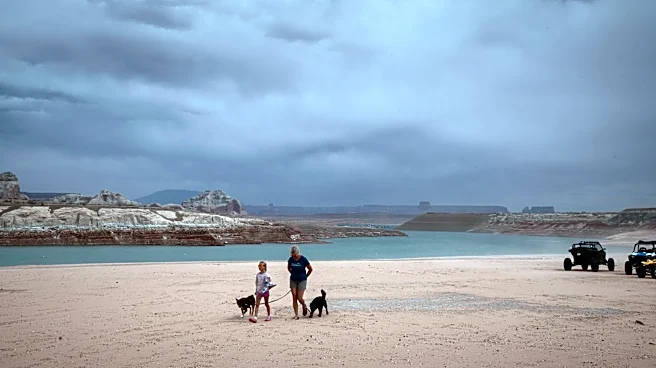



As a native Arizonan, and one who for the past 25 years, each October, has gone to Lake Powell for a week of boating, camping, fishing and great fun with a large group of my guy friends, I was practically in tears watching the latest CNN story on this beautiful place.
Lake Powell is now at 24% capacity, dropping daily, and rapidly approaching "dead pool" status, at which time it will no longer be capable of generating electricity.
I implore all my fellow citizens to please do your part to conserve water and energy in any way you can, before this serious situation becomes a full-blown crisis of unprecedented proportions. I keep my A/C thermostat at 80 degrees, keep our shutters closed during the day, and use ceiling fans to keep our house comfortable.
Two weeks ago, I replaced the grass in my front yard with artificial turf that not only looks great but saves lots of water. Please folks, if we all do our small parts, we can hopefully prevent your faucets from going dry and your electricity from not being there.
Antonio Morales Jr., Glendale
I-10 safety requires more than barriers
The Arizona Republic exposed deadly median crossover hotspots on the I-10 between south Phoenix and Marana.The Republic presents those numbers as a compelling case for median barriers. But barriers address only the final seconds.
Speeding, aggressive driving, unsafe lane changes, illegal handheld phone use, distraction, impairment, fatigue, overcorrection, debris, dust, pavement problems or tire failure may have contributed. Crossing the median describes what happened next, not why.
ADOT and DPS should review data about every crossover crash and other crash types to spot patterns, identify recurring risks, locations and times, and connect the dots into real-time warnings. Overhead boards should tell drivers when to slow down, increase following distance, stay in their lane, or prepare for hazards. Variable speed limits, targeted enforcement, stronger rumble strips, cameras and rapid-response crews should follow the evidence.
Google Maps already gives drivers basic warnings of dangers ahead. As autonomous passenger vehicles expand, many of these risks will be eliminated. For now, Arizona should connect existing technology and enforcement to dangerous patterns and warn drivers.
Marc Lamber, Paradise Valley
This article originally appeared on Arizona Republic: Lake Powell crisis demands action | Letters