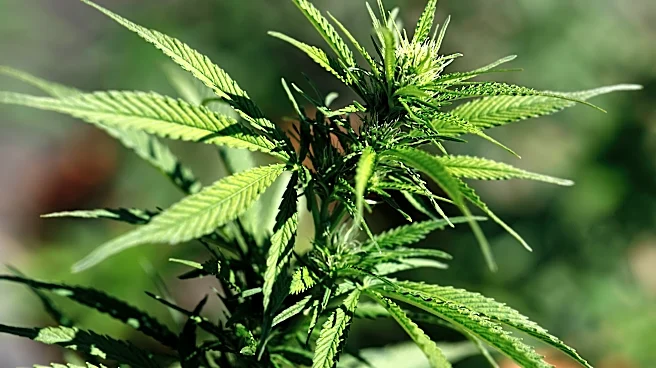


One of Arizona's largest cannabis dispensary chains will no longer accept products tested by two laboratories cited by state regulators for inaccurate results and other violations, according to an email obtained by The Arizona Republic.
The two independent marijuana testing labs mentioned in the email are Kaycha Labs in Tempe, which The Republic recently reported was fined $88,500 for inaccurate sample results for contaminants and other problems, and Level One Labs in Scottsdale, which used methods that inflated the potency of its samples.
Story Cannabis, which has 11 dispensaries in Arizona and stores in three other states, "takes the quality and control of the products sold in its stores very seriously," Nikole Samuelson, the company's state retail
buyer, wrote in a Sept. 10 email to its cannabis suppliers. "Given the multiple compliance violations and concerns related to the testing at Kaycha and Level One, we will no longer accept products tested by either laboratory with a Certificate of Analysis test date on or after October 1, 2026."
A certificate of analysis is a document produced by marijuana testing labs that shows whether samples of a particular product meet or exceed guidelines for pesticides, heavy metals, mold and THC potency. Consumers can often find the certificates online for various products and determine where they are tested. No formal site lists all of them, but many can be found on Arizona Organix's COA directory. Customers can also ask a budtender to provide the certificate of analysis when the item is purchased.
Jason Vedadi, Story Cannabis' founder and owner, confirmed the content of the email but declined to comment on it.
George Griffeth, Level One co-founder and CEO, told The Republic in an email that its recent problems were due to "human error" and "inadvertent" problems with software, and he believes Story may reconsider the boycott.
The boycott of two of the state's seven testing labs is a rare move by a dispensary that could have reverberations across the Arizona cannabis industry. Some consumers threatened to boycott OnPoint Labs in 2022 after it received a $470,000 fine, and some dispensaries boycotted a lab in 2022 whose owner proposed new rules for the system.
Like most dispensaries, Story sells products the company makes itself as well as a variety of independent brands. One Story website lists 270 brands that offer cannabis flower, edibles, vape pens and other products.
The impact on Kaycha and Level One isn't clear, but could be painful. Samples of all products sold in dispensaries must be tested under a 2020 law. Chris Martinez, president and co-founder of Kaycha Labs, didn't return calls or text messages seeking comment.
Pot-testing system long accused of 'pay-to-play'
Critics of the current testing regime have sounded the alarm for years about cheating and corruption within the industry.
Kaycha Labs, a chain with labs in nine states, recognizes the problem in a statement on its webpage titled "How 'Pay to Play' Labs Are Hurting The Cannabis Industry."
"It’s an open secret that certain companies are willing to pay a lot of money for favorable lab testing results," the site said. "When the product being grown, processed or sold at retail has the potential to be contaminated, it could lead to consumer illness or even death. That is why Kaycha welcomes federal and state regulators to require accurate lab testing of Cannabis products."
Yet some in the industry see Kaycha as part of the problem. The company is one of several being sued by a competitor in Massachusetts that claims Kaycha is manipulating its tests to inflate potency results while undercutting results on tests for contaminants.
The Tempe lab opened in 2023 and soon began racking up poor inspection reports. In a consent agreement, the state fined Kaycha over $40,000 in 2024.
An 11-page letter from April 2025 by the state Department of Health Services found the firm had provided some of the same kinds of inaccurate sample results for potency and contaminants the agency had found the previous year. Problems were found in tests for microbes and pesticides that helped lead to a December 2025 recall of several products tested by Kaycha.
Test methods included those that tended to inflate the potency of products, according to state records.
Customers typically pay a premium for products with a higher percentage of Delta-9 THC, the compound that produces marijuana's intoxicating effects. Marijuana flower usually contains roughly 10-25% THC, while the viscous liquid in vape pens or cartridges may top out with 90% or more THC.
Kaycha was set to receive a $133,500 fine for the 2025 findings but got the amount cut to $88,500 after another consent agreement with the health agency. The firm has paid about half of the new fine and has until the end of October to pay the rest.
Reasons for test problems unclear
Kaycha didn't acknowledge it did anything wrong in its consent agreements with the state, and state records don't detail the underlying reasons for the company's poor inspection findings.
Similarly, it's unclear whether Level One Labs' test outcomes resulted from mistakes or intent.
Level One started operating in 2018, when testing was still voluntary. The state imposed a $12,000 fine on the company in 2024 for a repeated finding of poor record-keeping and policy development that hampered test results.
In a major finding detailed in an Aug. 5, 2026, letter to Level One Labs, the lab allowed a software problem that inflated potency results for flower and infused flower products to continue for months.
State rules require marijuana samples to be tested as they're received by the lab. But inspectors found software used by the lab deducted water weight from the samples while determining the total THC. Since THC content is calculated as a percentage of a sample's weight, lowering the sample weight while keeping the same THC quantity makes the product appear more potent.
Level One didn't disclose the THC and CBD levels in its samples were based on a "dry-weight conversion factor" that caused the results to show higher THC levels, according to the letter signed by Kavita Jain, a state lab compliance supervisor.
"By reporting dry-weight results without adequate disclosures and data qualifiers," Jain wrote, the lab's certificates of analyses "overreported the amount of all approved cannabinoid analytes."
The lab director told a state inspector that staff "were unaware" the software was using a moisture correction factor for its potency calculations.
Inspectors found in December a Level One test had shown Aspergillus mold in a sample but the firm labeled the mold as "not detected" in a certificate of analysis.
In July, the health agency issued a recall for products including Dr. Zodiak's Moonrock Infused Bulk Snowballz and Bobby Blue's Buckshots after finding that Level One detected Aspergillus in several tests that were "reported to marijuana establishments as a passing test." The agency doesn't make clear if that was a new finding or based on the December inspection.
The health agency referred its most recent findings to its enforcement team for a possible fine, the letter stated.
Griffeth said in his statement the company fixed all the problems the state found immediately after being notified and that other labs have had problems, too.
"Story has expressed general compliance concerns, but it has not explained to Level One the specific standards underlying its decision or how it evaluated comparable findings at laboratories," Griffeth wrote. "We look forward to a constructive conversation with Story about a clear path to reinstatement. We are confident that a fuller understanding of the facts and our response will give Story a sound basis to reverse its decision."
Reach the reporter at rstern@arizonarepublic.com or 480-276-3237. Follow him on X @raystern.
This article originally appeared on Arizona Republic: Story Cannabis bans products from troubled testing labs