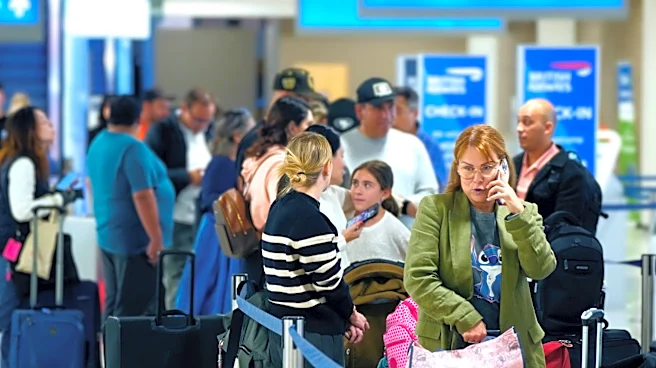










When booking travel, consumers don't want to be charged surprise fees at the end of their booking.
That sentiment explains why federal rules on airfare price advertising require airlines to show the total cost of airfare, including taxes and fees.
Rules requiring airlines to advertise the full amount of what consumers pay for flights have been in place since 1985, with amendments enacted in 2012 requiring the full amount to be displayed upfront on airlines' websites.
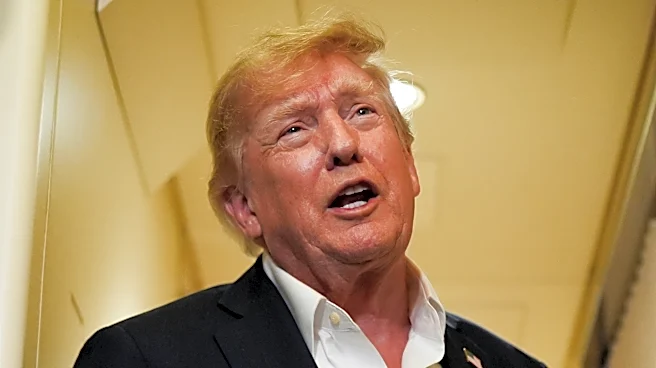
Now, under President Donald Trump, the U.S. Department of Transportation is seeking to loosen or toss this requirement. It proposed a new rule entitled "Enhancing Flexibility of Air Fare Price Advertising," which would allow airlines to "prominently" display components of airfare in the same
or bigger size as the total price.
What is DOT proposing and what does it mean for air travelers?
A DOT spokesperson said in a statement to The Arizona Republic, "The Department proposed a common-sense adjustment to protect passengers from misleading pricing information by allowing parts of airfare, such as government taxes, to be displayed just as prominently as the total price, but not more so."
The existing rules, the spokesperson said, "prohibit travel agents and airlines from prominently displaying taxes and fees, requiring them to be hidden in a smaller font than the total price."
Some consumer travel groups say the changes could mean airlines could advertise a low base fare that doesn't include taxes and fees, such as transportation, flight segment and security taxes charged by the government and passenger facility fees charged by airports. It also means passengers might not see those extra charges until the total shows up at the end.
The DOT received more than 1,300 public comments on the rule, including from individuals, airlines, travel industry groups and consumer groups.
Who supports changes to airfare advertising rules
Airlines for America, the trade group that represents U.S. airlines, supports the DOT's proposed changes to the existing "full fare rule."
In a letter signed by Graham Keithley, the group's vice president and deputy legal counsel for regulatory legal affairs, Airlines for America stated that its member airlines are "fully transparent about the prices of air travel" and do so while airlines compete with each other for consumers and compete with other modes of transportation that are "subject to less regulation and related costs than the airline industry."
It claims that the changes, combined with Trump's "deregulatory agenda," would improve competition in the airline industry, lower airfares and make air travel more accessible to American consumers.
Two travel industry groups, the American Society of Travel Advisors and the United States Tour Operators Association, filed comments supporting eliminating some of the existing rules on how prominently certain components of a fare can be displayed.
"Travelers deserve to know the full price of an airline ticket from the outset, but the federal government does not need to dictate every formatting decision used to present that information," ASTA president and CEO Zane Kerby said in a statement.
Both groups, however, do not support a full repeal of the current rules.
Who opposes changes to airfare advertising rules
At least seven consumer advocacy groups, including the National Consumers League, the American Economic Liberties Project and FlyersRights, submitted comments opposing the DOT proposal and supporting keeping airfare advertising requirements as they are today.
"Since 1985, the Full Fare Advertising Rule has protected flyers from hidden fees and false advertising when shopping for flights," said John Breyault, the National Consumers League's vice president of public policy, telecommunications and fraud. "DOT’s plan to undo this protection would harm the millions of travelers who depend on truthful price displays to make accurate purchasing decisions. By law, DOT must regulate in the public interest. This proceeding falls far short of that mandate."
In contrast with the airline industry trade group, Southwest Airlines opposes repealing the regulation requiring airlines advertise the total fare upfront. Southwest acknowledged it initially opposed the 2012 amendments, but now considers the current regulations "a well-established feature of the U.S. airline marketplace."
"Repeal would introduce complexity into fare shopping, disrupt settled industry practices, and undermine a disclosure framework that consumers have relied upon for more than a decade," according to Southwest's assistant general counsel Leslie Abbott, who signed off on the airline's comments on the DOT rule.
Consumers worry about deceptive practices
Many air travelers who publicly commented said they think changing or repealing the full fare rule would allow more deceptive pricing in the marketplace and make it harder for consumers to comparison shop.
They compared such practices to Ticketmaster, which like airlines, did not show the full price of tickets for concerts and events upfront. A Federal Trade Commission rule published in December 2024, which took effect in May 2025, required companies like Ticketmaster to show the total price.
What airlines and Ticketmaster have in common is how "time is of the essence when purchasing" because of the limited supply and high demand for the experience, said Ryan Lutz, a consumer who responded to the proposed rule in opposition.
"While a Beatles concert may not have the same demand as a flight from Charlotte to Phoenix, I imagine the demand would, in fact, be similar if the only flight from Charlotte to Phoenix happened once a year (at most) and had the capacity of an arena instead of a Boeing 737," Lutz said. "In both cases, I'm not stopping to check how much I'm paying in taxes and fees if it isn't shown up front because I'm too busy trying to buy the ticket faster than anyone else."
"The fact that I might see one price and then get charged $100-$200 more in fees is deceptive and un-American," Lutz added. "I should be free to see the total price up front before getting to the checkout screen!"
The DOT did not answer questions from The Republic seeking clarification on how its proposals would impact consumer decision-making and its response to claims that its proposed rule change could lead to deceptive airfare advertising.
What's next?
The DOT told The Republic that it's reviewing the public comments "to inform its next steps in the rulemaking process."
An agency spokesperson didn't say how soon it could be before a decision is made on a final rule.
Looking for the best things to do in Arizona? Sign up for our newsletter.
Michael Salerno is an award-winning journalist who’s covered travel and tourism since 2014. His work as The Arizona Republic’s consumer travel reporter aims to help readers navigate the stresses of traveling and get the best value for their money on their vacations. He can be reached at Michael.Salerno@usatodayco.com.
Support local journalism. Subscribe to azcentral.com today.
This article originally appeared on Arizona Republic: Tax included? DOT wants to ax rule requiring airlines show total price