


Arizona voters two years ago gave local police immense power to help enforce immigration law and arrest migrants, and the state's next attorney general could immediately shape how aggressively it gets used across the state.
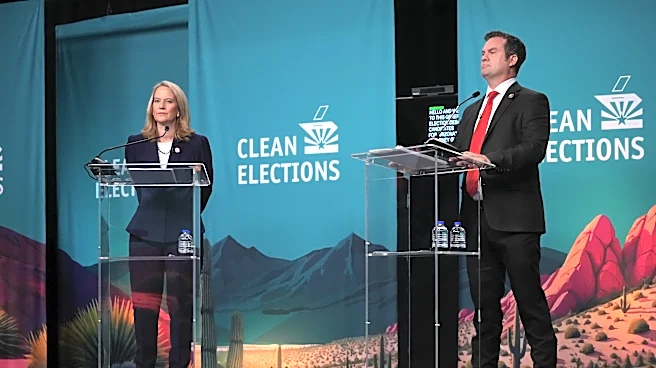
The Nov. 3 election pits incumbent Attorney General Kris Mayes, a Democrat, against GOP nominee Warren Petersen. Petersen is Arizona's Senate president and an immigration hard-liner who was a driving force behind a Republican-led effort to place Proposition 314 or the Secure the Border Act on the ballot in 2024.
The ballot measure, which includes a provision that makes crossing the border illegally a state crime, in addition to a federal crime, was approved by about 63% of voters. It took effectin July.
If Petersen wins, some
Latino advocates and some Democratic lawmakers expect him as the state's chief legal and law enforcement officer to push for greater cooperation with the federal government's escalating immigration crackdown and mass deportation campaign. The crackdown has cast a wide net and swept up large numbers of workers with no criminal records and deep ties to the United States in addition to violent criminals.
Mayes on the other hand has criticized violent enforcement encounters far from the state's southern border and sued the Trump administration several times to thwart attempts to change immigration policy or identify migrants.
"Many, many immigrants who have proper documentation and U.S. citizens who are Latino are being targeted by ICE and by the immigration enforcement crackdowns that the Trump administration is unleashing on our communities and especially here in Arizona," said Cesar Fierros, a spokesman for Living United for Change in Arizona, a progressive advocacy group, better known as LUCHA. LUCHA is supporting Mayes' reelection this year.
Latino families of mixed immigration status are also being torn apart by deportations, Fierros said.
"And so with him as AG, what is going to happen there? I think the situation will get a lot worse because he's going to be a rubber stamp to everything that the Trump administration is trying to do on the immigration side," Fierros said of Petersen.
After Arizona's law took effect on July 14, Petersen intervened in federal court to defend it from a legal challenge by the American Civil Liberties Union. Mayes' office also defended the law in court, though Mayes initially objected to the measure as an unfunded mandate on local law enforcement.
How Proposition 314 expands immigration enforcement
The ACLU argued the state law is unconstitutional because it preempts federal law since immigration enforcement is the responsibility of the federal government. The ACLU also argued in the lawsuit the law could lead to rampant unconstitutional racial profiling of Latinos.
The ACLU voluntarily dismissed the lawsuit in August after a federal judge denied its request to temporarily place the illegal entry provision on hold. So the law remains in effect.
The law makes it a misdemeanor to enter Arizona from Mexico improperly, and a felony for repeat offenders. It empowers state judges to issue orders of return to people found to have entered the state improperly and makes it a felony to refuse a judge's order to return.
The law also creates civil immunity that protects state and local law enforcement authorities from civil liability and legal action when enforcing it.
John Mitchell, an immigrant rights attorney at the ACLU of Arizona, said he is concerned that if Petersen is elected attorney general, he will use the illegal entry provision of Proposition 314 to push local and state police to get more involved in immigration enforcement.
"I think it's entirely possible that a different AG's office could very well end up supporting a much more aggressive enforcement scheme," Mitchell said.
Supporters of the bill like Petersen have argued it was aimed at giving the state the power to crack down on illegal border crossers and was prompted by the unprecedented surge in asylum seekers who crossed the southern border without authorization in Arizona and other states during the Biden administration.
Petersen has pledged to deport migrants but used his own Spanish-language fluency and marriage to a Mexican immigrant to show he supports immigrants who follow the legal process to come to the United States.
He said in a June interview with KTAR talk radio that he believes the law can only be used at the border and is "similar to working with ICE." Officers must "actually have evidence of them coming into the country illegally at the border" and see the person cross the border, he said.
But the ACLU doesn't agree with that interpretation.
The illegal entry provision also empowers law enforcement officers not just at the border but anywhere in the state to arrest people when there is "other constitutionally sufficient evidence of probable cause" that they entered the state from Mexico improperly, Mitchell said.
That means law enforcement officers don't have to actually witness someone crossing the border improperly to arrest them, Mitchell said.
The illegal entry provision of Proposition 314 is not currently being enforced in Arizona because of a plunge in illegal border crossings, Petersen said during a September interview on La Onda radio.
But the law is available "if we have a president like Biden who left the border completely wide open" and the federal government isn't enforcing the law, Petersen said. "That is the key to the law."
Mayes says border law is an unfunded mandate
Mayes said in a 30-minute interview with The Arizona Republic she did not believe Democrats would ever again allow record-breaking border crossings seen during the Biden administration.
"We learned a lesson, which is we need to be tough on border enforcement," she said of her party.
Mayes said no local prosecutor or law enforcement officer had brought a case under Proposition 314, something she attributed to already underfunded and understaffed departments. Several Arizona sheriffs had raised concerns about how to pay for enforcing it.
She said Petersen did not include funding for agencies to add immigration enforcement to their enforcement priorities when the Arizona Legislature put Proposition 314 before voters.
"They deceived the voters," Mayes said. "The voters didn't know they were voting on an unfunded mandate."
Petersen's campaign declined to make him available for an interview and said he would enforce all of the laws for the state.
"He has proven time and time again, funding for law enforcement is a top priority," campaign manager Chad LeBeau said in a statement. "He will continue advocating for more resources, especially when it comes to enforcing our border laws — which is why he has been endorsed by all the major law enforcement groups in Arizona."
Mayes said she's "not going to go out and tell law enforcement that they should divert critical resources that we need focused on drug trafficking, sex trafficking, murderers, gang-related crime, and divert that into going after a problem that at this point is much diminished."
Mayes noted her office defended the law in court, though she did oppose it initially. She said she would not try to intervene if a local agency brought charges allowed by Proposition 314.
"It's the law," she said.
But she gave no indication she would use her powerful position as the state's top cop to encourage officers to arrest migrants.
"I do think that the Trump administration has done a good job of cracking down on unlawful immigration across our border, and so that's a good thing," Mayes said. "I also think that it would be unfair and unwise for local law enforcement to be asked to, you know, engage in enforcing an unfunded mandate."
Daniel Gonzalez covers immigration. Reach him at daniel.gonzalez@arizonarepublic.com. Follow him on X, formerly Twitter, @azdangonzalez.
Stacey Barchenger covers state politics. Reach her at stacey.barchenger@arizonarepublic.com or 480-416-5669.
This article originally appeared on Arizona Republic: How would Arizona's next attorney general shift immigration policy?