





The old adage goes, "the customer is always right," but what happens when the customer is completely out of line?
These days everyone has a platform online, and many act like they have the expertise of a food critic. With a phone screen to hide behind, an increasing number of people are filing complaints about dining experiences online, pumping out one-star reviews like a high school bully. Often these online "reviews" aren't reviews, but rather a gripe about the way a worker was dressed or a misunderstanding about what the restaurant offers. Sometimes, they're just untrue.
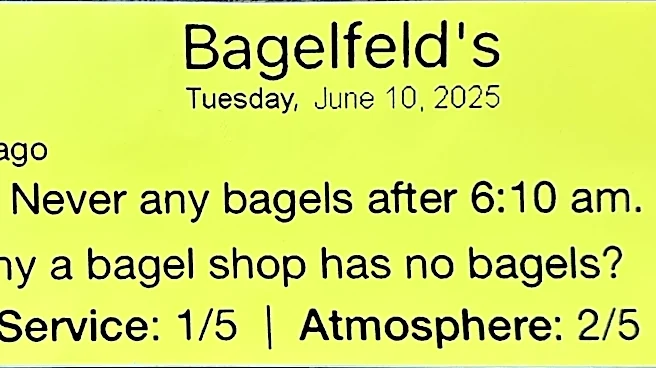
In 2025, a man named Tim Wu wrote a one-star review for Bagelfeld's, a local Arizona restaurant: "This place sucks. Never any bagels after 6:10 a.m. Can anyone tell me why
a bagel shop has no bagels?"
"I worked that day," Ryan Avery, operations manager of Bagelfeld's, said, "We were not sold out of anything. I think maybe we didn't have the flavor that he wanted."
Avery found the review ridiculous and hilarious and shared it on Bagelfeld's Instagram with the caption, "Amazing review. Thank you, Tim Wu!"
While some people took the reviewer's side, others doubled down on the joke. One customer responded to Tim Wu's review with, "Every day at 6:09 a.m. I walk in and buy all of the bagels they have. Best bagels and people in Phoenix."

Avery continued to fuel the Tim Wu fire. Instead of apologizing for not having the bagel Wu wanted and going above and beyond to get him what he wanted, a year later, on June 10, 2026, the anniversary of the review, Bagelfeld's hosted a promotional event dedicated to Tim Wu.
In an effort to sell out of bagels before 6:10 a.m., as Wu had suggested happened, Bagelfeld's gave away six free bagels to any customer who got in line before 6:10 a.m. Avery also made bumper stickers of the review for the occasion.
This kind of response isn't an isolated event. Rather than standing on the sidelines while their restaurant and workers are berated online by unreasonable customers, an increasing number of Phoenix restaurant owners are poking fun at nonsensical reviews.
Where did the idea 'the customer is always right' come from?
If you've worked in any hospitality industry, you've no doubt interacted with a customer asking for the moon who gets upset when you're unable to deliver. This kind of customer attitude may stem from the cliche "the customer is always right," but that was not the intended ethos of the term.
While the exact origin of the saying is up for debate, most attribute it to either Marshall Field or Harry Gordon Selfridge, the owner of Marshall Field & Company and one of his partners.
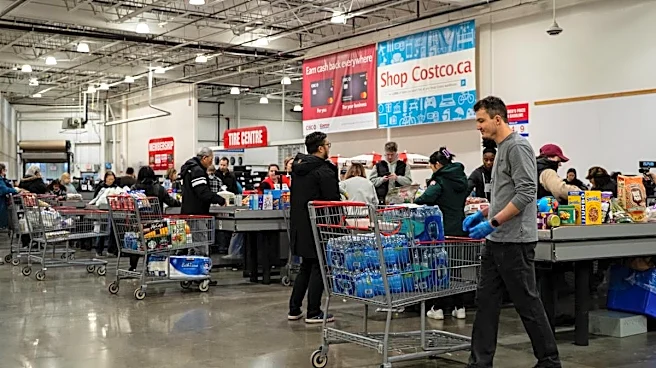
Field revolutionized the shopper experience as the originator of the in-store restaurant concept in department stores, less common today but still seen in the likes of Ebar in Nordstrom, or even the casual food court at Costco. Marshall Field & Company had every product and service all in one place, with salespeople at every corner of the store, a home delivery option and a no-questions-asked return policy.
Selfridge worked as Field's junior partner and later took this philosophy abroad to London, where he opened his department store, Selfridge & Co.
Yet, by the early 1900s, Selfridge had started to notice some unintended consequences when customers began to feel that they wielded unlimited power by way of service.
"The time has passed when an irritable customer, no matter who he or she may be, can, whether right or wrong, ride roughshod over the young man or woman behind the counter and demand his or her dismissal, and it is a good thing it is so," Selfridge wrote in his 1918 book, "The Romance of Commerce."

Although Selfridge believed in 1918 that the time for this behavior had passed, the philosophy lives on in the minds of many when it comes to modern hospitality. But some small business owners are doing their part to usher it out.
Small business owners are done being punching bags
Tim Wu Day is the antithesis of what Selfridge and Field built their business model on. And customers don't seem to mind; some even commented on the Instagram post, applauding Bagelfeld's for "fighting back."
"I feel bad for people who have that reaction to us not having what they wanted," Avery said, "When they're like, 'my whole day is ruined,' what am I supposed to do? I don't know; that's not my issue. It's weird that you're relying so heavily on having a jalapeño cheddar bagel today; you could have something else."
Even when complaints have nothing to do with the food or service, some customers still make a point to give their feedback.
In 2023, Dark Hall Coffee received a review that read, "I really wanted to like it. Coffee was good. Pastry was good. The vibe wasn't for me. When they say 'dark' they mean it. WeeGee board, drawings of demons, women dressed like dudes wearing black masks (still). If you want to grab a coffee before a pro-trans rally - this is the spot."
The review was referring to Dark Hall's gothic theme and its apparent Pride representation throughout the cafe.
Like Bagelfeld's, Dark Hall refused to let the disrespectful comment go unnoticed.
"It's never the food that we have issues with; it's how one of our employees looks; it's such a weird time to live in where they think that's OK," Juan Tavarez, co-owner of Dark Hall Coffee, said, "For us, that's not OK, and we're gonna say something."
Tavarez sold T-shirts mocking the rude comment and donated the proceeds to the Trans Queer Pueblo, an organization that supports migrant LGBTQ+ communities.
"You liked the food, you liked the coffee, and you think people should go here on the way to support human rights. That's the best review we could ever have," Liz Tavarez, co-owner of Dark Hall Coffee, said in an interview.
'The customer deserves honesty'
"I believe the customer deserves honesty more than they deserve obedience," Saint Pasta owner Racan Alhoch said.
Even, it seems, if that honesty means calling a customer an "uncultured cheapskate troglodyte."
Alhoch is notorious in the Valley for his snarky responses to negative reviews, so much so that a Reddit page was created for the sole purpose of tanking the restaurant's reviews. Though his fans are even more ardent in their support.
"When somebody goes and leaves a nonsensical bad review for a restaurant, it's like, you came here with the goal of taking food off of my family's table," Alhoch said, "You crossed the line; as far as I'm concerned, you tried to take money out of my pocket, my employee's pockets, and I'm OK at that point with saying almost anything."
Alhoch fights fire with fire, but not all the time, it's specific reviews that really get under his skin. Reviews that mention their food was wrong, or their service wasn't up to par, Alhoch typically responds to by offering a free meal or other chance to make it right. But reviews complaining about loud music or Saint Pasta's strict no-modification policy typically receive an unsavory response from Alhoch.
"The ones I usually respond to with aggressive responses are people who are just condescending or just saying something completely ignorant about food or just should not be sharing this opinion and having an effect on this restaurant because you clearly have no idea what you're talking about," Alhoch said.
Customer loyalty is tied to authentic hospitality
Nearly 110 years later, Selfridge may finally be right; maybe the time has passed when an irate customer has control over a business's livelihood. Though the power of an online review makes that tricky. The good news for small businesses is that the loyalty of a happy customer exists outside the confines of Yelp — proven by return visits and empty plates.
"I find the people that are the most loyal to us or the people who really love the brand of the restaurant, they come in because they agree with these perspectives. Most of the time when I speak to customers, they say something like 'I used to be a server, and I wish my boss was like this because some customers are unreasonable,'" Alhoch said.
And it doesn't mean restaurants don't care about customer service, just that reciprocal respect is being prioritized.
"What we do is hospitality. We offer: 'Hey, come into our house; we'll receive you, we'll take care of you, come as you are,' and that's fine if they don't like what we offer," Juan Tavarez said, "I think it's tough when someone comes into your house and they're mad about the way someone looks or because their parking lot sucks or if we closed on a Monday because something broke."
The true fans will be back.
"I think just being genuine is great," said Avery. "And if people don't like a business that's genuine or transparent, they shouldn't go there. They should stick with Amazon or whatever."
This article originally appeared on Arizona Republic: Phoenix restaurants are clapping back at rude customers with humor