







Over a decade after Arizonans voted to outlaw affirmative action, they will have the chance this November to expand upon those bans considerably.
Proposition 142 would amend Arizona’s constitution to ban public schools, universities and government agencies from compelling employees or students to exercise preferential treatment on the basis of race. It would also bar public schools and universities from requiring training that promotes discrimination.
The measure is one of eight propositions the Arizona Legislature has referred to voters in 2026.
Free speech advocates argue the additions to Arizona's existing anti-affirmative action laws would have a chilling effect on Arizona’s classrooms and government.
"Ideas are not illegal and Prop. 142 punishes
teachers and students for their beliefs by prohibiting ideas disfavored by some politicians from being debated and discussed in the college setting or in the workplace," said Darrell Hill, policy director for the ACLU of Arizona.

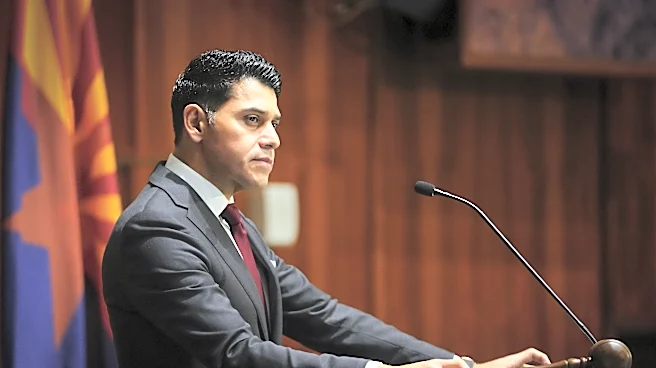
House Speaker Steve Montenegro, sponsor of Proposition 142, is one of the original authors of a 2010 ballot measure that banned affirmative action from Arizona public agencies. That ballot measure passed with a 19-point margin.
Montenegro believes this year's measure will be just as popular.
“I think voters believe this, they have spoken clearly,” Montenegro said earlier this year. “We’re not going to allow any type of racial discrimination in our education, in our public employment or our contracting.”
Montenegro said this year’s measure is needed to close “loopholes” in the existing law, claiming universities and municipalities are still using diversity, equity and inclusion policies.
The measure includes a long list of specific practices that would be prohibited at public agencies if passed, including preferring a job candidate because of ideological beliefs or contracting with companies that support preferential treatment based on race.
Republican lawmakers target trainings, honors classes
Democratic state lawmakers all voted against the measure, saying it was unnecessary and could limit the freedom of local government and education. The Goldwater Institute, a conservative think tank, supported the measure, specifically pointing to certain courses offered through ASU's Honors College as examples of the school supporting affirmative action.
The classes ranged from race and sex to food politics. The Goldwater Institute argued that since the classes were part of the Honors College's required seminar, the university was mandating DEI education.
Another example cited was an ongoing lawsuit against ASU filed by professor Owen Anderson, who claims the university forced him to complete DEI training as a condition of employment. Anderson said in the lawsuit that the training promoted discriminatory ideas based on race.
ASU officials said the lawsuit was “without merit” and misrepresented the contents of the training to further a political argument.
Hill and other free speech advocates argued that universities should maintain the freedom to teach about race and ethnicity without restrictions.
"Just to prohibit the blanket discussion of these topics within classrooms or within job settings, I think crosses the line and violates the First Amendment," Hill said.
Hill said Arizonans might misunderstand what Proposition 142 would prohibit, arguing that most Americans support efforts to end racial discrimination.
Americans’ feelings about DEI efforts have become increasingly complex. More than half of Americans polled by The Associated Press-NORC Center for Public Affairs Research believed DEI initiatives were having no impact or were increasing discrimination among certain groups.
In the last year, Arizona's public universities have faced accusations from Republican state and federal officials of supporting DEI practices. The universities have consistently denied those claims, saying they work to support all students equally.
Over the summer, the U.S. Department of Justice launched an investigation into ASU over viral videos that were recorded in secret claiming to show that students were being treated differently based on race.
The investigation came after a wider crackdown on DEI policies that began when President Donald Trump returned to office. Following pressure from elected officials, the University of Arizona merged its cultural centers in 2025. The Arizona Board of Regents, the body that oversees the state’s public universities, removed references to DEI from its policies and the Arizona State Board of Education took similar action last December.
Helen Rummel covers state politics and higher education for The Arizona Republic. Reach her at hrummel@azcentral.com. Follow her on X, formerly Twitter: @helenrummel.
This article originally appeared on Arizona Republic: What Proposition 142 would change about AZ's affirmative action laws