

How bad was the Arizona Cardinals' loss to the Seattle Seahawks in Week 2?
Try this on for size.
On Oct. 11, 1987, the then-St. Louis Cardinals trotted out a group of replacement players amid the NFL’s ongoing strike. They completed just three passes that day. The longest went for seven yards.
For nearly four decades, that stood as the last time the Cardinals failed to complete a pass for at least 10 yards.
Then came Sunday, Sept. 20. It was an afternoon that began with so much optimism, after the Cardinals discarded the Chargers last week, sparking belief that — somehow — this year might just be different.
Instead, it brought a demoralizing return to reality.
The Cardinals gained just 95 yards through the air, with no completion going for more than
nine yards. Matters weren’t much better on the ground, where they didn’t break off a 10-yard gain until the clock was running out on garbage time. And after a strong first half, their defense capitulated down the stretch, allowing 24 second-half points.
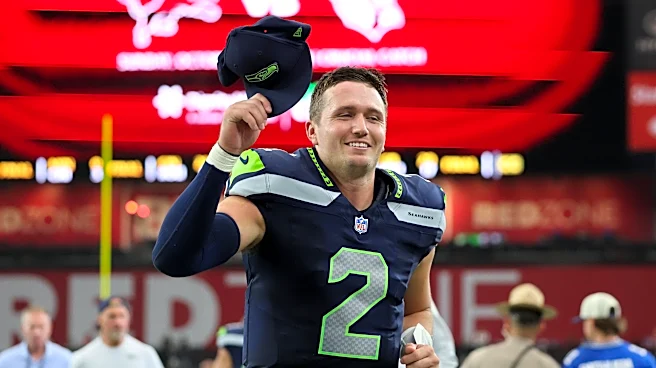
To make matters worse, it came against an opponent that was without its starting quarterback, Sam Darnold. When he was ruled out earlier in the week, a brutal game against the reigning Super Bowl champions began to feel winnable. Perhaps these Cardinals, with their non-existent preseason expectations, could begin the season with consecutive wins.
Instead, the Seahawks — without their quarterback but still armed with their elite defense — showed the Cardinals how far they still have to go.
At halftime, the Cardinals clung to a 7-7 tie, thanks to a forced fumble and a goal-line stand. By the end, they were vanquished, 31-7 — a score that reflected just how lopsided this game was.

Cardinals reminded of Brissett’s limitations
In Week 1, Jacoby Brissett felt like the perfect bridge quarterback for Mike LaFleur’s new-look Cardinals offense. He distributed the ball with ease, consistently working through his progressions to find the open receiver. And it’s not as if his job was simple. Numerous plays required difficult throws, often under pressure.
It was a performance that sparked visions of an efficient — if unspectacular — Cardinals offense.
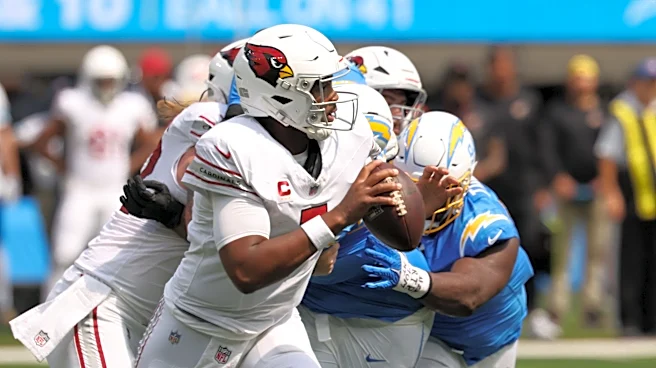
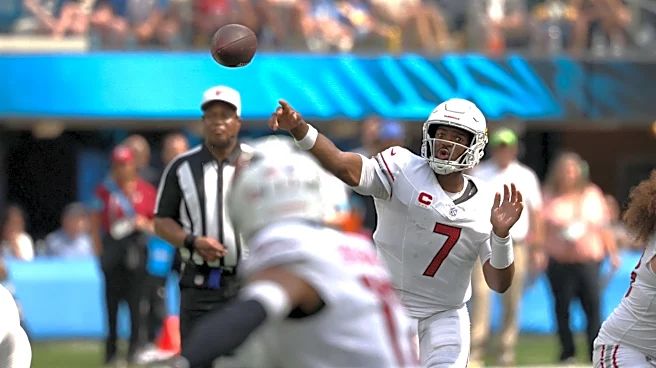
Then Week 2 arrived, bringing with it a sobering return to reality. Brissett finished his day with 17 completions on 28 attempts for just 95 yards, one touchdown and one interception.
It wasn’t just the stat line. All afternoon, Brissett was without answers when the Seahawks made his life difficult.
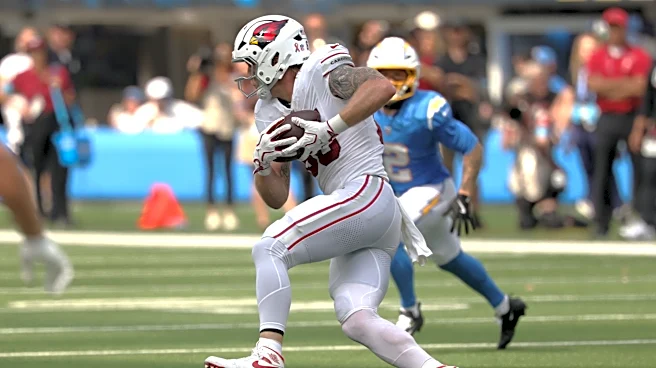
Within the offense's rhythm, he made some plays, mostly to Trey McBride. But when that structure broke down, and the Cardinals had to rely on their quarterback for playmaking, he struggled mightily. On 14 snaps under pressure, he was 3-for-11 for 8 yards and an interception, with two sacks, per Pro Football Focus.
“(Seahawks head coach Mike Macdonald) is as good as anyone in the world at changing it up, giving you a four-man, overloading you, stuff like that,” LaFleur said. “You're never gonna have a beat on him because he rolodexes it.”
In his inability to overcome that, Brissett provided a reminder of the Cardinals' limitations at quarterback, and of the uphill battle they face this season.

Cardinals lack answers for Jaxon Smith-Njigba
At one point in the third quarter, the Cardinals defense faced a third-and-7 shortly after cornerback Max Melton had entered the locker room with a toe injury. That put them in a difficult position, forcing them to rely on backup Kei’Trel Clark on a crucial down.
The Cardinals drew up a creative blitz, generating a free rusher in the face of Drew Lock. But on the front side of the play, they left Clark in man coverage against Jaxon Smith-Njigba, perhaps the best receiver in the NFL. Unsurprisingly, Smith-Njigba made easy work of his new assignment, winning on an out route to pick up the first down.
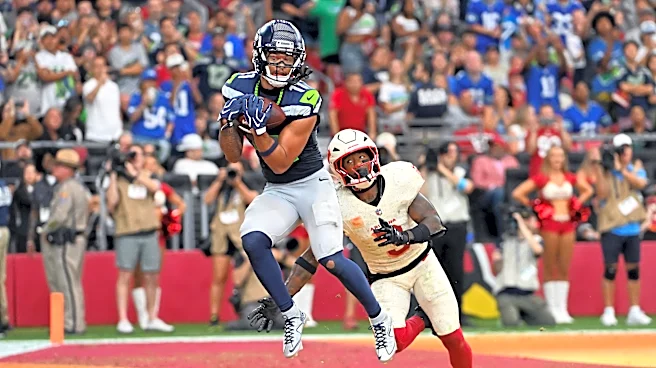
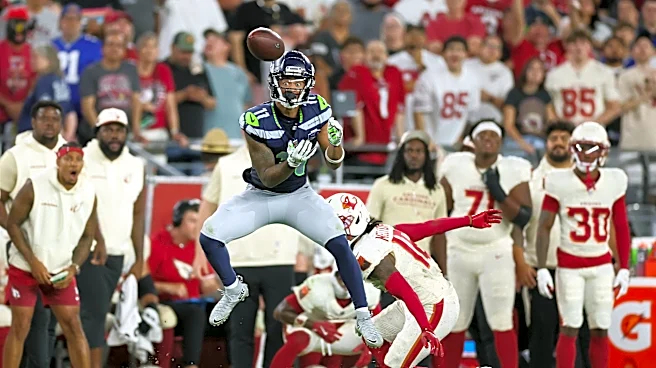
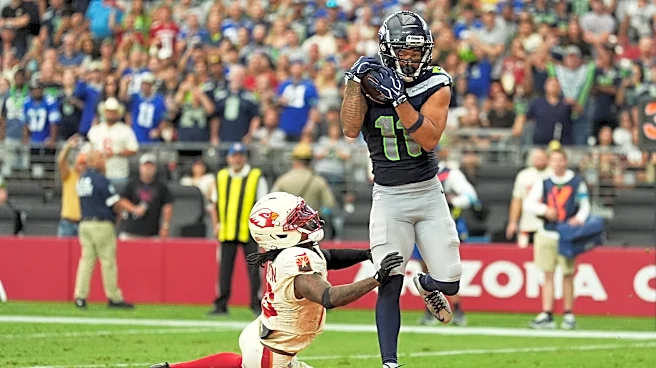
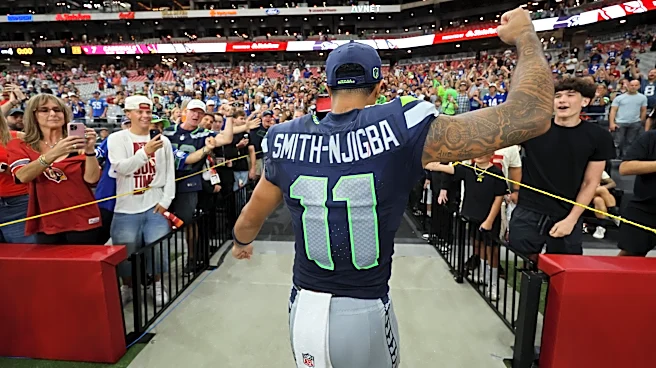
That was a common theme. By the end of the game, Smith-Njigba had once again dominated the Cardinals, catching nine passes for 155 yards and three touchdowns.
And far too often, the issues were self-inflicted, with the Cardinals not shading safety help over the top of Smith-Njigba. It felt as if they treated him like a regular wide receiver, rather than one of the NFL’s best.
“You don't want to sacrifice stopping the run and stuff too, just cause of him,” LaFleur said. “So you're mixing and matching it. ... I'm not worried about schematically in terms of what he was doing. He's gonna get his at times.”

Marvin Harrison Jr.’s struggles continue
At halftime, as the Cardinals offense struggled to get untracked, Marvin Harrison Jr. had played just 26 of 36 snaps. On 12 run plays, he was on the field just four times.
That spoke to an even larger issue than Harrison’s final line, which did not feature a single catch for the first time in his career — excluding games that he has departed early due to injury.
He is not seen as this team’s top wide receiver, as Michael Wilson played every snap. And Harrison is not, evidently, trusted as a run blocker.
It’s one thing for a wide receiver to put up a modest stat line. Just last week, Ja’Marr Chase caught two passes for 12 yards. Nobody is concerned about his capabilities. Sometimes, even elite weapons are schemed out of the game, which is what the Cardinals said happened to Harrison in Week 1, when he caught one pass for 33 yards.
But if a player is not even on the field, that’s a coaching decision. LaFleur attributed that to the Cardinals' reliance on three tight-end formations, with Wilson as the lone wide receiver. He added that he is “not concerned” with Harrison’s slow start to the season.
Elite wide receivers, though, play nearly every snap. And they produce far more than Harrison has this year.

Cardinals run game remains stuck
Last week, the one concern for the Cardinals offense came on the ground, where they averaged just 3.4 yards per carry. That trend only accelerated in Week 2. Before their final drive deep in garbage time, they averaged just 3.1 yards per carry. Neither Jeremiyah Love nor Tyler Allgeier hit 30 yards on the ground.
“With the run game, there was a lot out there,” LaFleur said earlier in the week. “We can be better with our combination (blocks).”
Identifying the problem, though, did not lead the Cardinals to an effective solution.

Injuries pile up in secondary
In the second half, the Cardinals lost both their starting outside cornerbacks to injuries.
Max Melton exited in the third quarter and did not return. The team officially described it as a toe injury, though LaFleur called it a foot injury in his postgame press conference.
Then, late in the fourth quarter, Will Johnson exited with a neck injury. He did not return.
Both players told LaFleur after the game that they came out okay, indicating that the long-term concern is minimal. The Cardinals, though, will find out more about both injuries later in the week.
“Sometimes the adrenaline's rolling and you wake up the next morning and … you feel some type of way,” LaFleur said.
After dealing with constant injuries last year, the Cardinals’ preseason optimism — at least on defense — was predicated on improved health. Losing either Melton or Johnson for an extended period would be an early blow to hopes of a turnaround on that side of the ball.
This article originally appeared on Arizona Republic: 5 key takeaways from Cardinals historic loss to Seahawks