




Dozens of school districts across Arizona may need to address budgetary shortfalls if Proposition 320 passes in the Nov. 3 election.
The ballot measure asks Arizona voters whether school districts should allocate at least 60% of their operational budget to “direct instructional expenses.” The Arizona auditor general would determine what falls under that expense category.
The measure would apply to all school districts in Maricopa, Pima and Pinal counties, as well as districts with more than 7,500 students. Failure to meet the requirement would place districts at risk of losing their classroom site fund dollars, a funding stream for public and charter school districts. Districts below the threshold would have to increase instructional spending
by a half percentage point per year until they reach 60%.
Administrators and public officials are turning to the auditor general's instructional spending percentage as an indicator of a school district's standing. The auditor general has tracked instructional spending since 2001, and uses the federal definition of "instruction" for its percentage, which includes classroom staff, supplies, field trips and athletics.
Where do school districts in Maricopa County stand?
Only one school district in Maricopa County meets the required threshold under Proposition 320. Arlington Elementary School District in the East Valley spends 62.8% of its budget on instruction during the 2024-25 school year. It has only 297 students and one school.
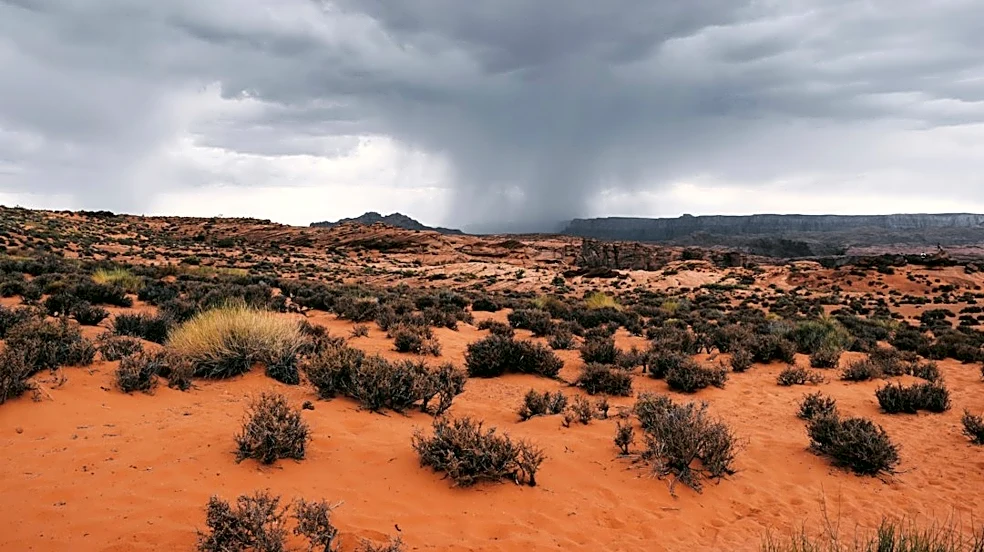
The district in Maricopa County with the lowest percentage of dollars spent on instruction was Sentinel Elementary School District, which spent roughly 33.5% of its budget on instruction in the 2024-25 school year. It has a student body of 35. Sentinel is between Gila Bend and Dateland along Interstate 8.
A report released in February 2026 from the auditor general found that within the past five years, Sentinel's spending on instruction has fallen by 15.1 percentage points. Spending primarily shifted towards instruction support, by 6.1 percentage points, and plant operations, by 3.8 percentage points.
Instruction support, which includes librarians, media specialists and special education and curriculum directors, does not fall under the auditor general's definition of instructional spending.
Deer Valley Unified School District and Gilbert Public Schools, two of the largest school districts in Arizona with over 30,000 students each, spend 59.7% and 57.6% of their budget on instruction, respectively. Mesa Public Schools, the state’s largest school district with a student body of 55,600 across 72 schools, spends 51.3% of its budget on instruction.
Phoenix Union High School District, which spends about 47.3% of its budget on instructional spending, presented options Sept. 3 for how officials would reallocate $48.5 million dollars of its budget if Proposition 320 passes. To address a 12.7 percentage point shortage, the district considered potential reductions in staffing or transportation services if the ballot measure passes.
Superintendent Scott Menzel of the Scottsdale Unified School District said during an Oct. 6 governing board meeting that the district would need to move $14.9 million of its budget towards instruction to satisfy Proposition 320's requirements. He said the classroom site fund is responsible for a teacher’s performance pay and longevity agreement, which compensates teachers depending on the number of years they stay.
Under Proposition 320, school districts could lose a quarter of their total classroom site funds for every year they are not compliant. Menzel said the fund accounts for 8% of their teachers' salaries and provided over $4,000 in performance pay the previous year.
Where do Pima and Pinal County school districts stand?
Only one school district in either Pima or Pinal county met the 60% benchmark within the 2024-25 school year. Red Rock Elementary School District in Pinal County, which has a student body of 419, spent 60.5% of its budget on instruction.
On the other end of the spectrum, Baboquivari Unified School District, which has roughly 1,000 students across six schools, used 32.2% of its budget on instructional spending.
A report from the auditor general found the district spent a "very high" amount on transportation compared to similar districts. The average district in Arizona spends roughly $2,343 per rider on transportation. Districts in a similar location and transportation need as Baboquivari Unified spent an average of $2,684 per rider. Baboquivari Unified spent $5,513 per rider.
The report also found the district decreased spending on instruction by 9.4 percentage points while spending on transportation increased by 9.1 percentage points since the 2019-20 school year.
Rep. Matt Gress, a Phoenix Republican who played a key role in getting the measure on the ballot, said he doesn’t believe every district needs its own transportation department. He pointed to a 2025 study from the Common Sense Institute that found Arizona schools have spent over half a billion dollars in transportation costs despite a 45% reduction in eligible bus riders.
“When half of the ridership disappears, you should be able to see a reduction in those costs,” he said.
Baboquivari Unified Superintendent Ruben Diaz said the auditor general does not consider the size and demographics of the district. He said Baboquivari Unified covers the size of Connecticut and 100% of its students are eligible for free and reduced lunches, a common indicator used to determine the number of students from low-income households.
Classroom spending has decreased as a result of declining enrollment over the years, he said, and 95% of their students use the district’s transportation system. Every week, the district’s buses travel a total distance equivalent to Tucson to New Orleans, or about 1,400 miles, he said.
According to Diaz, the district previously had eight buses serving 19 routes. Within the past four years, Baboquivari Unified replaced those buses and now has 13 buses still serving 19 routes. The district also leases an additional six buses and bus drivers.
Coverage of education solutions on azcentral.com and in The Arizona Republic is partially supported by a grant from the Arizona Local News Foundation’s Arizona Community Collaborative Fund.
This article originally appeared on Arizona Republic: Many Arizona school districts could lose money if Prop. 320 passes