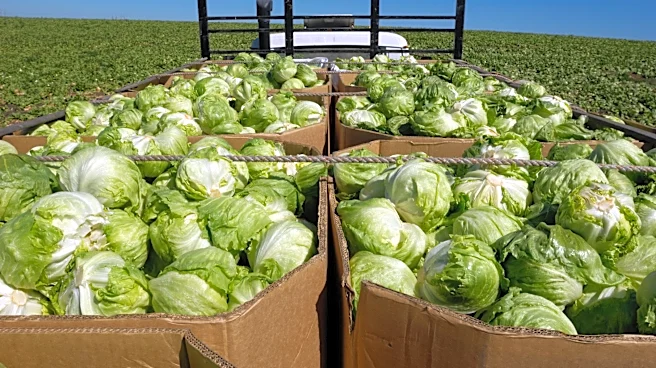

People seem to be becoming more cautious about what they eat because of the increasing number of food recalls and the recent cyclospora outbreak.
Cyclosporiasis is caused by a microscopic parasite and is usually
contracted by consuming food or water contaminated with the parasite; it is not spread directly from person to person like a typical stomach virus.
Symptoms commonly include watery diarrhea, stomach cramps, bloating, gas, nausea, fatigue, loss of appetite and weight loss. Symptoms can begin about a week after infection and may last for weeks or even longer without treatment.
One reason this outbreak hasbeen so difficult to investigate is that cyclospora is harder to track than bacteria such as E. coli or Salmonella. There is currently no whole-genome sequencing system for cyclospora comparable to the tools used for some bacterial outbreaks.
The safest approach right now is to avoid any recalled Taylor Farms iceberg lettuce, check recall information when buying packaged salads, wash fresh produce thoroughly under running water, and consider whole heads of lettuce or cooked vegetables if you want to be extra cautious.
Here’s what you need to know about the outbreak in Arizona.
Should I avoid eating lettuce right now?
You do not necessarily need to avoid all lettuce. The CDC says the specific Taylor Farms iceberg lettuce recalled on July 17 should not be eaten, but the recalled products had best-by dates that have now passed and should generally no longer be in stores or restaurants. The CDC also says that the lettuce-linked outbreak is only one of several cyclospora clusters occurring across the country.
The Arizona Department of Health Services says people in Arizona do not need to stop eating fruits and vegetables and that most produce in Arizona grocery stores is safe.
Why are people saying not to eat bagged lettuce?
People are particularly concerned about bagged lettuce because many individual leaves are mixed and processed in large facilities. If one contaminated leaf enters a batch, the parasite could potentially spread to other leaves in the same bag.
However, this does not mean that every bag of lettuce is contaminated. The FDA's investigation specifically identified iceberg lettuce from Taylor Farms de Mexico as the source of the current lettuce-linked outbreak and recalled particular products. The FDA also emphasized that the investigation is ongoing. In other words, the concern is about specific recalled or potentially implicated products, not every bag of lettuce sold in the United States.
Which states have the lettuce outbreak?
As of the CDC's August 5 update, the lettuce-linked Cyclospora outbreak involves 15 states: Illinois, Indiana, Kentucky, Michigan, Ohio, West Virginia, Kansas, Oklahoma, Pennsylvania, Missouri, Arkansas, Iowa, Nebraska, New Hampshire, and North Carolina. The outbreak had reached over 6,300 reported illnesses, over 200 hospitalizations, and two deaths.
The CDC reported over 10,400 laboratory-confirmed domestically acquired cases in 47 states from May 1 through August 3, plus more than 12,200 additional cases that were not yet laboratory-confirmed or still needed investigation. Those numbers include illnesses that may have come from sources other than the recalled lettuce.
How many cases of cyclosporiasis are there in Arizona?
According to Maricopa County’s website, Maricopa County has reported 43 confirmed cases as of Aug. 8.
Got a story you want to share? Reach out at Tiffany.Acosta@gannett.com. Follow @tiffsario on Instagram.
Looking for the best things to do in Arizona? Sign up for our newsletter.
This article originally appeared on Arizona Republic: Is it safe to eat lettuce? What Arizonans must know about cyclospora