






More Black Americans are choosing Mexico as a place to start over, drawn by a combination of lower living costs, family connections and the opportunity to build a life outside the racial tensions, violence and economic pressures they associate with the United States.
While some Black Americans relocate in search of greater peace of mind and affordability, others are motivated by education, personal growth or a desire for a different sense of belonging. Their stories reflect a growing and diverse community rather than a single movement, illustrating the many reasons people are looking south of the border for a new chapter in life.
“The Afro-Mexpats”, a 16-minute documentary presented by PBS’ “VOCES,” follows three Black women building new lives
in Mexico. The film examines race, identity and belonging while confronting a harder question: What happens when Americans seeking freedom arrive with U.S. passports and dollars in a country facing its own racism and housing crisis?
The film estimates that more than 11,000 Black people born in the United States live in Mexico. That figure offers a glimpse of the community, not a complete profile. Mexico’s 2020 Population and Housing Census counted 797,266 U.S.-born residents overall, a far broader group that includes children, Mexican citizens and binational families.
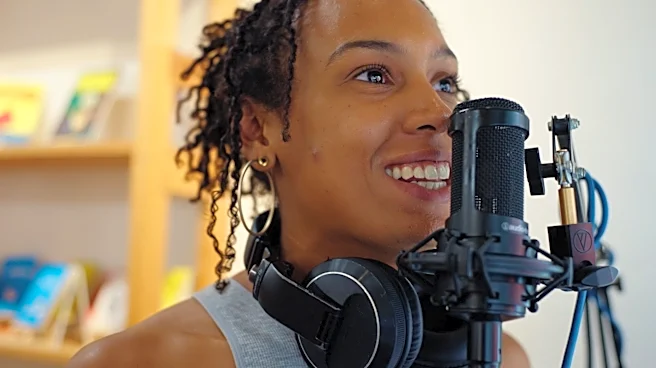
Director Ebony Marie Bailey understands that tension personally. The daughter of a Mexican mother and Black American father, she lived in Mexico City while studying documentary filmmaking at the National Autonomous University of Mexico. There, she encountered racism and microaggressions while recognizing the privilege tied to her U.S. citizenship.
Why are Black Americans moving to Mexico?
There is no single reason. Some are trying to put distance between themselves and the strain of being Black in the United States. Others are drawn by family ties, a lower cost of living, education or the possibility of building a different kind of life.
Bailey interviewed about 10 people while making the film before centering the stories of three women living in Mexico City, Tijuana and Guerrero. Their experiences challenge the idea that “Blaxit” — an informal name for Black Americans leaving the United States — is one organized movement with a shared destination or purpose.

Does racism disappear when Black Americans move to Mexico?
No. The experience may change, Bailey said, but crossing the border does not erase racism. Mexico has its own history of slavery, colorism and the exclusion of Afro-descendant communities. At the same time, a Black U.S. citizen may be treated differently from an Afro-Mexican person or a Black migrant from Haiti, Colombia or another country.
“Someone born and raised in the United States may not understand the privilege of U.S. citizenship until they leave,” Bailey said in a Spanish-language interview with USA TODAY. She knows that tension personally. The daughter of a Mexican mother and a Black American father, Bailey moved to Mexico City in 2016 for graduate studies at the National Autonomous University of Mexico. She encountered microaggressions as a Black woman while also recognizing how a U.S. passport changed her position.
The distinction matters because stories about Americans relocating to Mexico can make Blackness seem newly imported. It is not. Mexico’s national statistics agency, INEGI, counted 2,576,213 people who identified as Afro-Mexican or Afro-descendant in 2020, about 2% of the population. It was the first Mexican census to include a question allowing people to identify that way.
“Mexico has its own anti-Black history, its own history with slavery and its own history of erasing Afro-descendant people,” Bailey said. “So why Mexico?”
How did you begin telling stories about Blackness and Mexico?
Ebony Bailey: Well, I’m from Porterville, a town in California’s Central Valley. My mother is Mexican and my father is Black American, so I grew up with both identities. I have always wanted to tell stories. I took journalism classes as a teenager and later studied journalism in college. From there, my interest began evolving toward documentary filmmaking. I always wanted to tell stories that were underrepresented, especially stories about racialized communities and communities of resistance. What better place to start than my own community?
Since I began making documentaries, I have explored the relationship between Blackness and Mexican identity. I made one short film about Haitian and African migration in Mexico and another connected to the Afro-Mexican community. “The Afro-Mexpats” was the third short film to explore that relationship, but it is also the closest to my own experience. I was a Black American and Mexican woman living in Mexico.
I moved there to study for my master’s degree at UNAM, where I also studied film. As I was learning to become a filmmaker, I was experiencing what it meant to be Black, American and Mexican in Mexico.I experienced racism and microaggressions, but I also had a great deal of privilege. I don’t think people born and raised in the United States always recognize the privilege that comes with U.S. citizenship until they leave the country.
When I was preparing to leave Mexico City around 2021 or 2022, I noticed that many more Black Americans were arriving. During all the years I had lived there, I had barely met any. Part of me was happy to see them. Another part of me wondered: Are we doing the same thing white Americans are doing? That was my question. The documentary grew out of those internal questions about our presence in Mexico.
What question shaped “The Afro-Mexpats”?
Bailey: Wow. Those are very good questions. First, I wanted to understand how other Black Americans were experiencing life in Mexico, especially people who did not have any family connection to the country. My mother is Mexican, so part of my reason for going to Mexico was to reconnect with my roots. I wanted to ask people without that connection why they were drawn to Mexico. I knew many Afro-Mexicans and Black people from Colombia, Haiti and African countries, but I knew very few Black Americans.
My other question was: Are we the same as colonizers? Is our experience different? Is our thinking closer to that of privileged white people who also move to Mexico? How does our American nationality shape the experience of living in another country? Those questions came from criticism, but they also came from my own nervousness. I wanted to explore controversial issues, including the possibility that we are contributing to gentrification.
Many of the people I interviewed told me they had moved to Mexico to escape something. Some wanted to get away from racism in the United States. Others wanted a better life, a place where their dollars would go further or some form of freedom.
But Mexico has its own anti-Black history. It has a history of slavery and of erasing people of African descent. So why does Mexico represent freedom? Why Mexico? That was one of my central questions.
 Ebony Marie Bailey, conoce esas contradicciones desde adentro. Nació en el Valle Central de California, es hija de madre mexicana y padre afroestadounidense, y se define como “Blaxican”. " id="92127676007">
How do Mexico’s immigration requirements affect Black Americans who want to live there?
Bailey: In recent years, the financial requirements for Mexican residency have increased. I don’t know whether I would call them stricter, but they are certainly more expensive. Applicants have to show a higher monthly income or more money in the bank. Some Black Americans are now saying, “I can’t even afford to qualify for residency in Mexico.” There are also people who continue living there as tourists and have not regularized their status.
I have seen conversations in online groups about the importance of getting the proper documents. Some people are saying, “We are already Black, and Mexico is going to see us as foreigners. We need to get our papers because otherwise we are going to be profiled.” That concern is not experienced in the same way as it is by the Haitian population, for example. We are not talking about equal circumstances. Still, some people see Mexico’s rising residency requirements as a reaction to the Trump administration. They are beginning to see how these policies may be connected.
How do Black Americans in Mexico view U.S. immigration policies?

Bailey: Their perspectives are very different. I could not say that everyone thinks the same way or has the same level of understanding. I come from a migrant family, so these issues are always at the front of my mind. But I met people who were not very aware of what was happening with immigration in the United States because they did not grow up with it or experience it directly. That does not mean they reject immigrants. They simply did not know much about the policies or their consequences.
That can change when they become migrants themselves. Suddenly, they have to deal with applications, financial requirements and questions about their own legal status. I have also met people who are more involved in activism. They understand their position and recognize their privilege. There are many different perspectives. It is difficult to generalize.
Is Mexico less racist than the United States?
Bailey: Some Black Americans arrive with the idea that Mexico is “less racist” than the United States. That idea can change after they spend more time in the country, learn Spanish and understand more of its history. In general, there is not much awareness of Afro-Mexican history. That comes from institutional erasure, denial and a long history of making Afro-Mexican people invisible.
Many Black Americans arrive without knowing that history. At the same time, they may feel that Mexico is less racist because they have the privilege of carrying a U.S. passport. They may not experience the same forms of oppression faced by an Afro-Mexican, Haitian or Colombian person, or someone arriving from another country.
I have met all kinds of people. Some live inside an expat bubble, remain ignorant about these issues and show no interest in learning. Others genuinely want to connect with the local community. Most of the people I know do want to learn more, even if they arrive knowing nothing about Mexico’s Black history.
Are Black Americans contributing to gentrification in Mexico?
Bailey: The documentary explores that issue, but it does not offer a complete answer. I don’t have a complete answer either because it is complicated. Black Americans are not in Mexico in the same numbers as some other groups, but their presence can still have an effect. I have met people who say, “We contribute to the economy because we support local businesses.” And I say, well, yes, maybe. But that does not necessarily mean there is broader integration. It also does not mean they are paying taxes in Mexico or participating in the system in other ways.
People often become more aware of those questions once they obtain residency and become more integrated. I also want to be clear that this is based on my observations. I do not have hard data showing how many Black Americans are buying or renting property in Mexico. Some Black Americans are buying property, but many are simply moving there to live. I don’t know whether they are buying or renting in numbers large enough to measure their specific effect on gentrification.
Foreigners are not the only people contributing to gentrification. Wealthier Mexicans can participate in those same dynamics. There are also Mexican laws and government decisions that, as they have been explained to me, make gentrification easier. Mexico has many housing problems. Foreign gentrification is part of the crisis, but it is not necessarily the largest part. I am about to read “País sin techo,” by Carla Escoffié. She examines how gentrification fits into Mexico’s housing crisis without treating it as the crisis’ only cause. We have to acknowledge that American dollars are raising costs. For a Mexican worker earning an average salary, buying a home is nearly impossible. But we also have to examine the other conditions driving the housing crisis.

Where can you watch “The Afro-Mexpats”?
The 16-minute, 40-second documentary is available on PBS.org, the PBS app and YouTube. It debuted on YouTube on Sept. 28 and reached PBS platforms on Sept. 30 after screening at film festivals beginning in 2024.
Bailey does not offer a verdict on whether Black Americans should move to Mexico. That is not the film’s job. Instead, she makes room for a more honest question: What responsibilities come with searching for freedom in someone else’s home?
“The documentary is an exploration of questions,” Bailey said. One of them will grow more urgent if this migration continues: What kind of neighbors will the newcomers choose to be?
Boris Q’va es reportero nacional de noticias en tendencia en español para Connect/USA TODAY Network. Puedes seguirlo en X como @ByBorisQva o escribirle al correo BBalsindesUrquiola@gannett.com.
This article originally appeared on Arizona Republic: Why more Black Americans are moving to Mexico to start a new life